
Listen to this Post
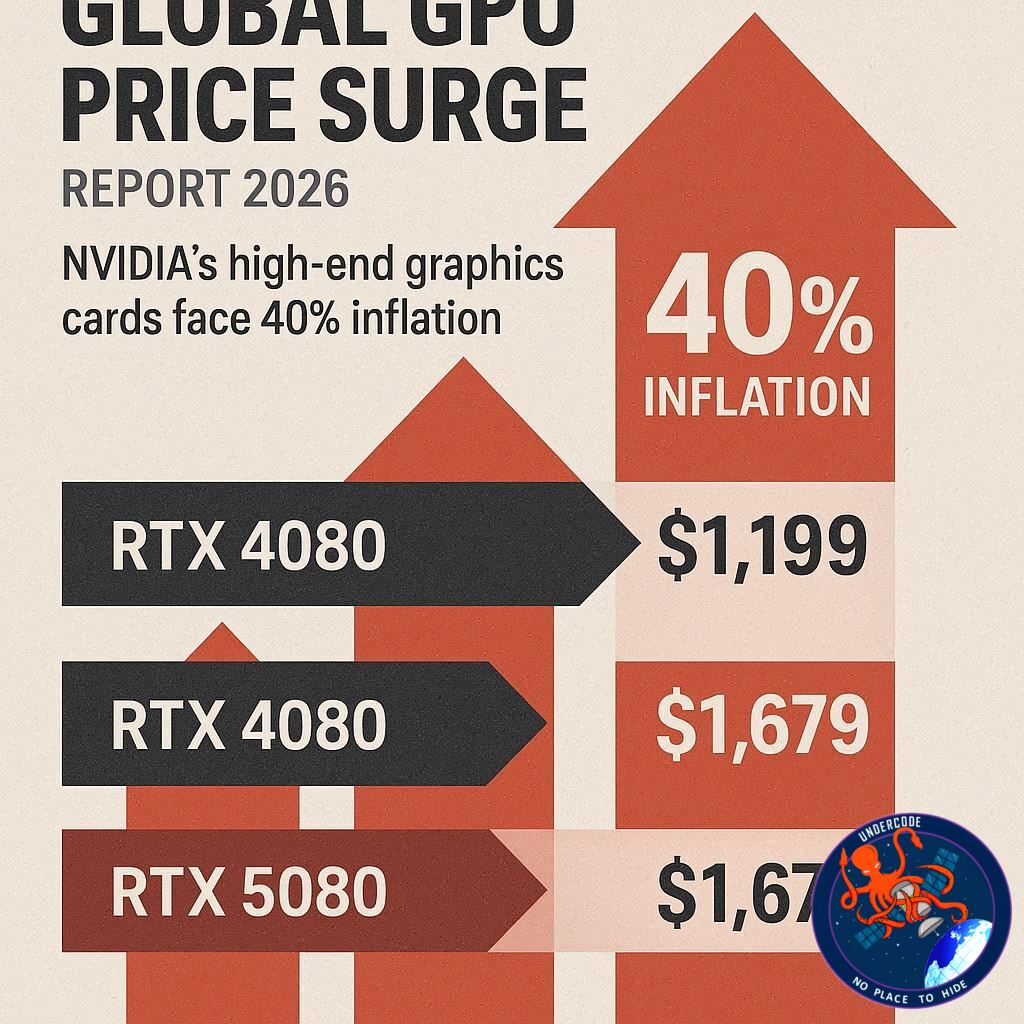
The graphics card market is once again entering turbulent territory. Just when gamers and PC builders believed stability was returning after years of shortages and scalping chaos, fresh data paints a far more uncomfortable picture. GPU prices are climbing sharply across the globe, and this time the pain is hitting hardest at the top end of Nvidia’s lineup. A newly compiled report tracking real retail pricing across multiple regions confirms what enthusiasts have been sensing for months: graphics cards are becoming significantly more expensive, and the spike is neither isolated nor subtle.
Global Data Confirms a 15% Average GPU Price Increase
A comprehensive pricing analysis compiled by TechSpot and highlighted by VideoCardz tracked 14 GPUs from AMD, Intel, and Nvidia across 10 global regions. By comparing the lowest available in-stock retail prices through local price comparison platforms, the study provides a realistic snapshot of actual buying conditions rather than theoretical MSRP figures.
The numbers are blunt. Over a three-month window, global GPU prices have increased by approximately 15% on average. In practical terms, a graphics card priced at $300 late last year now sits around $345. That jump is not minor inflation, it is a material cost increase for builders and gamers budgeting every component.
The timeline is also important. Initial pricing data was gathered in November 2025, just before memory shortages began tightening supply chains. The follow-up data, collected this month, captures the full impact of rising RAM costs that have directly affected video memory availability as well.
Nvidia’s RTX 5090 Leads the Price Surge Worldwide
Among all models analyzed, Nvidia’s flagship offering stands out dramatically. The Nvidia RTX 5090 has seen a global price increase of roughly 31%. In the United States, that figure jumps to approximately 40%, with some international markets such as India and Poland seeing increases exceeding 50%.
Retail pricing illustrates the severity. The cheapest RTX 5090 currently listed in the US sits around $3,600, far above its already premium launch positioning. At that level, buyers are entering territory where a full prebuilt system featuring the same GPU becomes comparatively reasonable.
The Nvidia RTX 5080 is not far behind, with a 25% global increase. The Nvidia RTX 5070 Ti mirrors that trend at roughly 25% worldwide. In the US, both models are approaching 40% inflation over just three months.
Mid-Range Nvidia Models Show Mixed Stability
Not every Nvidia card is surging equally. The Nvidia RTX 5060 lineup has experienced more moderate increases between 10% and 11%, relatively restrained compared to its higher-end siblings. The Nvidia RTX 5070 has climbed about 14%.
However, one notable exception disrupts that calmer picture. The Nvidia RTX 5060 Ti 16GB has risen by approximately 22% globally, suggesting that models with larger VRAM capacities are experiencing disproportionate supply strain.
AMD GPUs Remain Comparatively Resilient
Across the aisle, AMD’s pricing shifts appear less aggressive overall. The AMD Radeon RX 9060 XT 16GB shows a 15% global increase, while the AMD Radeon RX 9070 series has risen by only 7% to 8% worldwide.
That said, the US market again tells a harsher story. The AMD Radeon RX 9070 XT has climbed approximately 21% domestically, and the AMD Radeon RX 9060 XT 8GB is up around 20%. While still below Nvidia’s flagship surges, those increases are far from negligible.
Intel Arc GPUs Show Modest Price Movement
Intel’s Arc series appears to be the most stable among the three major GPU vendors. The Intel Arc B580 has increased by roughly 11% globally, while the Intel Arc B570 has only risen around 4%.
These numbers suggest Intel may be somewhat insulated from the most severe VRAM-related pressures or may be operating within different supply constraints compared to Nvidia’s higher-end memory-heavy designs.
Memory Shortages Drive the Core of the Crisis
The root cause of this new wave of inflation traces back to tightening RAM supplies, which have directly impacted GDDR memory production used in graphics cards. As system memory pricing rises, so too does video memory cost, creating a cascading effect throughout GPU manufacturing.
This impact appears especially pronounced in models with 16GB VRAM configurations. The RTX 5070 Ti and RTX 5060 Ti 16GB models both show stronger-than-average price hikes, reinforcing the theory that higher VRAM configurations are facing tighter allocation.
AI Demand Potentially Reshapes Nvidia Priorities
Another factor quietly influencing this market may be Nvidia’s AI hardware strategy. High-memory GPUs are critical for AI training and inference workloads, and data center products generate significantly higher profit margins than consumer GeForce models.
While no official confirmation suggests deliberate consumer deprioritization, the pricing patterns align with speculation that Nvidia is allocating more memory resources toward AI accelerators rather than gaming GPUs.
The result for consumers is straightforward. High-end Nvidia cards are becoming scarcer, and scarcity fuels higher pricing.
Building a PC in 2026 Becomes Increasingly Expensive
GPU inflation does not exist in isolation. System RAM prices have climbed sharply. Storage costs are also trending upward. Now, graphics cards are adding further strain.
For gamers and enthusiasts, the once exciting process of building a high-performance PC has become a budgeting challenge. Component price volatility has returned, echoing the uncertainty seen during earlier supply chain crises.
The broader concern is sustainability. If memory shortages persist through the first half of 2026, these increases may not be temporary spikes but rather structural price adjustments.
What Undercode Say:
The GPU pricing surge is not simply another cyclical bump. It signals a deeper structural shift in how semiconductor resources are being allocated globally. When examining the data, one theme stands out clearly: memory capacity is becoming a strategic asset, not just a spec sheet number.
High-end GPUs, particularly those with 16GB or more VRAM, are absorbing the sharpest inflation. This is unlikely to be coincidence. AI workloads thrive on large memory pools. Enterprise accelerators command far higher margins than consumer gaming cards. If supply is constrained, manufacturers will logically prioritize the segment that generates the most profit per wafer.
This creates a subtle but powerful realignment. Gaming GPUs are no longer the center of Nvidia’s universe. AI infrastructure is. The RTX 5090’s dramatic price escalation is not merely a supply hiccup, it may reflect shifting corporate gravity.
AMD’s relative stability could indicate either better allocation strategy or simply lower demand pressure from enterprise AI sectors. Intel’s modest inflation further reinforces the idea that not all vendors are equally exposed to memory scarcity dynamics.
There is also a psychological component. When flagship prices explode past $3,500, consumer perception of value erodes rapidly. That distortion trickles down the product stack. Even moderate increases begin to feel oppressive when top-tier models break affordability thresholds.
The US market showing harsher spikes suggests regional demand pressure or distribution inefficiencies. It may also reflect stronger AI data center expansion domestically, tightening memory supply closer to home.
If this trajectory continues, we may see a bifurcation of the GPU market. Ultra-high-end models drift further into luxury territory, while midrange and entry-level cards become the practical battleground. That scenario could reshape buying habits, pushing gamers toward performance-per-dollar metrics rather than chasing flagship dominance.
There is also long-term risk. Persistent inflation may suppress upgrade cycles. If gamers delay purchases due to pricing fatigue, overall unit sales could weaken, eventually forcing recalibration.
The memory crisis is the real variable. If RAM supply stabilizes, GPU pricing may normalize. If it does not, we may be witnessing the beginning of a new pricing era where AI demand permanently elevates the cost baseline for gaming hardware.
The uncomfortable truth is this: GPU pricing may not be broken. It may be adapting to a new technological hierarchy.
Fact Checker Results
✅ Global GPU prices increased roughly 15% on average over three months according to tracked retail data.
✅ Nvidia’s RTX 5090 shows approximately 31% global inflation and around 40% in the US market.
❌ There is no official confirmation that Nvidia is formally prioritizing AI GPUs over gaming models, this remains speculative analysis.
Prediction
📈 If RAM shortages continue into mid-2026, high-VRAM GPUs will likely experience further price escalation.
💻 Midrange GPUs may become the dominant consumer choice as flagship models drift into ultra-premium pricing tiers.
⚠️ Without memory supply stabilization, GPU inflation could expand beyond Nvidia and more aggressively impact AMD’s lineup.
▶️ Related Video (78% Match):
🕵️📝✔️Let’s dive deep and fact‑check.
References:
Reported By: www.techradar.com
Extra Source Hub (Possible Sources for article):
https://www.digitaltrends.com
Wikipedia
OpenAi & Undercode AI
Image Source:
Unsplash
Undercode AI DI v2
Bing
🔐JOIN OUR CYBER WORLD [ CVE News • HackMonitor • UndercodeNews ]
📢 Follow UndercodeNews & Stay Tuned:
𝕏 formerly Twitter 🐦 | @ Threads | 🔗 Linkedin | 🦋BlueSky | 🐘Mastodon


