
Listen to this Post
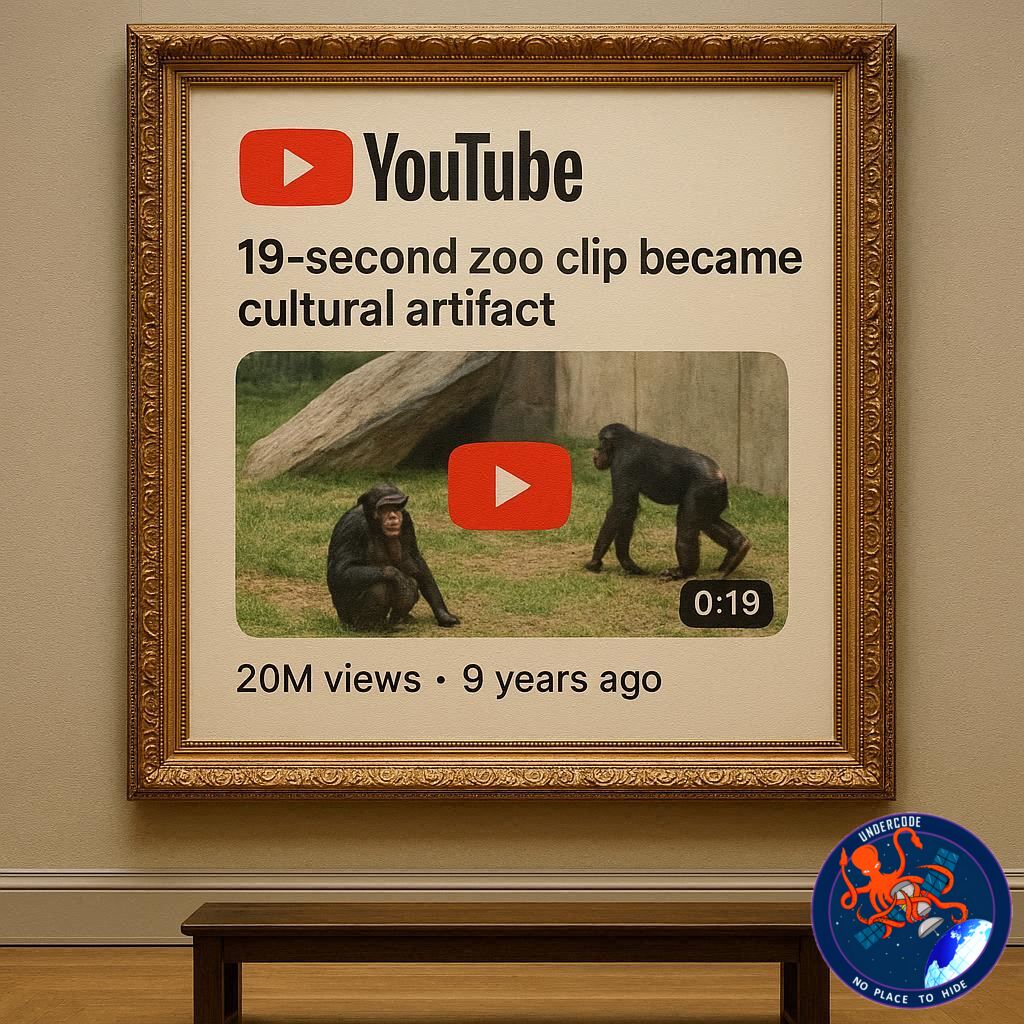
A Digital Platform Becomes a Historical Exhibit
It feels surreal, almost disorienting, to realize that YouTube, once the chaotic playground of early internet explorers, now stands behind museum glass. The platform that defined late-night scrolling sessions and viral culture is officially part of a curated exhibition at the prestigious Victoria and Albert Museum in London. What was once cutting-edge innovation is now treated as heritage. Even more astonishing, the year 2006 is being framed as “vintage.”
Two decades after YouTube first appeared online, its earliest design and its first-ever upload have been reconstructed and preserved as part of the museum’s “Design 1900 – Now” collection. The message is unmistakable: digital platforms are no longer fleeting products of tech cycles. They are cultural milestones.
Celebrating Twenty Years of a Cultural Shift
The museum’s exhibition marks twenty years since YouTube’s public launch and the upload of its inaugural video. To commemorate the milestone, curators recreated the original 2006 YouTube watch page interface, complete with its primitive layout and minimalist aesthetic. Alongside it plays the historic 19-second video, “Me at the zoo,” filmed by YouTube co-founder Jawed Karim.
At first glance, the exhibit appears to be a nostalgic nod to early web design. But beneath that surface lies something far more profound. The inclusion of YouTube in a museum signals recognition of its foundational role in shaping online culture, digital self-expression, and participatory media. This is not merely about pixels and buttons. It is about the beginning of a global behavioral shift.
The Humble Beginnings of User-Generated Media
The grainy zoo clip may seem trivial today. Recorded on a low-resolution camera, it shows Karim casually discussing elephants. Yet historians of digital culture increasingly see that moment as the spark that ignited the user-generated content revolution. It proved that anyone, anywhere, could publish themselves to a global audience.
At the time, no one could predict how transformative that simple act would become. YouTube introduced early versions of features we now consider essential: rating systems, share buttons, recommended videos, profile badges. These design elements laid the groundwork for modern social media architecture. What started as experimental interface choices evolved into the backbone of online engagement models across platforms.
The exhibit emphasizes this design evolution. By reconstructing the 2005 and 2006 watch pages, curators invite visitors to experience the digital environment that gave birth to viral culture. It is a reminder that innovation often looks ordinary at first glance.
Personal Nostalgia Meets Institutional Recognition
For many who discovered YouTube in the late 2000s, the museum display feels deeply personal. The platform became a portal into new creative worlds. Early viewers remember stumbling upon gameplay clips from The Sims, viral sketches like Potter Puppet Pals, and eventually a flood of official music videos.
The arrival of Vevo on YouTube in 2009 marked another turning point. Suddenly, high-quality music videos were accessible on demand. For a generation raised on music television channels and obscure video-hosting websites, this felt revolutionary. The transition from passive television consumption to interactive digital streaming happened almost seamlessly.
What is striking today is how similar the experience remains. While the platform has undergone massive algorithmic and design refinement, the core behavior persists: click, watch, share, repeat. The interface is sleeker, the recommendations smarter, the monetization models more complex, yet the foundational logic is recognizable. The DNA of early YouTube survives.
From Internet Playground to Cultural Institution
The idea that YouTube belongs in a museum once seemed absurd. Museums traditionally preserved oil paintings, sculptures, and ancient artifacts. Now they preserve web pages and video files. This shift reflects a broader recognition that digital environments shape society as profoundly as physical spaces.
The Victoria and Albert Museum is known for chronicling design history. Including YouTube positions the platform not merely as entertainment but as design innovation. Its early layout influenced countless websites. Its engagement tools reshaped advertising economics. Its democratization of media production disrupted television, journalism, and music industries.
If YouTube is museum-worthy, what comes next? Early TikTok interfaces in the Louvre? Archived Instagram feeds in contemporary art wings? The boundary between technology and art has dissolved. Platforms are no longer just tools; they are cultural ecosystems.
The Acceleration of Digital Time
Perhaps the most unsettling realization is how quickly digital artifacts age. In traditional historical timelines, twenty years is a blink. In internet years, it feels ancient. The rapid pace of technological evolution compresses generational shifts into a single decade.
YouTube’s early design now appears quaint. Yet it was revolutionary in its simplicity. The minimal interface prioritized content over complexity. Modern platforms layer algorithmic sophistication atop that simplicity, but the core experience remains anchored in those first experiments.
To call 2006 “vintage” reveals how rapidly digital culture matures. The internet, once perceived as perpetually new, now has its own nostalgia cycle. Millennials and Gen Z users look back on early platform aesthetics with the same sentimental affection previous generations reserved for vinyl records or arcade machines.
What Undercode Say:
The inclusion of YouTube in a museum is not about nostalgia alone. It is about power. Platforms like YouTube did not merely host content; they restructured global communication systems. They decentralized broadcasting authority and transferred cultural production from institutions to individuals.
When the first watch page launched, traditional media companies still dominated storytelling. Within a decade, YouTubers were building independent empires, influencing politics, fashion, education, and public discourse. This was not accidental. The architecture of participation embedded in early YouTube design encouraged interaction over passivity.
The rating buttons and comment sections created feedback loops. Recommendation algorithms amplified engagement. Monetization options incentivized consistency. These elements formed a self-sustaining ecosystem. In retrospect, the early interface was a prototype for the attention economy.
Museums typically validate objects that changed human behavior. By that metric, YouTube qualifies without question. It altered how news spreads, how artists launch careers, how communities organize. It blurred the boundary between audience and creator.
There is also a deeper implication. Preserving a web interface acknowledges that digital spaces are not ephemeral. For years, the internet was treated as disposable, constantly refreshed and overwritten. Archiving YouTube’s early design signals a shift toward digital preservation as cultural responsibility.
Yet there is irony in this celebration. The same platform that empowered creators also introduced algorithmic pressures, content moderation controversies, and monetization struggles. Its influence is double-edged. Cultural democratization coexists with algorithmic gatekeeping.
From a design perspective, early YouTube represents raw experimentation. It was imperfect, cluttered, and technically limited. But that imperfection allowed creativity to flourish. Modern platforms, optimized for engagement metrics, often feel more constrained despite greater sophistication.
The museum exhibit forces reflection on how quickly innovation becomes history. It also raises questions about what we choose to preserve. Are we archiving code, culture, or collective memory? Perhaps all three.
If digital platforms are now museum artifacts, then society has entered a new phase of cultural recognition. Technology is no longer separate from heritage. It is heritage.
Fact Checker Results
✅ YouTube’s first video, “Me at the zoo,” was uploaded by Jawed Karim in 2005 and runs approximately 19 seconds.
✅ The Victoria and Albert Museum included a reconstructed early YouTube watch page in its “Design 1900 – Now” exhibition.
❌ YouTube was not widely perceived as a cultural institution at launch; its museum recognition emerged years later.
Prediction
📊 Digital platforms from the 2010s will increasingly enter museum collections as early social media generations age into curatorial roles.
📊 Archival preservation of algorithms and interface design will become a formal academic discipline.
📊 Future exhibitions may showcase early TikTok or Instagram layouts as defining artifacts of the attention economy.
▶️ Related Video (82% Match):
🕵️📝✔️Let’s dive deep and fact‑check.
References:
Reported By: www.techradar.com
Extra Source Hub (Possible Sources for article):
https://www.stackexchange.com
Wikipedia
OpenAi & Undercode AI
Image Source:
Unsplash
Undercode AI DI v2
Bing
🔐JOIN OUR CYBER WORLD [ CVE News • HackMonitor • UndercodeNews ]
📢 Follow UndercodeNews & Stay Tuned:
𝕏 formerly Twitter 🐦 | @ Threads | 🔗 Linkedin | 🦋BlueSky | 🐘Mastodon


