
Listen to this Post
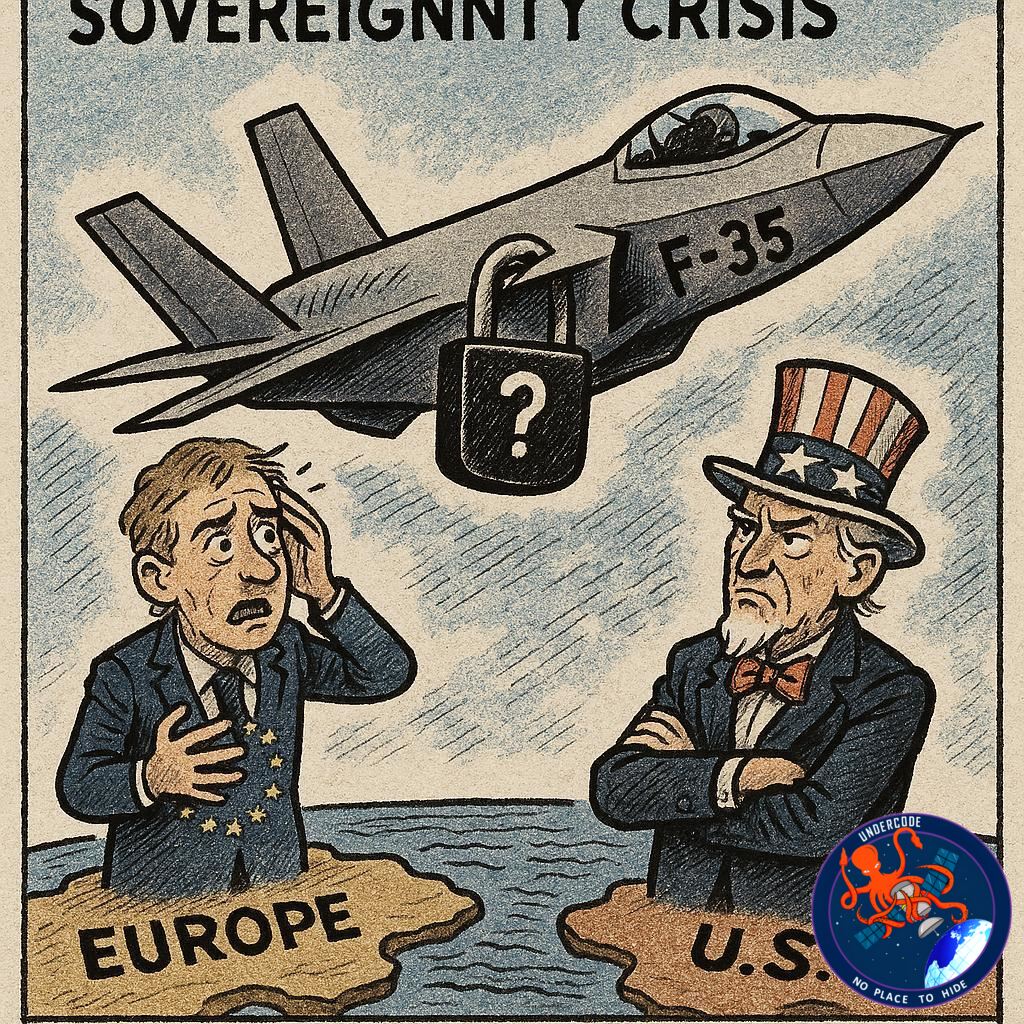
Introduction: When Fighter Jets Become Political Leverage
The transatlantic alliance is facing one of its most delicate stress tests in decades. What was once considered an unshakable military partnership between the United States and Europe is now clouded by mistrust, political brinkmanship, and a growing debate over technological sovereignty. At the center of this storm stands the F-35 stealth fighter jet, a symbol of Western air dominance and one of the most advanced combat aircraft ever built. But today, it is no longer just a military platform. It has become a geopolitical pressure point.
As tensions flare over Greenland, trade disputes, and tariffs, European leaders are beginning to ask a difficult question. How independent can Europe truly be if its most advanced weapons systems depend on American software updates and supply chains?
Dutch Defense Official Raises the “Jailbreak” Question
A striking moment in this debate came when Dutch State Secretary for Defence Gijs Tuinman publicly suggested that the F-35’s software could theoretically be “jailbroken,” comparing it to modifying the iOS system on an Apple iPhone. Speaking on the Dutch podcast “Boekestijn en de Wijk,” Tuinman acknowledged the sensitivity of his statement before making it anyway.
His remark was not a technical blueprint but a political signal. By invoking the idea of “jailbreaking,” he introduced a powerful metaphor into Europe’s defense discourse. It implied that the aircraft’s operational autonomy might not be entirely locked under U.S. control, at least not in absolute terms. Yet he carefully stopped short of claiming Europe could freely modify the system without American approval. Instead, he shifted the focus toward trust, suggesting that time would reveal Washington’s true intentions.
Structural Dependence on U.S. Software Infrastructure
The F-35’s architecture is not just about hardware. It is a flying data network. The aircraft relies on continuous software updates, mission data files tailored to operational theaters, and a globally integrated maintenance ecosystem coordinated largely by the United States. Without these updates, the jet does not suddenly stop flying, but its combat effectiveness could gradually degrade.
Reports indicate that the aircraft’s source code exceeds eight million lines, secured by multiple layers of protection. The idea of a simple “kill switch” that allows Washington to deactivate allied jets at will has been widely dismissed by defense analysts as fictional. However, that does not erase the reality that performance optimization, threat libraries, and system enhancements are centrally managed.
This is where Europe’s anxiety begins. The vulnerability is not cinematic. It is structural.
Technical Barriers and the Myth of Instant Deactivation
Experts consistently argue that hacking or modifying the F-35’s core software without authorization would be extraordinarily complex. The codebase is vast. The cybersecurity protections are sophisticated. Attempting to bypass them would require not only advanced technical capabilities but also enormous political will and coordination among European operators.
The comparison to jailbreaking a smartphone simplifies a far more intricate reality. An iPhone modification affects personal functionality. Altering a fifth-generation fighter jet’s mission systems involves classified data, encryption keys, and multinational industrial agreements. The barriers are high for a reason.
Still, even if direct modification is unlikely, the broader concern persists. The aircraft’s reliance on U.S.-managed updates means that operational excellence depends on continued political alignment.
Denmark’s Regret and the Greenland Flashpoint
The debate intensified when Rasmus Jarlov, chairman of Denmark’s parliamentary defense committee, publicly expressed regret over Denmark’s decision to purchase the F-35. His comments, posted on X in March 2025, were unusually blunt. He questioned whether a “kill switch” existed and argued that even if one did not, the United States could effectively ground the aircraft by halting spare parts supplies.
Jarlov went further, linking his concerns to broader geopolitical friction. He referenced tensions involving Greenland and suggested a scenario in which the United States could exert pressure by threatening to suspend military support. His remarks reflected not just technical anxiety but political distrust.
Denmark, like several European nations, is investing heavily in air defense, artillery, and modernization programs. For Jarlov, the risk was not theoretical. It was strategic. He openly encouraged allies to reconsider reliance on American-made weapons.
The F-35 as a Symbol of Alliance Fragility
The F-35 program has long been described as a cornerstone of NATO interoperability. Nations including the Netherlands, Denmark, Italy, Norway, and the United Kingdom operate or plan to operate the jet. Shared platforms were supposed to deepen strategic integration. Instead, they are now exposing underlying political fractures.
When trust erodes, even the most advanced military system becomes a potential liability. The aircraft was designed to fuse sensors, share data across allied networks, and provide unmatched situational awareness. Ironically, its strength as a connected system is also what fuels sovereignty concerns.
Dependence, in defense terms, can feel like vulnerability.
What Undercode Say:
The real issue here is not whether Europe can literally jailbreak an F-35. That framing captures headlines but misses the deeper strategic transformation underway. The core debate is about digital sovereignty in modern warfare.
In the 20th century, military autonomy was defined by control over territory, troops, and hardware. In the 21st century, it is increasingly defined by control over software, data flows, and update pipelines. A fighter jet is no longer just metal, engines, and missiles. It is a constantly evolving software platform.
Europe’s discomfort reveals a structural imbalance within the alliance. The United States designs the architecture, manages the codebase, and controls the ecosystem that keeps the aircraft optimized. Even without malicious intent, this centralization of authority creates asymmetry. Allies depend not only on shared values but also on uninterrupted technical cooperation.
The Danish reaction illustrates how political disputes can quickly spill into defense calculations. Trade disputes, tariff threats, and rhetoric around Greenland might appear separate from fighter jet operations. Yet when trust erodes at the diplomatic level, technical dependencies suddenly look risky.
There is also an economic dimension. European nations have invested billions of USD into acquiring and maintaining F-35 fleets. These investments were justified not only by capability but by alliance cohesion. If political volatility introduces uncertainty, future procurement decisions could shift toward European-made platforms such as next-generation fighter programs being developed under EU frameworks.
The notion of avoiding American weapons altogether is dramatic, but it reflects a growing appetite for strategic autonomy within the European Union. Initiatives aimed at strengthening domestic defense industries are gaining momentum. The F-35 debate may accelerate that trend.
However, abandoning U.S. systems is not simple. Interoperability, shared intelligence networks, and NATO command structures are deeply intertwined with American infrastructure. Replacing that ecosystem would require enormous funding, time, and coordination.
It is also worth noting that no formal decision by Washington to interrupt updates or supply chains has been made. The fear remains hypothetical. Yet in geopolitics, perception often drives policy as strongly as reality. If European policymakers believe dependence could become leverage, they will seek to reduce that exposure.
Ultimately, this controversy exposes a paradox. The F-35 was designed to bind allies closer together through technological integration. Instead, it has highlighted the political fragility that underpins that integration.
Sovereignty in the digital age is no longer just about flags and borders. It is about who controls the code.
Fact Checker Results
✅ There is no confirmed evidence of a built-in “kill switch” that allows the U.S. to instantly deactivate allied F-35 jets.
✅ The F-35 relies heavily on U.S.-managed software updates, mission data files, and supply chains.
❌ No official U.S. policy has been announced to suspend updates or parts deliveries to European operators.
Prediction
⚠️ Europe will intensify investment in sovereign defense software ecosystems to reduce dependency on external update pipelines.
✈️ The F-35 will remain operational across Europe, but future procurement decisions may increasingly favor joint European fighter programs.
🌍 Transatlantic defense ties will persist, yet they will evolve toward a more cautious and politically hedged partnership.
▶️ Related Video (84% Match):
🕵️📝✔️Let’s dive deep and fact‑check.
References:
Reported By: timesofindia.indiatimes.com
Extra Source Hub (Possible Sources for article):
https://www.github.com
Wikipedia
OpenAi & Undercode AI
Image Source:
Unsplash
Undercode AI DI v2
Bing
🔐JOIN OUR CYBER WORLD [ CVE News • HackMonitor • UndercodeNews ]
📢 Follow UndercodeNews & Stay Tuned:
𝕏 formerly Twitter 🐦 | @ Threads | 🔗 Linkedin | 🦋BlueSky | 🐘Mastodon


