
Listen to this Post
A New Front in the Big Tech Rivalry
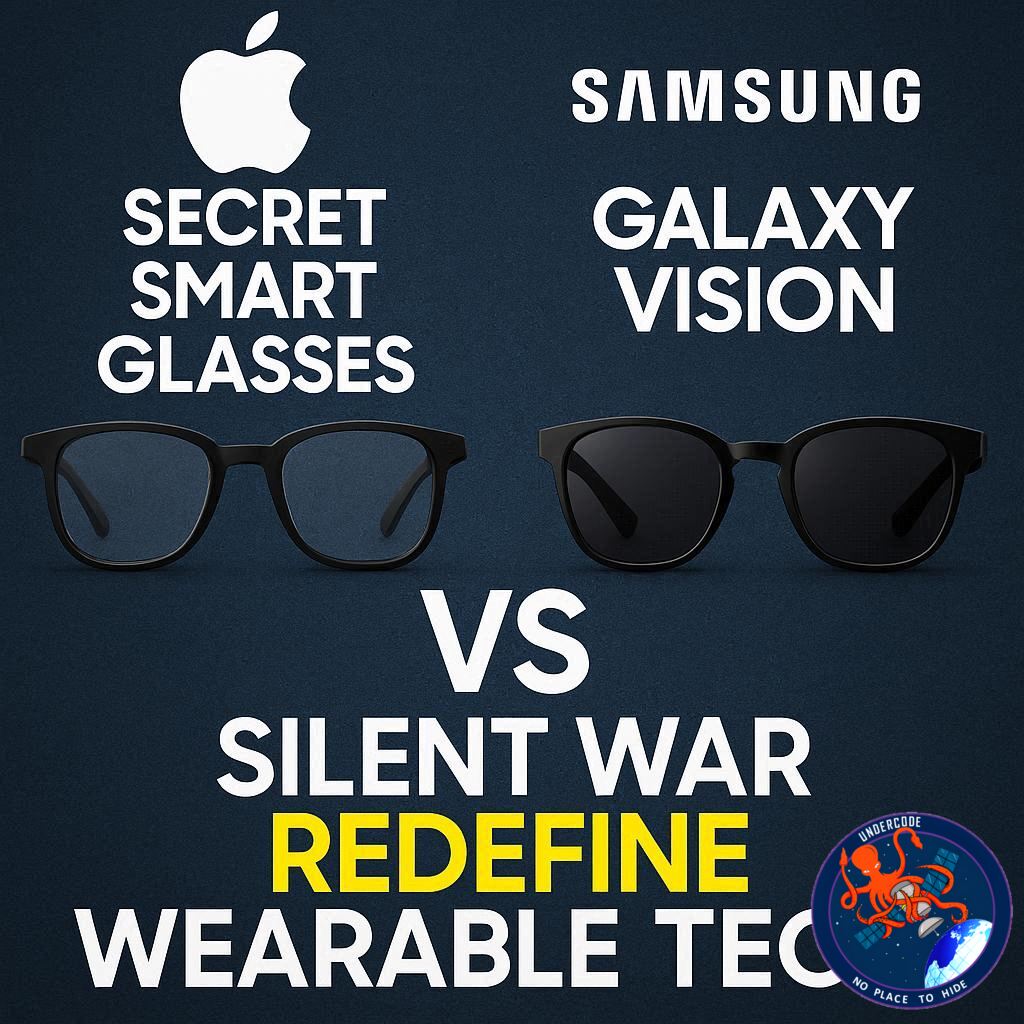
The race to dominate the next generation of wearable technology is quietly heating up. While smartphones and smartwatches have long been battlegrounds, smart glasses are emerging as the next high-stakes frontier. Both Apple and Samsung are preparing their first serious moves into AI-powered eyewear, and early reports suggest the competition may be more uneven than it initially appears. With Apple reportedly accelerating development and Samsung refining its Galaxy Glasses strategy, the coming years could reshape how consumers interact with artificial intelligence in everyday life.
the Original Report
Recent industry reports indicate that Apple is moving aggressively toward launching its first-generation smart glasses, internally codenamed N50. According to information published by Bloomberg, Apple has distributed additional prototypes to select employees, signaling a late-stage development push. The company aims to finalize the product this year, with a commercial launch expected in 2027.
Apple’s smart glasses are rumored to feature speakers, microphones, and—most notably—two high-quality cameras. One camera would handle image and video capture, while the second would be dedicated to AI-related processing. Unlike augmented reality headsets, these glasses are not expected to include an onboard display, keeping them lightweight and more socially acceptable for everyday use.
Samsung, meanwhile, is preparing its first Galaxy Glasses, expected to debut earlier, potentially later this year. These glasses are also rumored to include speakers and microphones, but current prototypes reportedly rely on a single camera to manage both visual capture and AI functions. If this configuration remains unchanged, Apple could enter the market with a clear hardware advantage.
Build quality is another rumored differentiator. Apple’s smart glasses are said to focus on premium materials and finish, an area where the company traditionally excels. Samsung, however, is not standing still. Reports suggest the South Korean tech giant is already developing second-generation Galaxy Glasses, potentially featuring a monocular color display, with a possible launch window in 2027.
On the software side, both companies may lean on Google’s AI ecosystem. Apple’s glasses could run a lightweight version of visionOS, while Samsung’s Galaxy Glasses are expected to operate on Android XR, a platform co-developed with Google and Qualcomm. Interestingly, both ecosystems may rely on Google’s Gemini AI models for advanced processing, underscoring how central AI partnerships have become—even among fierce competitors.
What Undercode Say:
The smart glasses market is shaping up to be less about who launches first and more about who launches smarter. Apple’s rumored dual-camera setup is not just a hardware flex; it signals a deeper commitment to on-device AI specialization. By separating visual capture from AI processing, Apple could achieve better performance, lower latency, and more efficient power management—critical factors for a wearable device that must last all day without feeling intrusive.
Samsung’s current single-camera approach, while more conservative, may reflect a strategy focused on rapid iteration rather than perfection at launch. Historically, Samsung has often released ambitious first-generation hardware, then refined it aggressively in subsequent versions. The rumored second-generation Galaxy Glasses with a monocular color display suggest Samsung is already thinking beyond basic AI assistance toward lightweight augmented reality experiences.
Another overlooked factor is ecosystem leverage. Apple’s tight integration between hardware, software, and services could allow its smart glasses to seamlessly interact with iPhones, Apple Watches, and future Vision products. Even without a display, features like contextual audio cues, AI-powered image recognition, and hands-free content capture could feel more polished within Apple’s closed ecosystem.
Samsung, on the other hand, benefits from flexibility. By building Galaxy Glasses on Android XR and collaborating closely with Google and Qualcomm, Samsung can iterate faster and potentially offer broader compatibility across Android devices. This openness could attract developers and partners who are wary of Apple’s restrictive platforms.
The shared reliance on Google’s Gemini AI is particularly telling. It suggests that even industry giants recognize the complexity and cost of developing state-of-the-art AI models independently for wearables. This convergence could lead to a situation where hardware design and user experience—not raw AI capability—become the true differentiators.
Timing will also matter. If Samsung launches first but with limited functionality, it risks being overshadowed by Apple’s later, more refined debut. Conversely, if Apple delays too long, Samsung could establish early mindshare and real-world usage data that informs its later designs.
Ultimately, smart glasses are unlikely to be an overnight success. Adoption will depend on comfort, privacy perceptions, battery life, and whether users find genuine daily value. In that sense, this rivalry mirrors the early days of smartwatches—slow starts, followed by rapid maturation once the right balance is found.
🔍 Fact Checker Results
✅ Apple is reportedly developing smart glasses codenamed N50 with a target launch around 2027.
✅ Samsung is confirmed to be working on Galaxy Glasses, with AI features and potential future display upgrades.
❌ There is no official confirmation yet that final consumer versions will include the exact camera configurations described.
📊 Prediction
Apple’s smart glasses will likely debut as a premium, tightly integrated accessory rather than a mass-market hit, while Samsung will push faster iterations to test consumer appetite. By 2027, smart glasses will still be niche—but the foundation laid by these first launches will set the stage for a broader AI wearable boom in the following decade.
🕵️📝✔️Let’s dive deep and fact‑check.
References:
Reported By: www.sammobile.com
Extra Source Hub (Possible Sources for article):
https://www.quora.com
Wikipedia
OpenAi & Undercode AI
Image Source:
Unsplash
Undercode AI DI v2
Bing
🔐JOIN OUR CYBER WORLD [ CVE News • HackMonitor • UndercodeNews ]
📢 Follow UndercodeNews & Stay Tuned:
𝕏 formerly Twitter 🐦 | @ Threads | 🔗 Linkedin | 🦋BlueSky | 🐘Mastodon


