
Listen to this Post
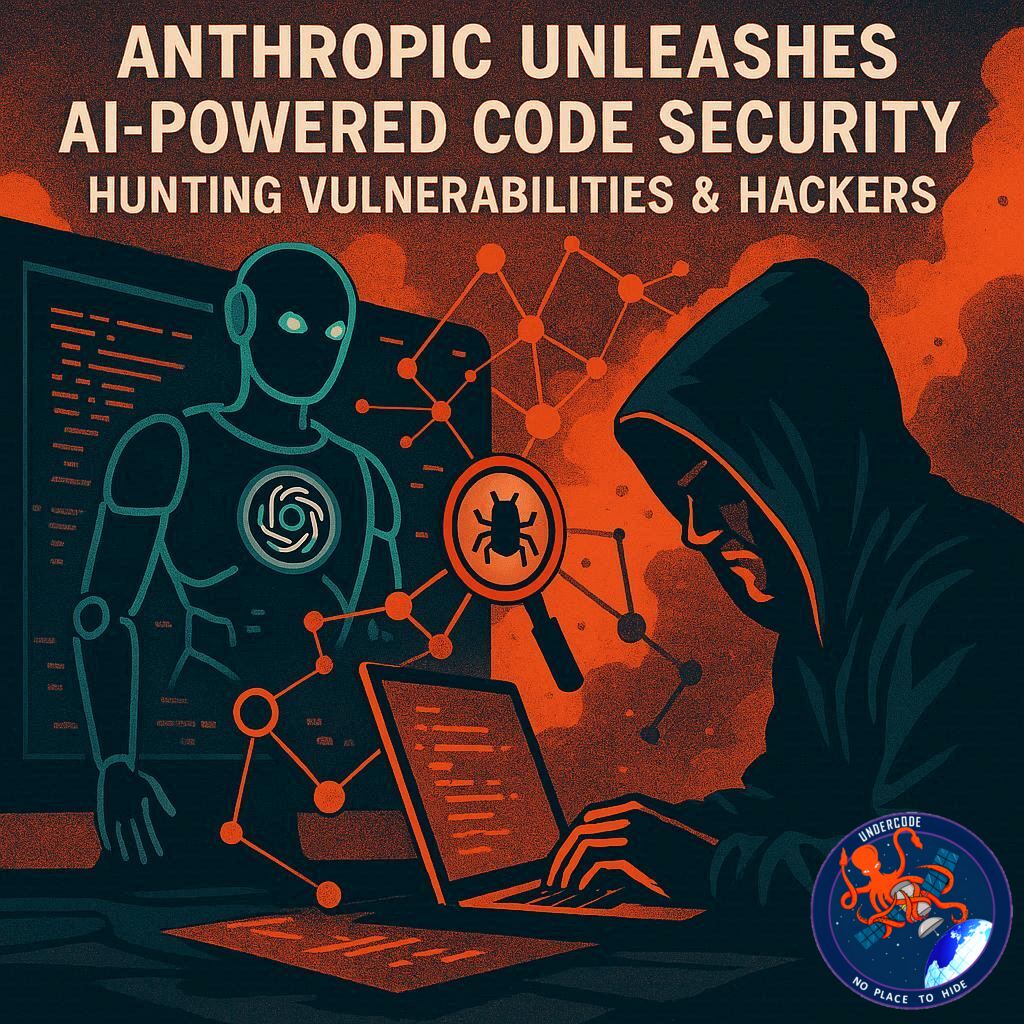
Introduction: AI Enters the Code Defense Battlefield
As artificial intelligence rapidly reshapes software development, it is also redefining how security flaws are discovered and exploited. Attackers are increasingly using automated tools to scan applications at scale, uncovering weaknesses faster than traditional defenses can respond. In this shifting landscape, Anthropic has introduced a new capability designed to tilt the balance back in favor of defenders. Its latest move brings AI directly into the secure development lifecycle, aiming to identify and fix vulnerabilities before they can be weaponized.
the Original What Claude Code Security Does
Anthropic has begun rolling out a new security feature called Claude Code Security, built into its Claude Code environment. The feature is currently available as a limited research preview for Enterprise and Team customers, signaling that it is still being refined but already usable in real-world development workflows. The core idea is straightforward but ambitious: use advanced AI reasoning to scan entire software codebases, identify potential security vulnerabilities, and suggest targeted patches that developers can review and approve.
According to Anthropic, Claude Code Security goes beyond traditional static analysis tools that rely heavily on known patterns and predefined rules. Instead, it attempts to reason about code in a way that resembles how a human security researcher would approach an application. This includes understanding how different components interact, tracing data flows across the system, and identifying subtle weaknesses that may not match any known signature. The company argues that this approach allows it to catch vulnerabilities that conventional scanners often miss.
The feature is also designed with the current threat landscape in mind. As AI agents become more capable of automated vulnerability discovery, Anthropic warns that attackers could use similar tools to rapidly identify exploitable flaws. Claude Code Security is positioned as a defensive countermeasure to this trend, giving development teams access to comparable AI-powered analysis before adversaries can strike. In effect, it aims to neutralize AI-enabled attacks by raising the baseline level of code security.
Once vulnerabilities are identified, Claude Code Security applies what Anthropic describes as a multi-stage verification process. Each finding is re-analyzed to reduce false positives, a common pain point with automated security tools. The system then assigns a severity rating to each confirmed issue, helping teams prioritize the most critical risks rather than being overwhelmed by long lists of low-impact warnings.
All results are presented through a dedicated dashboard, where analysts and developers can review the flagged code and the AI-generated patch suggestions. Importantly, Anthropic emphasizes a strict human-in-the-loop model. No changes are applied automatically. Instead, developers retain full control, reviewing each recommendation and deciding whether to implement it. To support this decision-making, the system also provides a confidence rating for every finding, acknowledging that source code alone does not always tell the full story.
What Undercode Say:
AI vs. AI: Security Enters an Arms Race
Claude Code Security reflects a broader reality in modern cybersecurity: AI is no longer optional. Attackers are already automating reconnaissance and vulnerability discovery, reducing the time between a code commit and a real-world exploit. Anthropic’s approach recognizes that defensive tools must evolve at the same pace. By embedding AI directly into the development workflow, security becomes a continuous process rather than a last-minute checklist before release.
Beyond Static Analysis: Why Reasoning Matters
Traditional static analysis tools are excellent at catching known classes of bugs, but they struggle with context. Business logic flaws, complex data flow issues, and multi-component interactions often fall through the cracks. Anthropic’s claim that Claude can “reason” about code like a human researcher is significant if it holds up in practice. Understanding intent, not just syntax, is where many high-impact vulnerabilities live.
Human-in-the-Loop as a Trust Anchor
One of the most important design choices here is the refusal to auto-apply fixes. Automated patching may sound efficient, but it introduces serious risks, especially in large or safety-critical systems. By keeping developers firmly in control, Anthropic avoids the trap of turning AI into an unaccountable decision-maker. The confidence ratings further acknowledge uncertainty, which is refreshing in a field where AI outputs are often treated as definitive.
False Positives: The Silent Productivity Killer
Security teams routinely complain that automated tools generate more noise than insight. Anthropic’s multi-stage verification process directly targets this problem. If Claude Code Security can meaningfully reduce false positives while still catching subtle flaws, it could save teams significant time and reduce alert fatigue. That balance will likely determine whether the tool becomes trusted or ignored.
Strategic Implications for Enterprise Development
For large organizations, integrating security earlier in the development cycle is both a technical and cultural challenge. Tools like Claude Code Security push security checks closer to the code author, not just the security team. This shift could help normalize secure coding practices, but it also raises questions about training, accountability, and how much developers should rely on AI guidance.
The Competitive Landscape
Anthropic is not alone in exploring AI-driven code security, but its emphasis on reasoning and human oversight sets a clear philosophical direction. If competitors focus more on speed and automation, Anthropic is betting that trust and depth of analysis will matter more in the long run. Enterprises choosing between tools may increasingly weigh explainability and control over raw detection numbers.
Fact Checker Results
The feature is confirmed to be in limited research preview for Enterprise and Team users, not a general release. Anthropic’s statements consistently emphasize human approval, aligning with the described human-in-the-loop model. Claims about superior reasoning beyond static analysis remain credible but will require independent validation over time.
Prediction
AI-assisted code security will quickly become a baseline expectation rather than a premium feature. Tools like Claude Code Security are likely to evolve into always-on development companions, with future versions expanding into real-time monitoring and deeper integration with CI/CD pipelines. As attackers continue to automate, defenders who fail to adopt similar AI-driven defenses will face an increasing security gap.
🕵️📝✔️Let’s dive deep and fact‑check.
References:
Reported By: thehackernews.com
Extra Source Hub (Possible Sources for article):
https://www.discord.com
Wikipedia
OpenAi & Undercode AI
Image Source:
Unsplash
Undercode AI DI v2
Bing
🔐JOIN OUR CYBER WORLD [ CVE News • HackMonitor • UndercodeNews ]
📢 Follow UndercodeNews & Stay Tuned:
𝕏 formerly Twitter 🐦 | @ Threads | 🔗 Linkedin | 🦋BlueSky | 🐘Mastodon


