
Listen to this Post
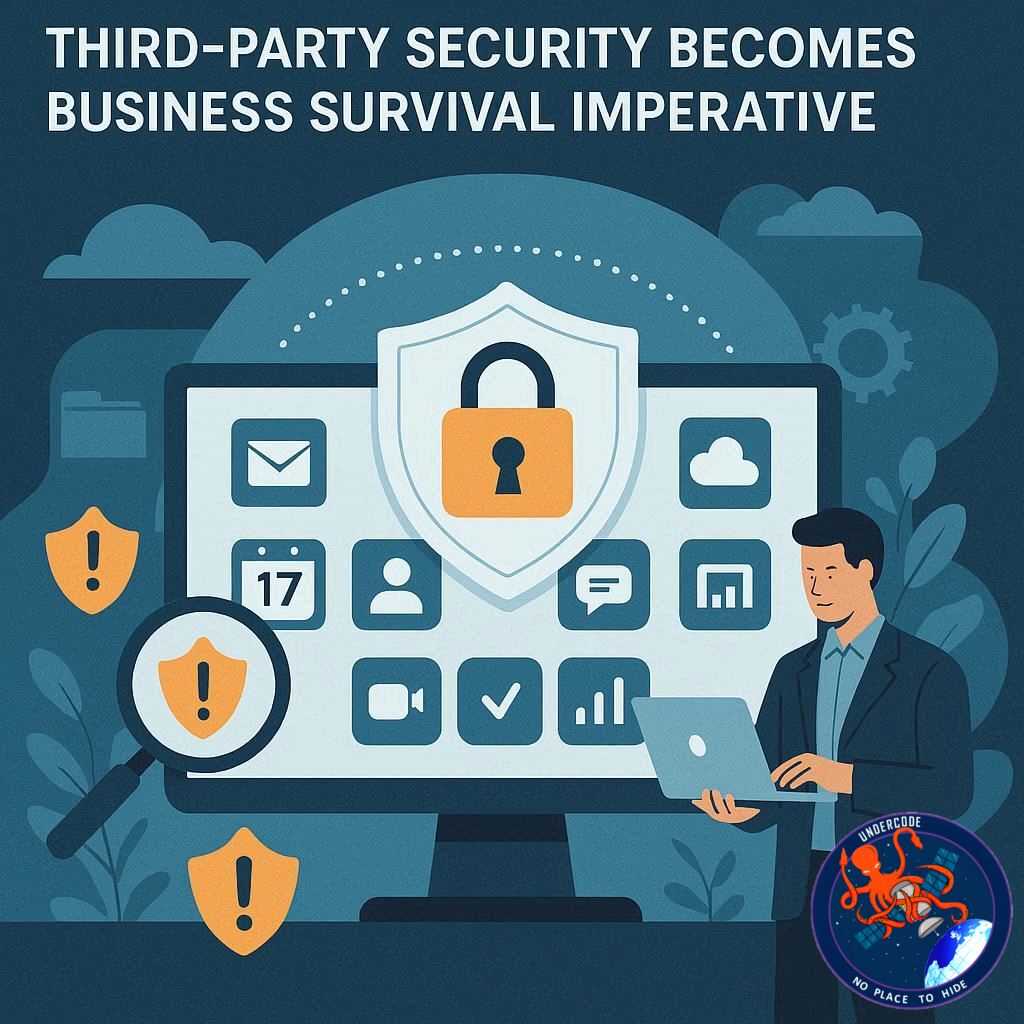
A Digital Workplace Built on Invisible Risk
The modern workplace runs on applications. From cloud collaboration suites to specialized SaaS tools and endpoint software, businesses now depend on a complex web of digital services to function. This transformation has unlocked flexibility, speed, and global collaboration. Yet beneath that efficiency lies a growing attack surface that many organizations still struggle to fully understand. Application sprawl and third-party software dependencies are no longer minor IT concerns. They are central risk factors in today’s cyber threat landscape. As nearly one-third of recent data breaches have been linked to third-party suppliers, the message is unmistakable. Visibility, control, and automation are no longer optional safeguards. They are the foundation of operational resilience.
The Expanding Software Footprint Across Modern Endpoints
Digital transformation has dramatically increased the number of applications deployed across enterprise environments. Employees now operate across Windows, macOS, Linux, and cloud-based endpoints, often from remote or hybrid settings. This distributed infrastructure creates both opportunity and exposure. While productivity tools accelerate workflows, each installed application introduces potential vulnerabilities.
Many IT teams struggle to maintain a clear inventory of what is installed, where it resides, and who is using it. In decentralized environments, applications can be installed without oversight, sometimes bypassing traditional approval processes. This phenomenon, commonly referred to as shadow IT, quietly expands the organization’s risk perimeter. Untracked applications may lack updates, contain known vulnerabilities, or violate compliance requirements, creating hidden entry points for attackers.
Visibility as the First Line of Defense
Effective application security begins with visibility. Without comprehensive insight into the software ecosystem, security teams operate in the dark. A centralized dashboard capable of monitoring all installed applications across endpoints and cloud services becomes essential infrastructure rather than a convenience feature.
Real-time awareness enables IT leaders to identify outdated software, flag risky applications, and enforce compliance standards. When organizations maintain a live inventory of applications across devices and operating systems, they can respond proactively instead of reactively. Visibility reduces uncertainty, and in cybersecurity, uncertainty is often the attacker’s greatest advantage.
The Growing Complexity of SaaS Management
The explosion of SaaS adoption has introduced an additional layer of complexity. Cloud-based applications are easy to deploy, often requiring only a corporate email address. This simplicity accelerates productivity but complicates governance. Many administrators acknowledge they cannot fully identify every SaaS application in use across their organizations.
Unlike traditional endpoint software, SaaS tools may be provisioned independently by departments or individuals. Without a reliable inventory system, organizations risk losing oversight of sensitive data flows, permission structures, and vendor security practices. Manually adding SaaS applications to centralized tracking systems ensures no tool remains invisible. Complete SaaS visibility strengthens governance, risk management, and regulatory compliance.
Policy Enforcement as a Risk Control Mechanism
Visibility alone does not prevent breaches. True security requires enforcement. Once IT teams understand their software landscape, they must be empowered to define and apply policies that determine which applications are approved, restricted, or removed.
Policy enforcement across endpoints and cloud environments allows organizations to block unauthorized installations and ensure only vetted software is operational. This structured control reduces the likelihood of insecure or malicious applications gaining a foothold. It also simplifies the employee experience by standardizing approved tools, reducing confusion, and eliminating unnecessary redundancy.
The Persistent Threat of Unpatched Software
Outdated third-party software remains one of the most exploited attack vectors in modern cyber incidents. Software vendors regularly release patches to correct security flaws, but applying these updates across distributed workforces presents logistical challenges. Manual patch management is slow, inconsistent, and prone to oversight.
Cybercriminals actively monitor vulnerability disclosures, often targeting organizations that delay updates. The window between vulnerability discovery and patch deployment can be the difference between safety and compromise. Automated patch management systems dramatically reduce this window. From a centralized console, IT teams can schedule updates, deploy patches, and verify compliance across endpoints without disrupting productivity. Automation transforms patching from a reactive chore into a strategic defense mechanism.
Third-Party and SaaS Security as Shared Accountability
Third-party security is not solely the responsibility of vendors, nor is it entirely within the organization’s control. It is a shared responsibility model. Vendors must deliver timely updates, transparent security practices, and vulnerability disclosures. Organizations must conduct thorough evaluations before adopting new tools and maintain continuous oversight thereafter.
Regular risk assessments, ongoing vulnerability monitoring, and structured approval processes strengthen this shared defense model. A fragmented approach leaves gaps. An integrated framework that combines visibility, SaaS inventory management, enforcement policies, and automated patching creates a cohesive security posture that supports both agility and protection.
Security as a Business Imperative, Not Just an IT Function
Application and third-party security are no longer confined to the IT department. They directly impact operational continuity, brand trust, regulatory standing, and financial stability. A single breach involving a third-party vendor can disrupt supply chains, expose customer data, and erode stakeholder confidence.
Organizations that invest in proactive security measures do more than reduce risk. They strengthen business resilience. In a world where employees work from anywhere and applications run everywhere, maintaining control over the software ecosystem is essential to sustaining growth and innovation.
What Undercode Say:
The Illusion of Control in a SaaS-Driven Economy
Digital transformation has created an illusion of control. Companies believe they are modern, agile, and efficient because they have adopted cloud platforms and third-party integrations. Yet in many cases, this rapid expansion has outpaced governance structures. The real vulnerability is not simply outdated software. It is organizational overconfidence.
When nearly 30 percent of breaches are tied to third parties, the issue is structural. Businesses increasingly outsource not only infrastructure but also trust. Each SaaS integration represents a dependency chain that extends beyond direct oversight. If one vendor fails, the ripple effect can reach hundreds or thousands of customers instantly.
Shadow IT as a Cultural Symptom
Shadow IT is often framed as a technical problem, but it is fundamentally cultural. Employees adopt unauthorized tools because they perceive friction in official processes. If security controls are seen as obstacles rather than enablers, workarounds will emerge. Effective governance must balance flexibility with control.
Organizations that succeed in managing shadow IT typically create transparent approval pipelines and rapid software evaluation frameworks. When employees trust that their productivity needs will be addressed quickly, unauthorized adoption decreases naturally.
Automation as a Strategic Multiplier
Automation is frequently discussed as an efficiency enhancer. In cybersecurity, it is a survival mechanism. Human-driven patch management cannot scale in environments with hundreds of applications and thousands of endpoints. Automation reduces exposure time and eliminates inconsistent update cycles.
However, automation must be intelligently configured. Blind automation without monitoring can introduce compatibility issues or operational disruptions. The optimal strategy combines automated deployment with continuous verification and reporting.
Vendor Risk Is Systemic Risk
Third-party risk management must extend beyond initial due diligence. Security questionnaires and compliance certifications provide snapshots, not guarantees. Continuous monitoring, contractual security obligations, and clear incident response coordination are necessary to reduce systemic risk.
Organizations should categorize vendors by criticality and data sensitivity. Not all integrations carry equal risk. Prioritization ensures that security resources focus on high-impact dependencies rather than spreading efforts too thin.
Security Investment as Competitive Advantage
There is a misconception that security spending slows innovation. In reality, strong application governance accelerates sustainable growth. Investors and enterprise clients increasingly evaluate vendors based on cybersecurity maturity. Transparent patching policies, comprehensive SaaS inventories, and automated enforcement mechanisms signal operational discipline.
Businesses that treat application security as strategic infrastructure rather than reactive defense position themselves as trustworthy partners. In competitive markets, trust converts directly into long-term revenue stability.
Fact Checker Results
✅ Third-party suppliers account for a significant percentage of modern data breaches, highlighting systemic dependency risks.
✅ Shadow IT and unpatched software are widely recognized contributors to security incidents.
✅ Automated patch management reduces vulnerability exposure windows compared to manual processes.
Prediction
🔮 Organizations will increasingly adopt unified security platforms that merge SaaS visibility, endpoint control, and automated patching into a single operational framework.
🔐 Regulatory bodies are likely to tighten oversight around third-party risk management, pushing companies toward stricter vendor accountability.
📈 Businesses that prioritize proactive application governance will gain measurable competitive advantages in enterprise markets.
▶️ Related Video (78% Match):
🕵️📝✔️Let’s dive deep and fact‑check.
References:
Reported By: www.darkreading.com
Extra Source Hub (Possible Sources for article):
https://www.quora.com
Wikipedia
OpenAi & Undercode AI
Image Source:
Unsplash
Undercode AI DI v2
Bing
🔐JOIN OUR CYBER WORLD [ CVE News • HackMonitor • UndercodeNews ]
📢 Follow UndercodeNews & Stay Tuned:
𝕏 formerly Twitter 🐦 | @ Threads | 🔗 Linkedin | 🦋BlueSky | 🐘Mastodon


