
Listen to this Post
Introduction: The Silent Cyber Pathway into Critical Infrastructure
A brief post shared by cybersecurity watchers has surfaced a deeply unsettling reality: most attacks that end up disrupting operational technology (OT) environments don’t begin there at all. Instead, they quietly originate inside traditional IT networks, spreading laterally for months before anyone notices. This insight, highlighted by the cybersecurity-focused account Cybersecurity News Everyday, underscores a widening and dangerous gap between IT and OT security—one that threat actors are exploiting with alarming efficiency, particularly across industrial and critical infrastructure sectors in the United States.
the Original
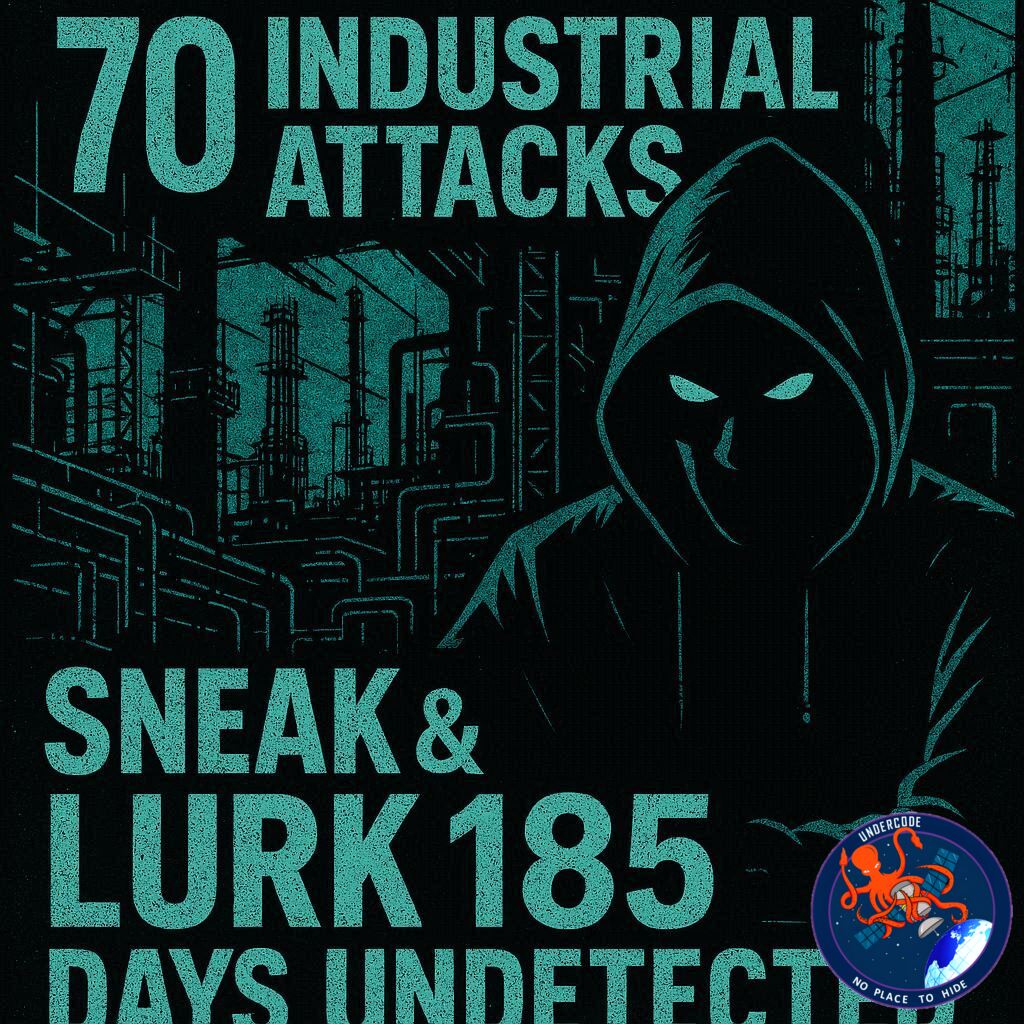
The core message is blunt and data-driven. Around 70% of cyberattacks that ultimately impact OT systems actually begin in IT environments. Once inside, attackers don’t rush. On average, they remain undetected for 185 days, carefully observing networks, escalating privileges, and mapping pathways toward industrial control systems.
The post emphasizes that IT–OT convergence, while beneficial for efficiency and data visibility, has dramatically expanded the attack surface. Legacy OT systems, often designed decades ago with little to no security in mind, are now indirectly exposed through modern IT connections.
The key warning is clear: securing the IT–OT edge is no longer optional. Early interception at this boundary is critical to preventing ransomware outbreaks, production shutdowns, and even safety incidents. The insight shared originates from hendryadrian.com, a site known for tracking threat intelligence and attack trends.
What Undercode Say:
The statistic itself is alarming, but the implication is far more dangerous than it first appears. A 185-day dwell time means attackers are not just breaching systems—they are studying organizations from the inside. By the time OT systems are affected, the attacker likely understands network topology, backup strategies, incident response playbooks, and even operational schedules.
This reinforces a hard truth many enterprises still resist: OT breaches are rarely “OT problems.” They are governance, architecture, and visibility failures rooted in IT. Flat networks, poor asset inventory, shared credentials, and outdated monitoring tools give adversaries exactly what they need.
Another overlooked factor is organizational culture. IT and OT teams often operate in silos, with different priorities and risk models. IT focuses on confidentiality and data loss, while OT prioritizes availability and safety. Attackers exploit this disconnect, moving quietly through IT where security tooling exists, then pivoting into OT where detection is weaker and response is slower.
The rise of ransomware groups targeting industrial firms proves this model works. Disruption, not data theft, is the real leverage. Stopping these attacks means rethinking security as a continuous pathway, not isolated zones. Zero Trust principles, deep network segmentation, continuous monitoring, and shared threat intelligence between IT and OT teams are no longer “best practices”—they are survival requirements.
🔍 Fact Checker Results
✅ Multiple industry reports confirm that most OT incidents originate from IT compromises.
✅ Average dwell times exceeding 150 days are consistent with global threat intelligence data.
❌ There is still no universal standard adopted across industries to secure the IT–OT boundary.
📊 Prediction
Over the next 12–24 months, regulators and insurers will begin treating IT–OT security failures as negligence rather than risk. Organizations that fail to reduce dwell time and secure convergence points will face higher premiums, stricter compliance demands, and increased operational downtime following inevitable breaches.
🕵️📝✔️Let’s dive deep and fact‑check.
References:
Reported By: x.com
Extra Source Hub (Possible Sources for article):
https://www.reddit.com/r/AskReddit
Wikipedia
OpenAi & Undercode AI
Image Source:
Unsplash
Undercode AI DI v2
Bing
🔐JOIN OUR CYBER WORLD [ CVE News • HackMonitor • UndercodeNews ]
📢 Follow UndercodeNews & Stay Tuned:
𝕏 formerly Twitter 🐦 | @ Threads | 🔗 Linkedin | 🦋BlueSky | 🐘Mastodon


