
Listen to this Post
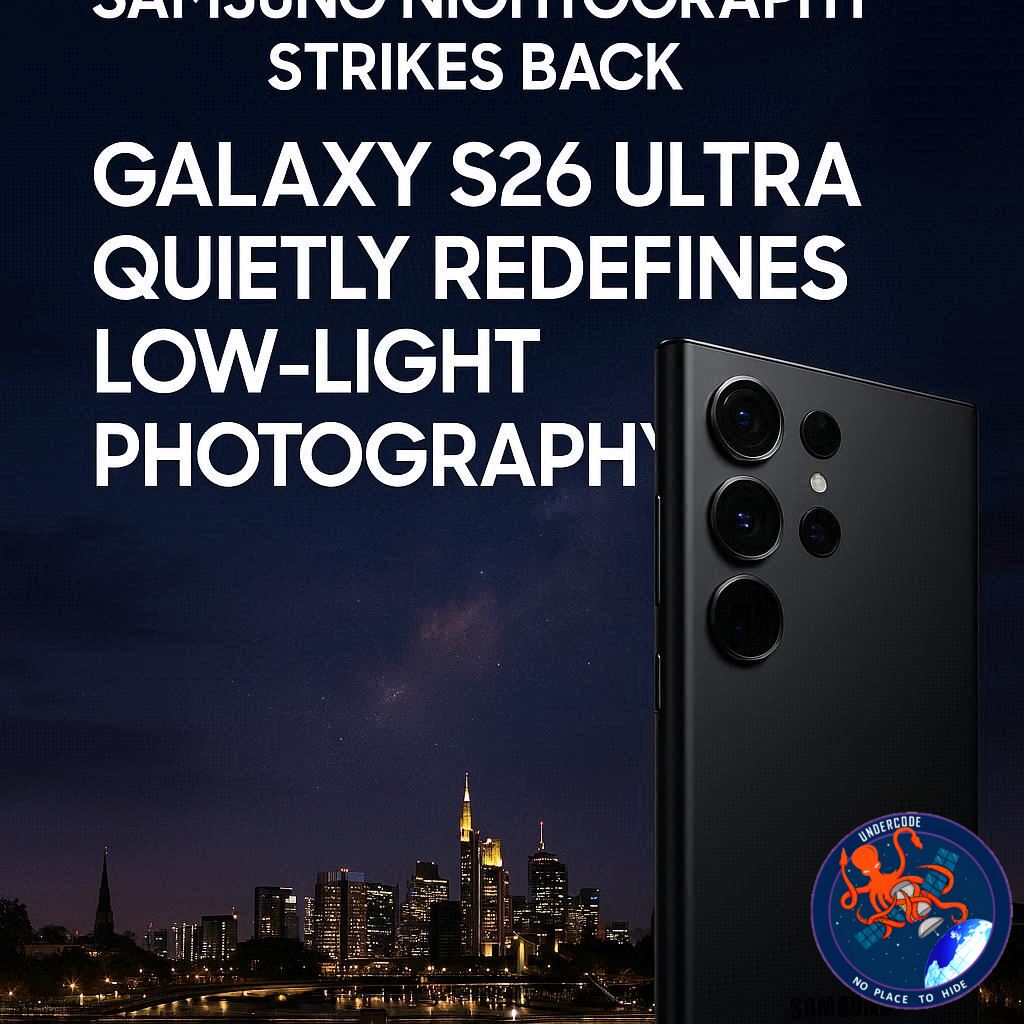
Introduction: A Familiar Camera, a Sharper Night Vision
Samsung’s latest flagship may look like a cautious upgrade on paper, but the Galaxy S26 Ultra tells a very different story once the sun goes down. Without dramatic camera hardware overhauls, Samsung has leaned into smarter optics, wider apertures, and far more aggressive AI processing to push its Nightography brand further than ever. The result is a phone that proves low-light photography is no longer just about megapixels, but about how much light — and intelligence — you can squeeze out of every frame.
Background: Samsung’s Long Game With Nightography
Nightography is a term introduced by Samsung back in 2022, aimed at branding its Galaxy devices as low-light champions. Since then, the company has refined the concept annually, alternating between hardware tweaks and software intelligence. With the Galaxy S26 Ultra, Samsung continues that evolution, focusing on light intake and computational photography rather than radical sensor changes.
Core Claim: Better Night Photos Without Major Hardware Changes
Despite the absence of revolutionary camera sensors, the Galaxy S26 Ultra captures noticeably brighter and cleaner photos and videos than its predecessor. Samsung achieves this through a calculated mix of wider apertures and a more capable image signal processor, proving that refinement can sometimes beat reinvention.
Main Sensor Upgrade: A Wider Aperture Makes the Difference
The 200MP primary camera now features an f/1.4 aperture, a meaningful jump from the f/1.7 aperture on the previous generation. This change allows the sensor to capture roughly 47% more light, directly improving brightness and reducing noise in dark environments. It’s a subtle spec bump with outsized real-world impact.
Telephoto Gains: Night Zoom Gets a Boost
Samsung didn’t stop at the main sensor. The 50MP telephoto camera now uses an f/2.9 aperture instead of f/3.4, increasing light intake by about 37%. This improvement helps preserve detail and clarity when shooting distant subjects at night, an area where smartphone cameras traditionally struggle.
AI at the Core: Smarter Image Processing
At the heart of the Galaxy S26 Ultra is a new AI-enhanced image signal processor integrated into the Snapdragon 8 Elite Gen 5 for Galaxy chipset. This processor analyzes scenes in layers, separating faces, backgrounds, and objects to fine-tune colors, textures, and contrast while aggressively suppressing noise.
Video Improvements: Cleaner Motion After Dark
Nightography isn’t limited to still images. The same combination of wider apertures and smarter processing delivers cleaner low-light video, with improved dynamic range and reduced grain. Nighttime footage appears more stable and detailed, even in poorly lit urban environments.
The Real-World Impact: Night Memories Done Right
When hardware light intake and AI processing work together, the result is night photography that feels more natural and less artificially bright. Photos retain mood without sacrificing clarity, making the Galaxy S26 Ultra particularly strong for cityscapes, concerts, and evening portraits.
Original Summary: What the Source Established
The original article explains that Samsung’s Nightography improvements in the Galaxy S26 Ultra come from a combination of wider camera apertures and enhanced AI processing rather than dramatic hardware changes. It highlights the f/1.4 main camera and f/2.9 telephoto lens as key upgrades, enabling significantly more light capture. The article also emphasizes the role of the AI-powered image signal processor in optimizing different elements within a scene. Together, these enhancements result in brighter, sharper, and cleaner low-light photos and videos compared to the previous generation.
What Undercode Say: Why This Upgrade Matters More Than It Looks
Samsung’s approach with the Galaxy S26 Ultra reflects a broader shift in smartphone photography. Instead of chasing headline-grabbing sensor sizes, the company is optimizing the physics of light capture and pairing it with increasingly sophisticated AI. Wider apertures are a photographer’s dream, and Samsung is one of the few brands willing to embrace them at scale.
This strategy also signals maturity. Smartphone cameras are nearing physical limits, and gains now come from efficiency rather than brute force. By letting in more light at the lens level and processing it intelligently, Samsung avoids over-sharpened, unnatural night photos that plague many competitors.
There’s also a quiet confidence here. Samsung doesn’t market Nightography as a gimmick anymore; it treats it as a foundational feature. That suggests the company sees low-light performance not as a niche benefit, but as a baseline expectation for premium phones.
From a competitive standpoint, these improvements put pressure on rivals relying heavily on post-processing alone. Light captured optically is always superior to light invented by software, and the Galaxy S26 Ultra strikes a rare balance between both worlds.
🔍 Fact Checker Results
Verified Camera Aperture Improvements ✅
Samsung officially increased the main and telephoto camera apertures, directly boosting light intake.
Confirmed AI Processing Enhancements ✅
The upgraded image signal processor does perform multi-layer scene analysis as described.
No Evidence of New Sensors ❌
There is no indication of entirely new camera sensors compared to the previous model.
📊 Prediction
Night Photography Becomes the New Battleground 🌙
Samsung’s focus on aperture and AI suggests future flagships will prioritize optical efficiency over megapixel counts. Expect competitors to follow, making low-light performance the defining metric of premium smartphones over the next few years.
🕵️📝✔️Let’s dive deep and fact‑check.
References:
Reported By: www.sammobile.com
Extra Source Hub (Possible Sources for article):
https://www.pinterest.com
Wikipedia
OpenAi & Undercode AI
Image Source:
Unsplash
Undercode AI DI v2
Bing
🔐JOIN OUR CYBER WORLD [ CVE News • HackMonitor • UndercodeNews ]
📢 Follow UndercodeNews & Stay Tuned:
𝕏 formerly Twitter 🐦 | @ Threads | 🔗 Linkedin | 🦋BlueSky | 🐘Mastodon


