
Listen to this Post
 A Major macOS Evolution Is Approaching, But One Signature iPhone Feature Remains Missing
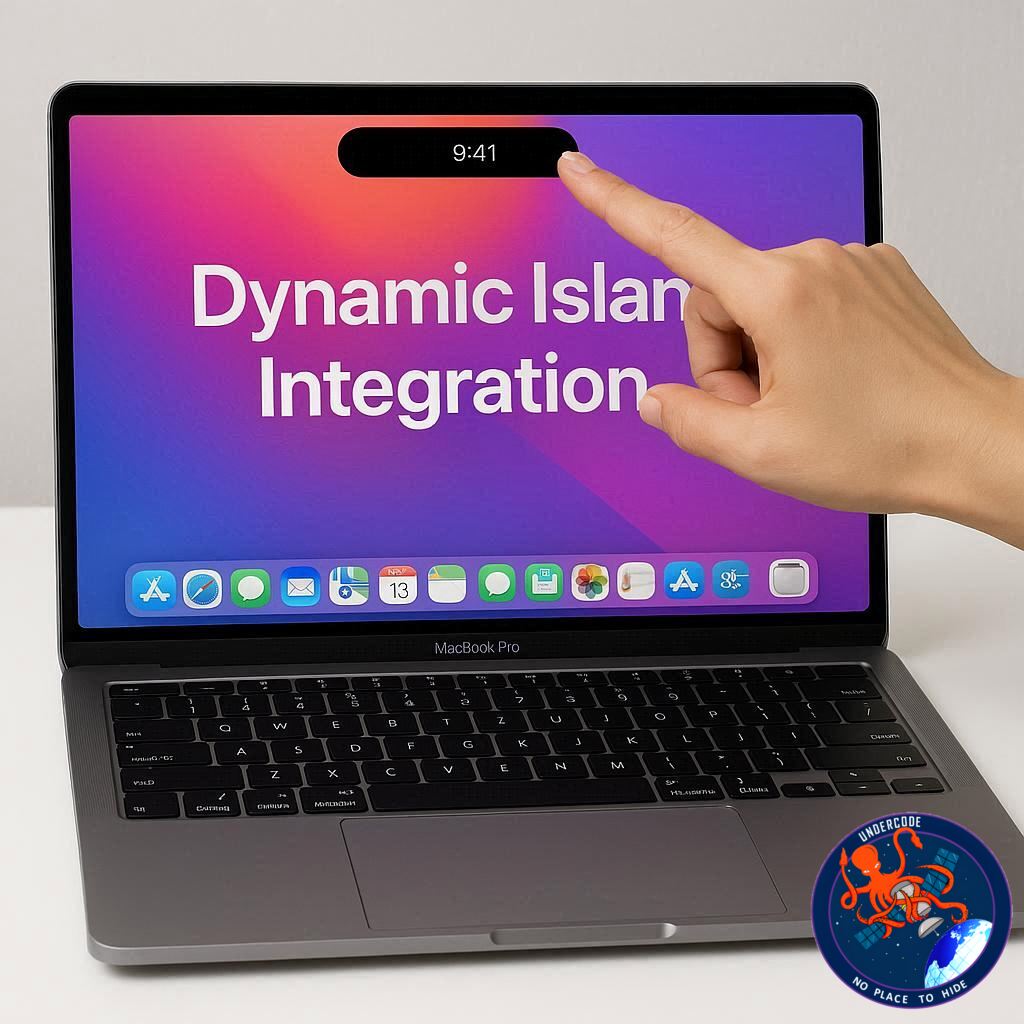
Apple’s long-rumored touchscreen MacBook Pro is no longer a distant fantasy whispered across forums and patent filings. According to fresh reporting from Mark Gurman of Bloomberg, the company is actively preparing a redesigned MacBook Pro that blends touchscreen functionality with iPhone-inspired software elements. Among the most striking additions is the possible arrival of the Dynamic Island, a feature that debuted on modern iPhones and reshaped how users interact with notifications and live activities. Yet despite this crossover between platforms, one flagship feature appears absent from the roadmap: Face ID. The Mac may gain touch and a new visual interface layer, but it may still rely on Touch ID for biometric security.
Dynamic Island Expansion Signals iOS Influence on macOS
The Dynamic Island first appeared on Apple’s premium iPhones and quickly became one of the company’s most recognizable interface innovations. Now, reports suggest that this floating notification hub could migrate to the MacBook Pro’s OLED display. Unlike the pill-shaped cutout found in current iPhones, the Mac version is expected to feature a smaller, hole-punch camera design. This subtle redesign could allow the Dynamic Island to feel less intrusive while still delivering contextual alerts, background activity indicators, and adaptive controls.
The shift to OLED is equally significant. OLED technology enables deeper contrast, richer colors, and thinner display panels. Combined with touch sensitivity, this marks one of the most dramatic hardware transformations in MacBook history. Apple appears to be designing a hybrid experience that does not abandon traditional input methods but expands them.
Adaptive Touch Interface Could Reshape macOS Interaction
Beyond simply adding touch capability, Apple is reportedly building an adaptive interface system that intelligently responds to how the user interacts with the device. When using a keyboard and trackpad, macOS would behave much like it does today. Switch to touch input, however, and the operating system would dynamically enlarge buttons and controls for easier tapping.
Menus could transform contextually, appearing around the user’s finger for immediate accessibility. Even familiar tools like the emoji selector would reportedly adopt touch-optimized layouts. Gesture support may expand as well, potentially incorporating iOS-style scrolling and pinch-to-zoom functionality directly into macOS.
This suggests that Apple is not merely adding touch as a novelty feature. Instead, it may be rethinking the interface architecture to accommodate two fundamentally different interaction styles.
Face ID Remains Absent Despite Longstanding Rumors
While the integration of Dynamic Island seems bold, the omission of Face ID stands out. On iPhones, the Dynamic Island works closely with facial recognition hardware. Yet Gurman’s report makes no reference to Face ID on the MacBook Pro.
Mac users may continue relying on Touch ID, which remains embedded in the keyboard. This aligns with earlier claims that Face ID on Macs is still years away from becoming commercially viable. Despite Apple filing multiple patents related to facial recognition in laptops, technical constraints such as display thickness and internal component placement may be slowing its implementation.
For now, Face ID appears to remain exclusive to iPhones and iPads.
Release Timeline Points to 2026 Launch Window
The touchscreen MacBook Pro with Dynamic Island integration is expected to arrive toward the end of 2026. Before that milestone, Apple is reportedly preparing a refreshed MacBook Pro powered by M5 Pro and M5 Max chips. That interim model will likely retain the traditional display design, without touch input or Dynamic Island enhancements.
This staggered rollout suggests Apple is taking a phased approach. First comes silicon refinement. Then comes interface reinvention.
What Undercode Say:
Apple’s potential move toward a touchscreen MacBook Pro signals more than incremental hardware evolution. It represents a philosophical shift. For over a decade, Apple publicly resisted touchscreen laptops, often arguing that vertical screens are ergonomically unsuited for touch input. The company positioned the iPad as the touch-centric alternative to the Mac. Now that line appears increasingly blurred.
The introduction of Dynamic Island on macOS would deepen ecosystem cohesion. Apple’s strength has always been vertical integration. When design language and interface elements align across devices, the ecosystem feels unified. Dynamic Island on a MacBook could extend real-time app awareness, music playback indicators, timer alerts, and background processes in a more immersive way.
However, the absence of Face ID raises strategic questions. If Apple is willing to reengineer the display stack for OLED and touch, why not integrate facial recognition at the same time? The likely answer lies in engineering trade-offs. Face ID hardware requires infrared sensors, dot projectors, and depth mapping components. Incorporating those into a thin laptop lid without increasing thickness or reducing battery space is complex.
Another factor is behavioral difference. MacBooks are often used at varied angles and distances, not always directly facing the user’s face. Face ID reliability might drop in such scenarios. Touch ID, by contrast, remains simple, fast, and reliable in desktop contexts.
The adaptive interface concept is arguably the most transformative element of this rumor. Instead of forcing macOS to become iPadOS, Apple appears to be designing a responsive UI layer that morphs depending on input type. That dual-mode intelligence could prevent the awkward hybrid interfaces seen in some Windows touchscreen laptops.
From a market perspective, touchscreen MacBooks could attract creative professionals who rely on stylus-based workflows. It may also strengthen Apple’s position against premium Windows ultrabooks that already offer touch and OLED panels.
Yet this shift carries risk. Apple must avoid cannibalizing the iPad Pro’s identity. If a MacBook offers touch, OLED, and powerful silicon, some consumers may question the need for a high-end iPad.
Timing is equally strategic. A 2026 launch aligns with broader OLED adoption across Apple’s product line. It allows supply chains to mature and costs to stabilize. This measured pace reflects Apple’s historical pattern of entering established markets late but redefining them through software integration and hardware refinement.
Ultimately, the rumored touchscreen MacBook Pro is not just about adding a finger-based input method. It is about collapsing the conceptual wall between macOS and iOS while preserving the strengths of each. Apple is not merging the platforms outright. It is harmonizing them.
If executed correctly, the result could feel less like a laptop borrowing phone features and more like a natural evolution of personal computing.
Fact Checker Results
✅ Mark Gurman has reported on Apple’s touchscreen MacBook Pro development timeline.
✅ OLED touchscreen integration for MacBooks has been referenced in multiple supply chain analyses.
❌ There is currently no official confirmation from Apple Inc. regarding Face ID integration in Macs.
Prediction
📊 Apple’s 2026 touchscreen MacBook Pro could redefine premium laptops and push competitors toward deeper OS-level adaptation.
📊 Face ID may eventually reach Macs, but likely only after display engineering constraints are solved.
📊 The strongest impact will be ecosystem unification, not hardware novelty.
🕵️📝✔️Let’s dive deep and fact‑check.
References:
Reported By: www.techradar.com
Extra Source Hub (Possible Sources for article):
https://www.stackexchange.com
Wikipedia
OpenAi & Undercode AI
Image Source:
Unsplash
Undercode AI DI v2
Bing
🔐JOIN OUR CYBER WORLD [ CVE News • HackMonitor • UndercodeNews ]
📢 Follow UndercodeNews & Stay Tuned:
𝕏 formerly Twitter 🐦 | @ Threads | 🔗 Linkedin | 🦋BlueSky | 🐘Mastodon


