
Listen to this Post
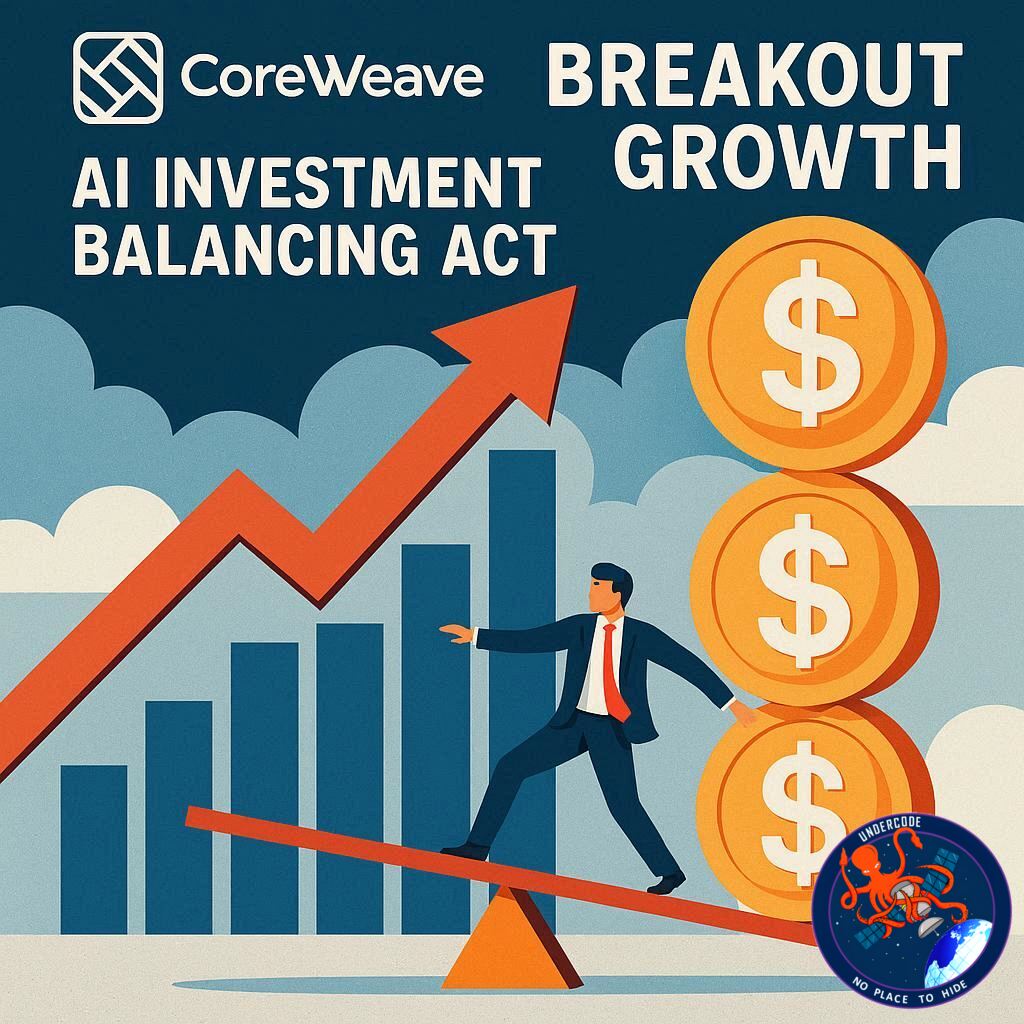
As artificial intelligence continues reshaping global technology markets, infrastructure companies like CoreWeave, Inc. have become central to both investor excitement and risk debates. Set to report its 2025 fourth‑quarter results on February 26, 2026, CoreWeave is expected to show dramatic revenue growth alongside widening losses, underscoring a tension many AI‑related firms face: massive expansion funded by debt versus the path to profitability. While the company’s sales are predicted to more than double from a year ago thanks to surging demand for AI cloud services, analysts and market participants are raising alarms about the sustainability of its heavy capital‑intensive strategy and reliance on future contracts in an uncertain AI boom environment.
MarketWatch
CoreWeave’s Latest Financial Outlook
CoreWeave has rapidly expanded its footprint in AI cloud infrastructure, benefitting from rising demand for GPU‑powered computing from major tech customers. For the 2025 fourth quarter, analyst consensus anticipates revenue to be up by roughly 100% year‑over‑year, driven by increased operational capacity and contractual commitments. However, despite top‑line acceleration, a significant net loss is expected for the quarter, largely due to higher interest expenses and the costs tied to scaling data centers ahead of revenue recognition. This pattern of revenue growth with escalating losses reflects CoreWeave’s current phase: aggressive build‑out funded by debt and strategic partnerships, particularly around Nvidia hardware. The company’s backlog of contracted revenue has soared into the tens of billions of dollars, signaling future demand but also tying its success to contract fulfilment and delivery timing.
MarketWatch
Investor reactions have been mixed. Strong earnings reports in the past have paradoxically led to share price declines when guidance was trimmed or delays in data center capacity slowed revenue recognition. Recent volatility has also been exacerbated by financing concerns linked to partner firms and broader hesitancy in private credit markets to support massive debt‑backed AI expansion projects. Despite these headwinds, CoreWeave’s stock has seen significant long‑term gains and remains a focal point for both bullish AI proponents and cautious analysts.
Business Insider
+1
What Undercode Say:
CoreWeave’s trajectory vividly illustrates the modern AI infrastructure growth paradox: exponential demand meets a capital‑intensive business model that can’t yet consistently deliver profits. On one hand, the company’s core business — providing purpose‑built AI compute and cloud services — is fundamentally aligned with long‑term technology trends. The expansion of machine learning workloads, multimodal AI services, and large foundational models requires infrastructure that general‑purpose cloud providers can’t always efficiently supply. This structural demand supports CoreWeave’s revenue backlog and underpins its ability to secure long‑dated contracts with heavyweight clients. In this context, the forecasted doubling of quarterly revenue isn’t just a statistical highlight — it reflects real adoption of AI workloads that are increasingly mission critical across industries.
However, the scale of spending to meet that demand is both the engine of growth and the company’s Achilles’ heel. CoreWeave’s strategy of building out massive data centers, often funded through debt and partner financing, loads the balance sheet with obligations that must eventually be serviced or rolled over. When revenues aren’t recognized immediately — due to project delays, capacity timing, or contractual nuances — heavy interest and depreciation costs can widen reported losses even as the business expands. This timing mismatch between cost incurrence and revenue realization has contributed to negative investor sentiment, even during quarters of spectacular growth.
Furthermore, market sentiment is inseparable from execution risk. The recent pullbacks in CoreWeave’s stock following earnings or financing reports highlight how sensitive the market has become to any suggestion that growth might falter. Whether it’s data‑center delays or questions around financing partners’ ability to support high capital commitments, these events are magnified by the broader AI infrastructure narrative: if investors start doubting the sustainability of AI spending cycles, even high growth companies feel the impact.
In addition, CoreWeave’s reliance on a smaller set of large clients and partners amplifies both its growth potential and its concentration risk. While diversification efforts are underway, dependency on major customers — including hyperscalers and AI labs — means that any shifts in those relationships could materially affect the company’s financial outlook. The dual nature of this relationship bespeaks the larger strategic trade‑offs in the AI infrastructure market: growth backed by concentration can accelerate adoption but also magnify volatility.
Looking ahead, the question for investors and analysts isn’t simply whether revenue will grow — it’s whether CoreWeave can balance its aggressive expansion with meaningful steps toward long‑term profitability and operational resilience. Achieving this balance will be key not only for CoreWeave’s stock performance but also for how the AI infrastructure sector as a whole is valued in markets that are increasingly wary of growth‑at‑all‑costs narratives.
Fact Checker Results
Revenue and loss trends: CoreWeave has delivered doubling revenue growth while reporting widening losses, consistent with analyst expectations ahead of Q4 2025 earnings.
MarketWatch
Contract backlog: Contracted revenue obligations have reached tens of billions, signaling future revenue potential.
Barron’s
Market volatility: Share price movements have been sensitive to execution and financing concerns in AI infrastructure markets.
Business Insider
Prediction
Looking forward into 2026, CoreWeave is poised to continue strong top‑line expansion if AI demand remains robust. However, near‑term stock performance may remain volatile, influenced by quarterly execution, financing conditions, and investor confidence in sustaining capital‑intensive growth. If the company can steadily bring new capacity online and align revenue recognition with cost structures, it could move closer to profitability; failure to do so may sustain the market’s cautious stance. Increased diversification of clients and more stable financing frameworks would likely improve CoreWeave’s risk profile and valuation moving into the next earnings cycle.
🕵️📝✔️Let’s dive deep and fact‑check.
References:
Reported By: xtechnikkeicom_60eda0f6c8c1a527f1db2f1d
Extra Source Hub (Possible Sources for article):
https://www.discord.com
Wikipedia
OpenAi & Undercode AI
Image Source:
Unsplash
Undercode AI DI v2
Bing
🔐JOIN OUR CYBER WORLD [ CVE News • HackMonitor • UndercodeNews ]
📢 Follow UndercodeNews & Stay Tuned:
𝕏 formerly Twitter 🐦 | @ Threads | 🔗 Linkedin | 🦋BlueSky | 🐘Mastodon


