
Listen to this Post
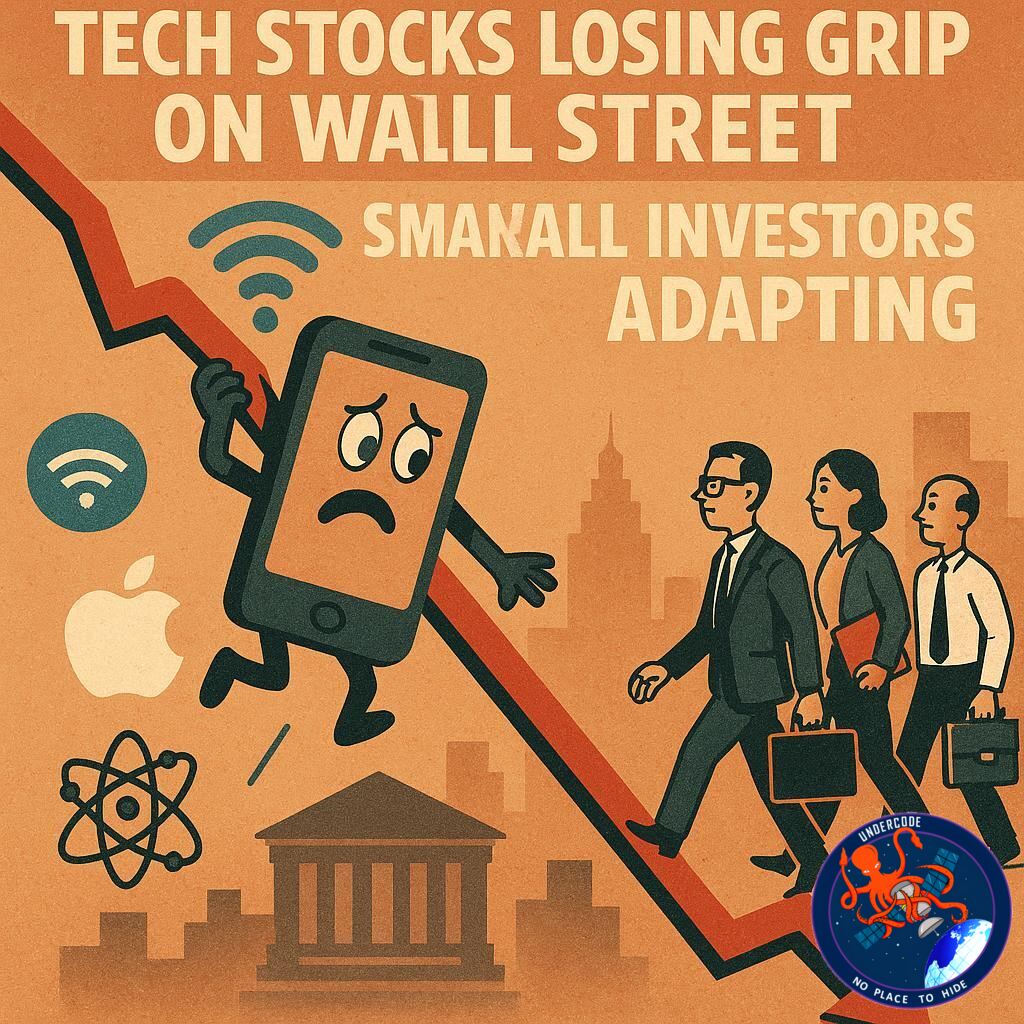
Introduction: A Market No Longer Led by Silicon Dreams
For years, technology and artificial intelligence stocks acted as the unstoppable engine of the U.S. stock market, lifting major indexes on bold promises of productivity revolutions and exponential growth. That era is now facing a serious stress test. As volatility creeps back in and investor confidence wavers, Wall Street is quietly rotating away from its once-untouchable tech darlings. The result is a market divided — and a new playbook emerging for investors trying to stay protected.
Market Momentum Begins to Fracture
Tech’s Long Pause After a Historic Run
It has been four months since the tech-heavy Nasdaq Composite last touched a record high, marking a noticeable slowdown after years of dominance. Once the clear leader of market gains, technology is now struggling to regain traction amid rising uncertainty.
The S&P 500 Stalls Under Tech’s Weight
The S&P 500, heavily influenced by mega-cap technology firms, is roughly flat for the year and on track for its worst monthly performance since March. Its stagnation reflects how deeply tech weakness now affects the broader market.
Old-School Stocks Quietly Pull Ahead
In contrast, the blue-chip Dow Jones Industrial Average has gained about 3% this year. With less reliance on high-growth tech names, the Dow is benefiting from investor interest in more traditional, cash-flow-driven businesses.
The AI Trade Hits Turbulence
Nvidia’s Warning Shot to the Market
Even Nvidia, the undisputed symbol of the AI boom, recently suffered its worst trading day since April — despite delivering strong quarterly earnings. The reaction highlights how fragile sentiment around AI stocks has become.
Software Firms Caught in the Crossfire
Anxiety about AI disrupting existing business models continues to pressure software companies. Investors are struggling to determine which firms will truly benefit and which may be left behind by rapid technological shifts.
Big Tech’s Spending Spree Raises Doubts
Adding to the unease is the massive capital spending by Big Tech on data centers. Hundreds of billions of USD dollars are being poured into infrastructure, but the timeline — and certainty — of returns remains unclear.
Investors Look for Stability Elsewhere
Concentration Risk in Mega-Cap Tech
Nearly 40% of the S&P 500’s total value is concentrated in a handful of companies such as Microsoft and Alphabet. This concentration means even modest tech sell-offs can drag the entire index lower.
Portfolio Rebalancing Gains Momentum
Wealth managers warn that many investors are more tech-exposed than they realize. As a result, rebalancing portfolios to reduce reliance on AI-driven stocks is becoming a common defensive move.
Sector Rotation Takes Center Stage
Market technicians, including analysts at Piper Sandler, have downgraded technology from “overweight” to “neutral,” signaling a broader rotation toward sectors seen as safer during volatility.
Defensive Sectors Step Into the Spotlight
Energy, Materials, and Staples Lead
So far this year, energy, materials, and consumer staples are the top-performing sectors in the S&P 500. These industries benefit from tangible demand, pricing power, and less exposure to speculative growth narratives.
Tech and Financials Fall Behind
While defensive sectors climb, technology and financial stocks are lagging. The gap underscores how investor priorities have shifted from future potential to present stability.
Diversification Becomes the Survival Strategy
Equal-Weight Indexes Gain Appeal
One way investors are reducing tech risk is by turning to equal-weighted indexes. By assigning the same weight to every stock, these indexes limit the damage caused by sharp drops in mega-cap tech names.
International Markets Offer Relief
Another strategy gaining traction is increasing exposure to international equities. Markets in Europe and Asia have outperformed the U.S. this year after strong gains in 2025, offering diversification beyond American tech.
Long-Term Discipline Over Short-Term Fear
Despite the turbulence, analysts stress that markets historically trend higher over time. For long-term investors, sticking to a disciplined plan often proves more effective than reacting to every headline.
What Undercode Says:
The End of Tech Absolutism
The market is not rejecting technology outright — it is rejecting the idea that tech alone can carry everything. This distinction matters. Investors who treat AI as one component rather than the entire thesis will be better positioned.
AI’s Valuation Reality Check
AI remains transformative, but valuations ran ahead of fundamentals. The recent pullback is less a collapse and more a recalibration toward sustainable growth expectations.
Sector Rotation Signals Market Maturity
Rotations into energy, materials, and staples suggest the market is entering a more mature phase of the cycle. This is typical behavior when investors prioritize earnings certainty over visionary narratives.
Concentration Risk Is the Real Threat
The true danger isn’t AI — it’s overconcentration. When a small group of stocks dominates index performance, volatility becomes unavoidable the moment sentiment shifts.
Equal-Weight Indexes Are Quiet Winners
The outperformance of equal-weight strategies exposes a hidden truth: breadth matters more than hype. A healthy market needs participation beyond a few giants.
Global Diversification Is No Longer Optional
U.S. investors who ignore international markets risk missing entire growth cycles. The world is no longer moving in sync with Silicon Valley.
Patience Is the Underrated Asset
Markets punish impatience. Investors who resist emotional decisions during periods of uncertainty historically come out ahead.
🔍 Fact Checker Results
Market Performance Trends
✅ Major U.S. indexes show divergence, with the Dow outperforming tech-heavy benchmarks.
Sector Rotation Evidence
✅ Energy, materials, and consumer staples are among the strongest performers this year.
AI Investment Uncertainty
❌ No definitive evidence yet that massive data-center spending guarantees proportional returns.
📊 Prediction
Near-Term Outlook
📉 Technology stocks are likely to remain volatile as earnings struggle to justify past valuations.
Mid-Term Market Behavior
📈 Defensive sectors should continue attracting capital as long as AI uncertainty persists.
Long-Term Market Direction
📊 If historical patterns hold, diversified portfolios are positioned to benefit when stability returns and the next sustainable growth phase begins.
🕵️📝✔️Let’s dive deep and fact‑check.
References:
Reported By: edition.cnn.com
Extra Source Hub (Possible Sources for article):
https://www.github.com
Wikipedia
OpenAi & Undercode AI
Image Source:
Unsplash
Undercode AI DI v2
Bing
🔐JOIN OUR CYBER WORLD [ CVE News • HackMonitor • UndercodeNews ]
📢 Follow UndercodeNews & Stay Tuned:
𝕏 formerly Twitter 🐦 | @ Threads | 🔗 Linkedin | 🦋BlueSky | 🐘Mastodon


