
Listen to this Post
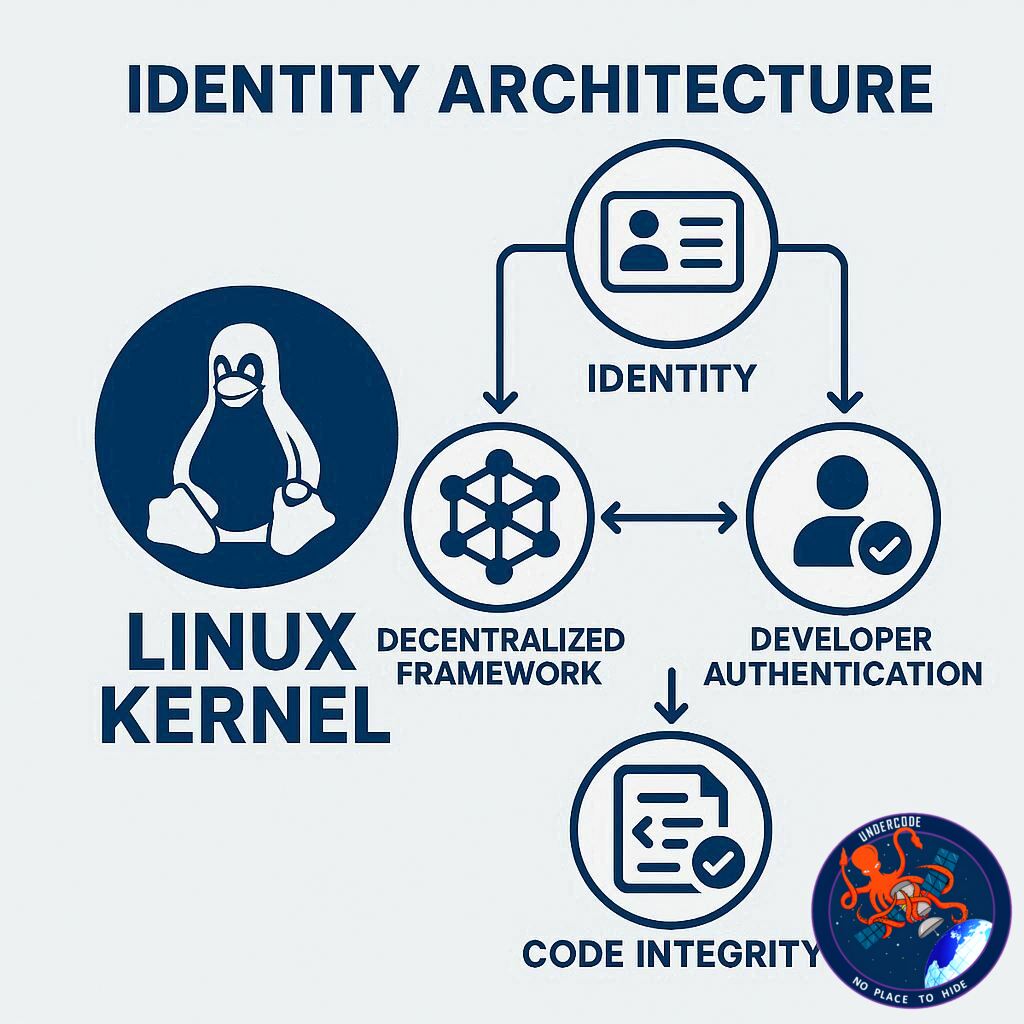 Introduction: Reinventing Trust in the World’s Most Critical Open-Source Project
For decades, the Linux kernel has operated on a foundation of trust, cryptographic signatures, and community reputation. But in an era shaped by supply-chain attacks, social engineering, and increasingly sophisticated digital threats, trust alone is no longer enough. The stewards of the Linux ecosystem are now exploring a new identity architecture designed to modernize how developers prove who they are and verify that the code they submit is genuinely theirs. The initiative represents more than a technical upgrade. It signals a structural transformation in how open-source communities may secure themselves in the future.
The Legacy of PGP and the Fragile Web of Trust
For years, the Linux kernel community relied on Pretty Good Privacy, commonly known as PGP, to authenticate developers and sign release artifacts. Integrated directly into Git, PGP allowed maintainers to sign commits and tags, helping verify repository integrity and prevent impersonation.
This system worked, but it depended heavily on what is known as a web of trust. Developers validated each other’s keys, often through in-person meetings. The model assumed that cryptographic signatures tied to real-world identity checks were sufficient to guarantee authenticity. However, maintaining this web required manual oversight, scripts, and public trust mappings that exposed personal data.
The fragility of this approach became evident after the 2011 breach of kernel.org. In response, the community held a face-to-face key-signing event during the Kernel Summit to rebuild trust from the ground up. That reboot stabilized the system, but it also revealed how dependent the ecosystem was on physical verification events and static credentials.
The Wake-Up Call of the XZ Backdoor Incident
More recently, the attempted compromise of the xz utility served as another stark reminder of open-source vulnerability. A malicious contributor nearly introduced a backdoor that could have impacted vast portions of the Linux ecosystem. Although the attack was caught before widespread damage occurred, it exposed the reality that long-term credentials and reputation-based trust can be exploited.
The lesson was clear. A single cryptographic key, even one embedded in a respected web of trust, is no longer sufficient protection against modern supply-chain threats.
The Painful Developer Onboarding Process
Under the current system, developers seeking a kernel.org account must find someone within the existing PGP trust network, arrange an in-person meeting, present government identification, and have their key signed. The process resembles a global scavenger hunt. It is slow, manual, and increasingly impractical in a geographically distributed and remote-first world.
Maintainers such as Greg Kroah-Hartman have described the system as difficult to manage. Keys expire, records drift out of date, and public identity maps create potential privacy and social engineering risks. The infrastructure that once safeguarded the kernel has gradually become a liability.
Introducing Linux ID: A Decentralized Identity Layer
In response, leaders within the Linux Foundation’s decentralized trust initiative, including Daniela Barbosa and Hart Montgomery, alongside Glenn Gore of Affinidi, have presented a new framework informally referred to as Linux ID.
Rather than replacing PGP entirely, Linux ID builds a layered identity system on top of modern decentralized identity standards. The goal is to create cryptographic proofs of personhood that are privacy-preserving, flexible, and resilient.
Instead of relying on a single monolithic web of trust, Linux ID introduces verifiable credentials. These credentials can assert statements such as whether an individual is a real person, employed by a specific company, or recognized as a kernel maintainer. The credentials are issuer-agnostic, meaning they can come from multiple trusted entities.
Decentralized Identifiers and Composable Trust
At the core of Linux ID are decentralized identifiers, or DIDs. These globally unique identifiers attach public keys and service endpoints to a cryptographically verifiable identity document. Developers can create DIDs, potentially reusing existing Curve25519 keys from their PGP setup, and publish associated documents through secure HTTPS endpoints.
Trust in this model is composable. Two developers may rely on different trusted issuers but still discover overlapping trust relationships. The more independent issuers involved, the stronger the system becomes. Government-issued digital IDs, employer attestations, third-party verifiers, or the Linux Foundation itself can all serve as credential issuers.
The result is a layered trust architecture where identity becomes dynamic rather than static.
Ephemeral Relationships and Privacy by Design
Linux ID also introduces pairwise, ephemeral DIDs for relationships. When two participants connect, they generate unique identifiers specific to that interaction. This design prevents external observers from mapping the broader social graph of the kernel community.
Credentials can include verifiable relationship credentials that record when a relationship began, what level of trust it represents, and its expiration date. Short-lived credentials, valid for days or weeks rather than years, reduce long-term exposure and allow for rapid revocation if compromise occurs.
Transparency logs and trust registries add another dimension of accountability, enabling public or semi-public auditing without exposing unnecessary personal data.
A Technology Stack, Not a Mandate
Importantly, Linux ID is described as a technology stack rather than a rigid policy. Individual Linux Foundation projects and kernel maintainers will determine which issuers they trust and what verification standards apply to different roles.
The system also anticipates AI integration. Maintainers could delegate limited authority to automated agents through separate credentials. If an AI system or automation pipeline misbehaves, its credentials can be revoked independently from the human maintainer who authorized it.
The architecture thus anticipates a future where human and machine contributors coexist within a cryptographically governed ecosystem.
Deployment Timeline and Migration Strategy
Linux ID remains in an exploratory and prototyping phase. Discussions are expected to continue at upcoming Linux Plumbers and Kernel Summit events. In the short term, kernel.org may import its existing PGP trust data into the new framework, enabling a gradual transition rather than abrupt replacement.
This incremental approach reflects the kernel community’s cautious engineering culture. Trust infrastructure cannot be rushed. It must be battle-tested before it protects one of the world’s most critical software foundations.
What Undercode Say:
The Linux ID initiative is not merely a technical refresh. It is a strategic response to a structural crisis in open-source identity management. Modern supply-chain attacks no longer depend solely on code exploits. They target trust pathways, contributor onboarding systems, and social engineering vulnerabilities embedded within human networks.
PGP was revolutionary in its time, but it was designed for a slower internet era. Static keys, long validity periods, and physical key-signing ceremonies assumed a stable threat landscape. That landscape no longer exists. Today’s attackers are patient, persistent, and capable of building reputations over months or years before striking.
Linux ID addresses this by shifting from static identity to dynamic identity. Short-lived credentials, multi-issuer attestations, and revocation registries create a moving target for adversaries. An attacker would not only need to compromise a key but maintain a web of fresh, cross-validated credentials under constant scrutiny.
The composable trust model is particularly powerful. It eliminates dependence on a single central authority while preventing fragmentation. Overlapping trust paths mean resilience increases as the ecosystem expands. This reflects the architectural philosophy that made Linux itself successful: decentralization without chaos.
Another critical aspect is privacy preservation. The old web of trust inadvertently exposed physical locations and social relationships. In an age of doxxing and social engineering, that transparency became a vulnerability. Pairwise DIDs and ephemeral identifiers reintroduce confidentiality without sacrificing verifiability.
The integration of AI delegation is equally forward-looking. As automated code review, CI pipelines, and AI-assisted development grow, machine actors will need cryptographic identities. Embedding delegation mechanisms into the trust layer ensures automation does not bypass accountability.
However, no identity system can guarantee absolute safety. The xz incident demonstrated that even verified contributors can act maliciously. Linux ID increases friction and traceability, but it cannot eliminate insider risk entirely. The true strength of the system lies in raising the cost of attack and accelerating detection.
If successfully deployed, Linux ID could become a blueprint for the broader open-source world. Projects beyond the Linux kernel face similar identity challenges. By pioneering decentralized trust infrastructure, the Linux Foundation positions itself as a leader in digital identity governance.
In strategic terms, this move reinforces Linux’s status as critical infrastructure. As cloud computing, enterprise servers, embedded systems, and AI platforms depend on Linux, identity integrity becomes a matter of global cybersecurity.
Linux ID is not just about verifying who writes code. It is about redefining how open-source ecosystems scale securely in an era where authenticity is constantly under threat.
Fact Checker Results
✅ The Linux kernel currently relies on PGP and a web of trust model for developer authentication.
✅ The xz utility incident exposed vulnerabilities in open-source supply-chain security.
✅ Linux ID is still in exploratory and prototyping stages, not yet deployed.
Prediction
🔮 Linux ID will likely be piloted within the next year and gradually adopted across Linux Foundation projects.
🔐 Short-lived, multi-issuer credentials will become standard practice in high-value open-source ecosystems.
🚀 Decentralized identity frameworks may redefine how AI agents and human developers coexist securely in software development.
🕵️📝✔️Let’s dive deep and fact‑check.
References:
Reported By: www.zdnet.com
Extra Source Hub (Possible Sources for article):
https://www.reddit.com
Wikipedia
OpenAi & Undercode AI
Image Source:
Unsplash
Undercode AI DI v2
Bing
🔐JOIN OUR CYBER WORLD [ CVE News • HackMonitor • UndercodeNews ]
📢 Follow UndercodeNews & Stay Tuned:
𝕏 formerly Twitter 🐦 | @ Threads | 🔗 Linkedin | 🦋BlueSky | 🐘Mastodon


