
Listen to this Post
Introduction: A Quiet Update With Big Enterprise Implications
Enterprise adoption of AI coding tools is no longer about hype—it’s about measurable impact. In a low-key but strategically important release, GitHub Copilot has expanded its enterprise usage metrics to include activity from the Copilot CLI. While this may look like a routine telemetry update on the surface, it fundamentally changes how large organizations can monitor, evaluate, and scale AI-assisted development across command-line environments.
the Original Announcement: What Changed and Why It Matters
Expanded Enterprise Telemetry Coverage
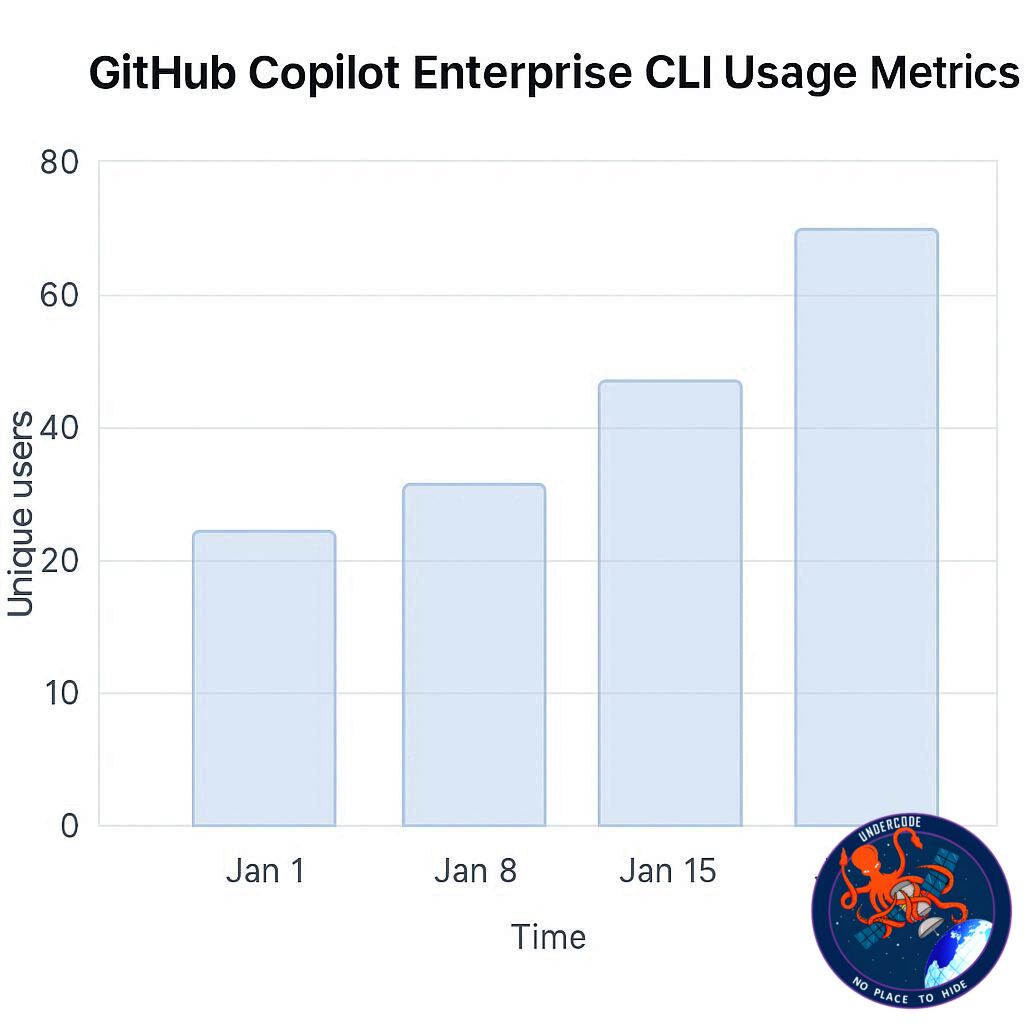
GitHub has officially expanded enterprise-level Copilot usage metrics to include Copilot CLI telemetry. Until now, enterprise reporting focused primarily on IDE-based usage. With this update, command-line interactions are no longer invisible in organizational analytics.
New Metrics Now Available
Enterprises can now access CLI-specific usage data, including daily active CLI users, total request counts, session volumes, and detailed token usage statistics. This also includes average tokens consumed per request, offering more granular insight into how Copilot is being used in terminal workflows.
Visibility Into Real Developer Behavior
By surfacing CLI data, organizations gain a clearer picture of how developers actually work day to day. Many critical tasks—automation, scripting, infrastructure management—happen in the terminal, and this update finally acknowledges that reality.
Adoption Tracking Across the Organization
These metrics allow engineering leaders to track Copilot CLI adoption across teams and departments. Gaps in usage can quickly signal where onboarding, training, or internal advocacy may be lacking.
Comparing Environments and Workflows
The update also enables comparisons between IDE-based usage and CLI usage. This helps enterprises understand how Copilot fits into different development contexts, from local machines to remote servers and cloud environments.
Better Cost and Consumption Planning
Token usage totals provide valuable insight into consumption trends. Enterprises can now forecast usage more accurately, manage budgets, and plan phased rollouts without flying blind.
Community Discussion and Feedback Loop
GitHub has encouraged users to join the conversation via GitHub Community, signaling that feedback on enterprise metrics remains an evolving, collaborative process.
What Undercode Say:
Why CLI Metrics Are a Bigger Deal Than They Look
This update is less about numbers and more about control. The command line is where senior engineers, DevOps teams, and platform specialists spend a disproportionate amount of time. By exposing CLI telemetry, GitHub is effectively acknowledging that Copilot’s real enterprise value often lives outside traditional IDEs.
From Vanity Metrics to Operational Intelligence
Daily active users and request counts may sound basic, but at enterprise scale they become operational signals. A spike in CLI usage can correlate with infrastructure changes, incident response activity, or large-scale refactoring efforts.
Token Data Equals Power Dynamics
Token usage metrics introduce a new layer of accountability. Enterprises can now identify which teams are heavy consumers and which are underutilizing Copilot. This may quietly shift internal conversations from “Should we use AI?” to “Who is using AI effectively—and why?”
Enablement Becomes Data-Driven
Previously, enablement programs relied on surveys and anecdotal feedback. Now, leadership can spot underperforming adoption zones using hard data, then intervene with targeted training or documentation.
A Signal Toward Enterprise-First AI Governance
By expanding metrics instead of restricting features, GitHub is leaning into observability rather than limitation. This aligns with a broader enterprise trend: allow experimentation, but measure everything.
Competitive Pressure on Other AI Tools
This move raises the bar for competing AI coding assistants. Enterprises will increasingly expect CLI-level transparency as a baseline, not a premium feature.
The Subtle Push Toward Standardization
Once metrics exist, policies follow. Expect enterprises to start defining internal benchmarks for “healthy” Copilot usage, especially in regulated or security-sensitive environments.
Long-Term Strategic Implication
Ultimately, this update positions Copilot not just as a developer tool, but as an enterprise platform component—one that can be audited, optimized, and justified at the CFO level.
Fact Checker Results
✅ Accuracy of Feature Expansion
GitHub has officially confirmed the inclusion of Copilot CLI telemetry in enterprise usage metrics.
✅ Validity of Reported Metrics
The listed metrics—users, sessions, requests, and token usage—align with GitHub’s documented enterprise reporting framework.
❌ No Evidence of Usage Limits Change
The update does not introduce new caps or restrictions on Copilot CLI usage; it is strictly an observability enhancement.
Prediction
Where This Update Is Headed Next
Within the next year, Copilot CLI metrics are likely to be integrated into broader enterprise dashboards alongside security, compliance, and productivity indicators. As organizations grow more comfortable measuring AI usage, expect these metrics to influence licensing models, internal performance benchmarks, and even hiring expectations for AI-native developers.
🕵️📝✔️Let’s dive deep and fact‑check.
References:
Reported By: github.blog
Extra Source Hub (Possible Sources for article):
https://www.reddit.com/r/AskReddit
Wikipedia
OpenAi & Undercode AI
Image Source:
Unsplash
Undercode AI DI v2
Bing
🔐JOIN OUR CYBER WORLD [ CVE News • HackMonitor • UndercodeNews ]
📢 Follow UndercodeNews & Stay Tuned:
𝕏 formerly Twitter 🐦 | @ Threads | 🔗 Linkedin | 🦋BlueSky | 🐘Mastodon


