
Listen to this Post
Introduction: Why Network Mode Matters More Than Ever
Modern smartphones give users more control than ever before, including the ability to choose how their device connects to mobile networks. With 2G and 3G nearly phased out across many regions, the real decision today revolves around 4G, LTE, 5G On, and 5G Auto. This choice is not just about raw internet speed. It directly affects battery life, call stability, and how smoothly daily apps perform. Understanding these modes can help users avoid unnecessary battery drain and frustrating signal drops.
The End of 2G and 3G Changes Everything
As legacy networks disappear, smartphones are forced to rely on newer standards. This transition has made network mode selection more important than it was a decade ago. Devices now aggressively search for compatible signals, and the wrong setting can cause constant network switching, higher power usage, and unstable connectivity.
What Network Modes You See on Modern Smartphones
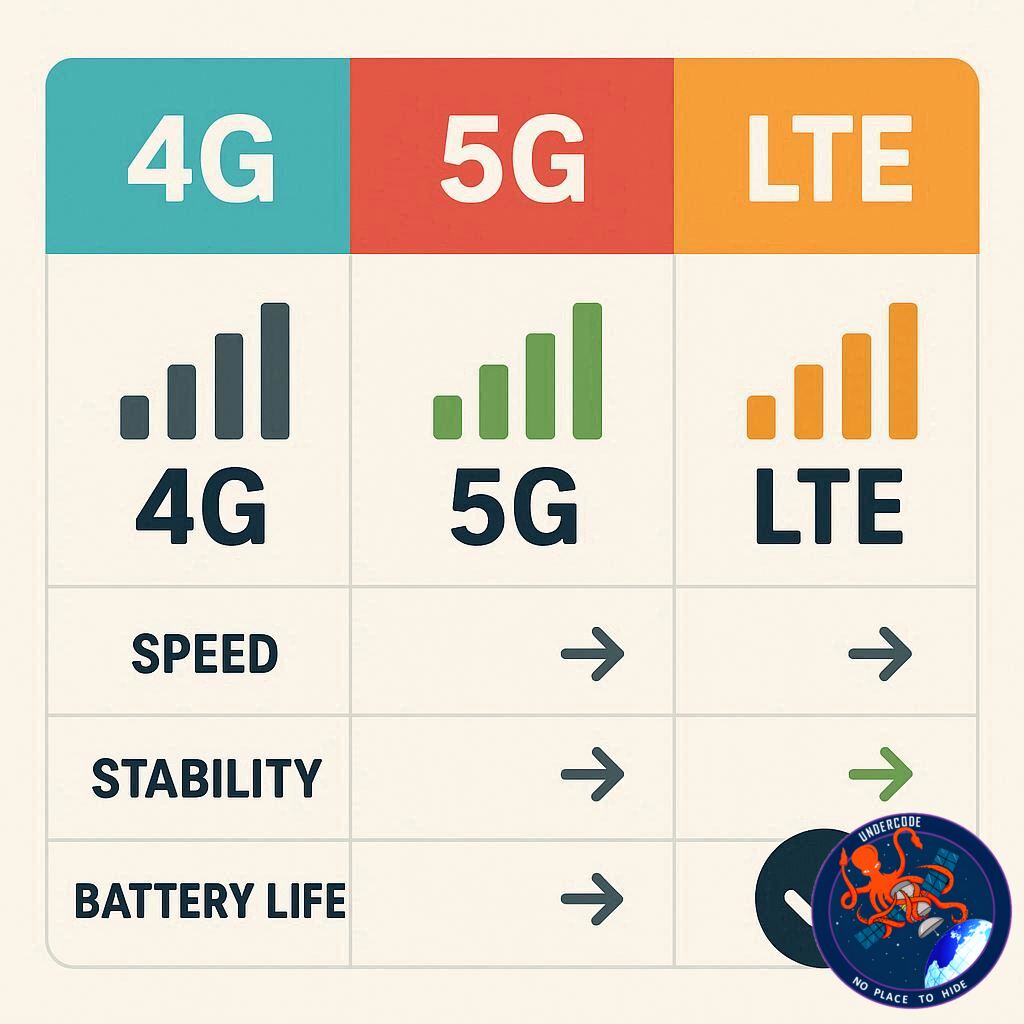
Most smartphones today display four main options inside network settings. These include 4G, 4G LTE, 5G On or 5G Only, and 5G Auto. While all of them provide internet access, they behave very differently in real-world conditions. The differences become obvious when moving between cities, indoors, or areas with mixed coverage.
Speed Is Only One Part of the Experience
Many users assume the fastest network is always the best choice. In reality, speed is just one factor. Battery efficiency, signal consistency, and call reliability often matter more in everyday use. A slightly slower but stable connection can feel better than ultra-fast speeds that drop frequently.
Why Picking the Wrong Mode Can Hurt Battery Life
When a phone struggles to maintain a connection, it increases radio activity. This forces the modem and processor to work harder. The result is faster battery drain, warmer devices, and sometimes reduced long-term battery health. Choosing the right mode reduces this constant background effort.
4G and LTE Remain Surprisingly Reliable
Despite the hype around newer technologies, 4G and LTE continue to offer dependable performance. These networks are widely deployed and optimized, especially in suburban and rural areas. For many users, they provide the most consistent day-to-day experience.
Real-World Speeds on 4G and LTE
Typical 4G and LTE speeds range between 20 Mbps and 100 Mbps depending on network congestion and location. These speeds are more than sufficient for HD video streaming, video calls, cloud apps, and social media. For everyday usage, most people will not feel limited.
Battery Efficiency Is a Hidden Advantage of 4G
One of the biggest strengths of 4G and LTE is lower power consumption. Because the signal coverage is broader and more stable, phones spend less time searching for towers. This results in longer screen-on time and fewer unexpected battery drops.
Call Stability Favors Older Networks
Voice calls tend to be more stable on 4G and LTE, especially in areas where 5G coverage is inconsistent. Dropped calls and sudden network switches are far less common, making these modes ideal for users who prioritize communication reliability.
Weak 5G Coverage Can Be a Problem
In many regions, 5G infrastructure is still uneven. Buildings, distance from towers, and network congestion can all weaken the signal. When coverage fluctuates, performance becomes unpredictable, even if peak speeds look impressive on paper.
The Speed Advantage of 5G Explained
5G is designed for high bandwidth and low latency. In areas with strong infrastructure, users can experience speeds between 500 Mbps and 1 Gbps. This makes tasks like large downloads, cloud gaming, and high-resolution video calls noticeably faster.
When 5G Feels Transformational
In dense urban areas or near modern towers, 5G can feel like a major leap forward. Apps load instantly, streaming buffers disappear, and uploads complete in seconds. For power users, these gains are real and measurable.
The Downside of Using 5G Only Mode
5G Only mode forces the phone to stay connected exclusively to 5G. When coverage drops, the device may show “No Service” instead of falling back to 4G. This can interrupt calls, messages, and navigation at critical moments.
Battery Drain Risks with 5G Only
High-frequency 5G signals require more power to maintain. When the phone constantly searches for a stable connection, battery usage increases sharply. Over a full day, this can reduce total battery life significantly compared to mixed network modes.
Why 5G Auto Exists
5G Auto was created to solve the weaknesses of both extremes. Instead of locking the phone into one network, it allows dynamic switching based on signal quality and usage demands. This makes it one of the most practical options for most users.
How 5G Auto Manages Speed and Stability
When strong 5G coverage is available, 5G Auto enables high-speed access. As soon as the signal weakens, the phone switches to 4G or LTE seamlessly. The transition often happens without the user noticing.
Battery Benefits of Smart Network Switching
By avoiding constant signal hunting, 5G Auto reduces power consumption. The modem operates more efficiently, and background processes stay calmer. This leads to better battery endurance throughout the day.
Who Should Use 5G Auto Mode
Users who move frequently between different coverage zones benefit the most from 5G Auto. Commuters, travelers, and office workers experience fewer disruptions and more predictable battery performance with this setting enabled.
Daily Usage Scenarios Compared
For messaging, browsing, and streaming, 4G and LTE feel nearly identical to 5G in many cases. The real difference appears during large downloads or high-bandwidth tasks. Understanding personal usage habits helps determine the best mode.
Gaming and Video Calls Favor Strong 5G
Online gaming and high-quality video calls benefit from 5G’s low latency when coverage is stable. In these cases, 5G On or 5G Auto provides smoother experiences than older networks.
Travel and Rural Use Cases
Outside major cities, 4G and LTE often outperform 5G due to better coverage. Travelers may find that locking the phone to 4G improves reliability and reduces battery anxiety during long journeys.
How Network Mode Affects Phone Temperature
Higher power usage leads to more heat. Phones running in 5G Only mode in weak signal areas often get warmer. This can affect comfort and long-term component health.
How to Change Network Mode on Android
On Android devices, users can adjust network preferences through SIM and mobile network settings. The process takes only a few taps and can be reversed at any time based on location or needs.
How to Change Network Mode on iPhone
iPhone users can access network options through Mobile Service and Voice and Data settings. Apple also recommends Auto modes for balanced performance in most situations.
Carrier and Region Play a Major Role
Network performance depends heavily on carrier investment and regional infrastructure. A strong 5G experience in one city does not guarantee the same results elsewhere.
Marketing vs Reality in Network Choices
Advertisements often focus on peak speeds rather than everyday reliability. Users should focus on consistent performance instead of theoretical maximums that appear only under ideal conditions.
The Practical Takeaway for Most Users
For most people, 5G Auto offers the best compromise. It delivers speed when available and stability when needed, without excessive battery drain or connectivity frustration.
Media Coverage and Public Awareness
Discussions about network performance are increasingly covered by outlets like Zee News, reflecting growing consumer interest in practical smartphone performance rather than just specifications.
What Undercode Say:
From an analytical standpoint, network mode selection represents a shift from raw performance obsession to efficiency-driven usage. Smartphones today are powerful enough that network instability, not processing power, becomes the real bottleneck. 5G promises massive potential, but uneven rollout makes blind adoption risky. Battery health is quietly becoming a priority as devices age, and network behavior plays a significant role in that equation. Users who understand signal behavior gain more control over their daily experience. 4G and LTE remain undervalued despite delivering consistent results across regions. 5G Auto reflects a more mature approach to connectivity, prioritizing adaptability over brute force. As infrastructure improves, the balance may shift, but for now, smart switching beats fixed preferences. The real optimization lies in aligning network settings with actual coverage, not marketing claims. Undercode views adaptive network usage as the most sustainable approach for both performance and device longevity.
Fact Checker Results
✅ 4G and LTE generally consume less battery than constant 5G usage
✅ 5G Auto dynamically switches networks based on signal quality
❌ 5G does not guarantee better performance in weak coverage areas
Prediction
📶 As 5G infrastructure expands, Auto modes will become the default choice on most smartphones
🔋 Battery-aware network management will play a larger role in future mobile operating systems
🚀 4G will remain relevant longer than expected due to reliability advantages
🕵️📝✔️Let’s dive deep and fact‑check.
References:
Reported By: zeenews.india.com
Extra Source Hub (Possible Sources for article):
https://www.facebook.com
Wikipedia
OpenAi & Undercode AI
Image Source:
Unsplash
Undercode AI DI v2
Bing
🔐JOIN OUR CYBER WORLD [ CVE News • HackMonitor • UndercodeNews ]
📢 Follow UndercodeNews & Stay Tuned:
𝕏 formerly Twitter 🐦 | @ Threads | 🔗 Linkedin | 🦋BlueSky | 🐘Mastodon


