
Listen to this Post
A New Era of Intelligent Mobility Begins
The automobile is no longer just a mechanical product. It is becoming a dynamic, software-driven machine that learns, adapts, and evolves over time. At the heart of this transformation lies AI-Defined Vehicles, a new generation of cars built on artificial intelligence foundations capable of continuous learning and improvement. Yet despite the futuristic promise, the infrastructure required to support this evolution remains in its infancy. Only 4% of new vehicles sold globally are equipped with the Software-Defined Vehicle architecture necessary to unlock the full power of AI-driven mobility.
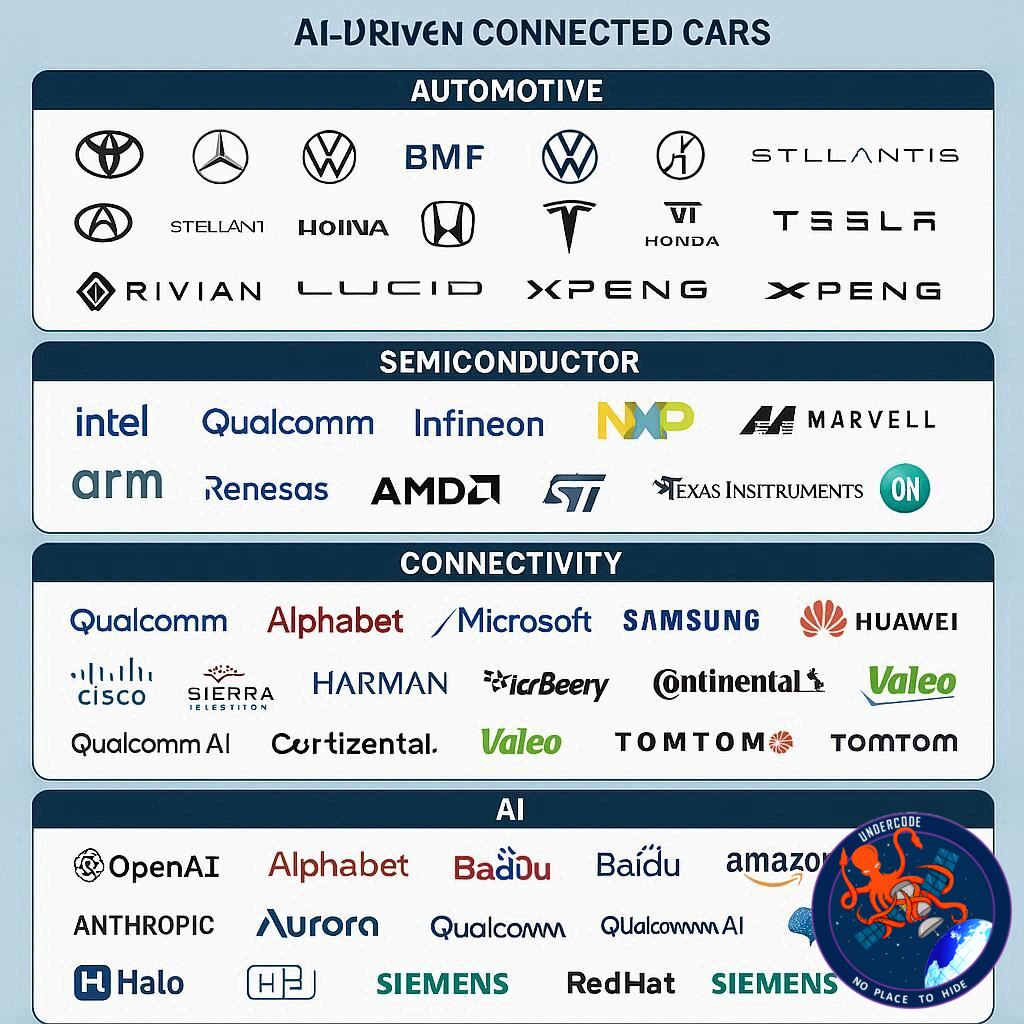
A comprehensive market map highlighting 96 companies shaping this next era reveals an industry at a crossroads. Technology giants, established automotive suppliers, bold startups, and vertically integrated manufacturers are racing to define who will control the software stack of tomorrow’s connected vehicles. The stakes are enormous. Those who master vehicle operating systems, sensing systems, cybersecurity, and AI computing infrastructure will determine whether they become platform leaders or fade into commodity hardware providers.
The AI-Defined Vehicle as the Next Platform Shift
AI-Defined Vehicles, often referred to as AIDV, represent the next evolution in automotive design. Unlike traditional cars, which rely heavily on fixed hardware systems, AIDVs are built on adaptive software layers that continuously improve through AI-driven data analysis. These vehicles are designed to learn from real-world driving conditions, refine performance, enhance safety, and personalize the user experience over time.
However, the commercial realization of AIDVs remains decades away. The reason is simple. AI capabilities require a digital backbone capable of real-time communication, over-the-air updates, and centralized computing power. That backbone is the Software-Defined Vehicle platform.
The Slow but Strategic Rise of Software-Defined Vehicles
Software-Defined Vehicles, or SDVs, separate hardware from software control. Instead of embedding vehicle functionality permanently into physical components, SDVs rely on programmable architectures that allow features to be updated remotely. This shift turns cars into evolving digital platforms rather than static products.
Despite strong momentum, SDVs currently account for only a small fraction of global vehicle sales. Yet the category shows extraordinary commercial potential. Companies operating in the SDV platform space boast average performance scores placing them in the top tier of innovation categories across industries. The segment not only promises future dominance but is already delivering practical AI applications in telematics and driver monitoring.
Tech Giants Drive the AI Compute Backbone
Major technology companies are emerging as foundational players in this transformation. Firms such as Nvidia and Qualcomm are developing advanced AI computing chips and automotive software frameworks that enable real-time data processing inside vehicles. Their platforms provide the processing power necessary for autonomous features, predictive safety systems, and intelligent infotainment.
Meanwhile, established automotive suppliers such as Bosch and Denso are reengineering their product lines to become AI-compatible. The traditional parts supplier is rapidly transforming into a software-integrated technology partner.
Vertical Integration as a Competitive Weapon
A separate group of industry leaders is pursuing a more radical approach. Companies like Tesla and Xiaomi are developing critical in-vehicle AI functions in-house. By controlling hardware, software, and data pipelines, these firms reduce dependency on third-party platforms and accelerate innovation cycles.
This vertically integrated model offers tighter system optimization and faster feature deployment. It also creates high entry barriers for competitors who rely on fragmented supply chains.
Telematics and Driver Monitoring Lead Commercial Adoption
While full AI-defined vehicles may still be years away, AI applications in telematics and driver monitoring are already generating substantial revenue. Companies like Motive and Netradyne are prime examples. Both firms rank among the top-performing private companies in innovation metrics and have demonstrated strong revenue growth, validating the commercial viability of AI-powered fleet intelligence.
These platforms use AI to predict risks, monitor driving behavior, and provide automated coaching. Their rapid expansion proves that the smart vehicle economy is not theoretical. It is already producing measurable returns.
Cybersecurity and Regulatory Pressure Reshape the Market
As vehicles become connected data hubs, cybersecurity risks multiply. Regulatory frameworks are tightening accordingly. In 2024, new cybersecurity regulations in the European Union forced automakers such as Mercedes-Benz, Porsche, and Volkswagen to discontinue certain models that failed to meet compliance standards.
This regulatory shift is accelerating partnerships between automakers and cybersecurity firms. Israeli startup Upstream partnered with Skoda to integrate real-time security monitoring into connected vehicles. Such alliances underscore how cybersecurity is no longer optional. It is central to product viability.
Mapping the Ecosystem of 96 Key Players
The market map identifies companies across ten critical categories shaping connected car infrastructure:
Software-Defined Vehicle platforms that enable over-the-air updates and modular architecture.
In-vehicle marketing and advertising platforms delivering contextual ads through infotainment systems.
Connected car data platforms aggregating real-time vehicle data for insurers and mobility providers.
V2X technologies enabling low-latency communication between vehicles, infrastructure, and pedestrians.
Driver monitoring systems detecting fatigue and distraction.
Automotive cybersecurity and data privacy solutions safeguarding vehicle ecosystems.
Fleet video telematics platforms capturing and analyzing driving footage.
In-vehicle infotainment software powering digital cockpits.
Location intelligence and mapping platforms supporting geospatial analysis.
Vehicle network hardware connecting telematics units and gateways.
This diversified ecosystem reveals that the future of mobility is not defined by a single breakthrough but by layered infrastructure integration.
What Undercode Say:
Platform Control Determines Economic Power
The automotive sector is entering its operating system moment. Just as smartphones shifted value from hardware manufacturers to software ecosystem owners, vehicles are undergoing a similar redistribution of power. The company that controls the core vehicle OS and data pipeline will capture recurring revenue streams long after the car is sold.
AI Infrastructure Is the True Battleground
Consumers often focus on autonomous driving headlines, yet the deeper competition lies in AI compute architecture. Without scalable onboard processing and cloud synchronization, advanced features remain unreliable. The quiet dominance of chipmakers and middleware providers may ultimately outweigh flashy brand innovation.
Regulatory Complexity Favors Technological Depth
The EU cybersecurity enforcement wave demonstrates that compliance capability is becoming a competitive differentiator. Smaller automakers lacking software expertise may struggle under mounting regulatory requirements. Strategic partnerships or acquisitions will intensify as firms seek defensive positioning.
Vertical Integration vs Ecosystem Collaboration
The market is splitting into two strategic camps. Vertically integrated innovators aim for total control and higher margins. Ecosystem collaborators pursue flexibility and risk sharing. The eventual winners may blend both models, maintaining internal control over critical AI layers while partnering externally for non-core services.
Data Monetization Will Redefine Revenue Models
Connected vehicles continuously generate behavioral, environmental, and mechanical data. This data fuels insurance pricing, predictive maintenance, and mobility optimization. The most profitable players will not merely sell cars but monetize insights extracted from real-time vehicle intelligence.
Commoditization Threatens Traditional Manufacturers
If automakers fail to secure control over the software stack, they risk becoming assembly platforms for technology firms. Hardware alone no longer guarantees differentiation. The shift from mechanical excellence to software agility represents a structural transformation rather than a temporary trend.
Long-Term Commercial Horizon Requires Strategic Patience
Although AI-defined vehicles may take decades to achieve full commercialization, early infrastructure dominance will shape long-term leadership. Investment cycles today determine market hierarchies tomorrow. Companies positioning themselves in SDV foundations are effectively purchasing optionality in the future mobility economy.
Fact Checker Results
✅ Only about 4% of global new vehicles currently support full Software-Defined Vehicle infrastructure.
✅ European cybersecurity regulations in 2024 forced certain automakers to discontinue non-compliant models.
✅ AI-driven telematics companies are already demonstrating significant commercial revenue growth.
Prediction
🚗 AI-Defined Vehicles will gradually surpass traditional architectures as over-the-air ecosystems mature.
📈 Cybersecurity partnerships will become mandatory components of automotive strategy within five years.
🧠 Platform owners controlling AI compute and vehicle operating systems will dominate long-term automotive profit pools.
▶️ Related Video (82% Match):
🕵️📝✔️Let’s dive deep and fact‑check.
References:
Reported By: xtechnikkeicom_7da127388a4873c2ad66a665
Extra Source Hub (Possible Sources for article):
https://www.stackexchange.com
Wikipedia
OpenAi & Undercode AI
Image Source:
Unsplash
Undercode AI DI v2
Bing
🔐JOIN OUR CYBER WORLD [ CVE News • HackMonitor • UndercodeNews ]
📢 Follow UndercodeNews & Stay Tuned:
𝕏 formerly Twitter 🐦 | @ Threads | 🔗 Linkedin | 🦋BlueSky | 🐘Mastodon


