
Listen to this Post
Introduction: A New Foldable Battle Begins
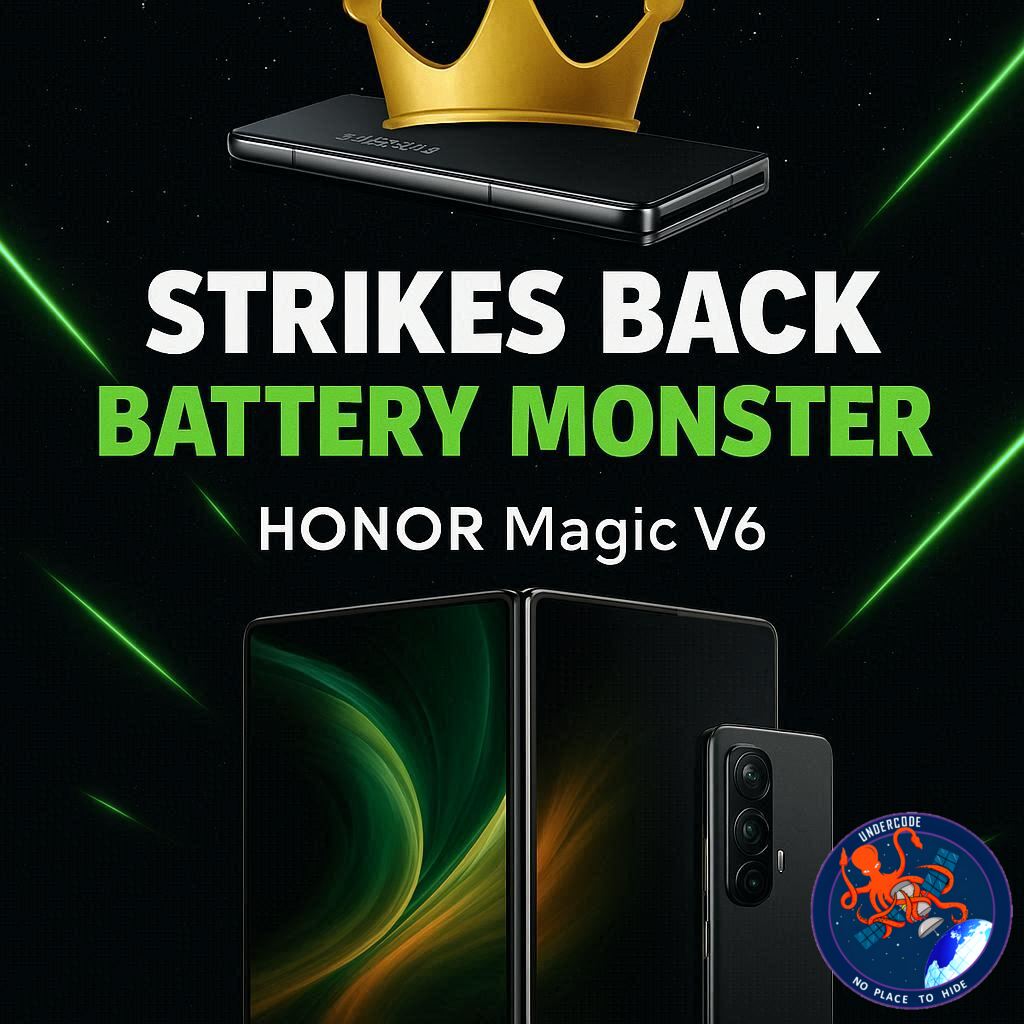
The foldable smartphone market is entering a new and far more aggressive phase. After years of cautious, incremental upgrades, competition is now laser-focused on the areas that matter most to users: battery life, durability, and long-term software support. While Samsung has dominated the global foldable conversation with its engineering prowess, Chinese manufacturers are no longer playing catch-up. The launch of the Honor Magic V6 marks a bold challenge to Samsung’s supremacy, directly targeting the weaknesses of the Galaxy Z Fold 7 rather than copying its strengths.
Background: Samsung’s Thinness Advantage
For years, Samsung refined its foldable strategy cautiously, which changed dramatically with the Galaxy Z Fold 7. The device shocked the industry by becoming the thinnest and lightest book-style foldable phone on the market. Competing brands claimed similar feats, but real-world measurements exposed those claims as exaggerated. Samsung clearly won the thinness race—but that victory came with compromises, particularly in battery capacity and charging speed.
Honor’s Countermove: Battery Over Everything
Unable to outdo Samsung on thinness alone, Honor shifted the battlefield. The Magic V6 prioritizes endurance, packing a massive 6,660mAh battery—51% larger than the one inside the Galaxy Z Fold 7. This decision signals a strategic pivot: instead of chasing millimeters, Honor is betting that users care more about lasting through a full day of heavy multitasking on a foldable display.
Display Technology: Brightness Taken to Extremes
The Magic V6 features a 6.52-inch OLED cover display and a 7.95-inch foldable inner OLED panel. The cover screen reaches a claimed peak brightness of 6,000 nits, while the inner display reportedly hits 5,000 nits and includes an anti-reflective coating. Both panels use LTPO 2.0 OLED technology, offering a variable refresh rate from 1Hz to 120Hz, stylus support, and 20MP selfie cameras on each screen.
Charging and Durability: A Clear Win for Honor
Honor’s advantage grows stronger when charging and durability enter the conversation. The Magic V6 supports 80W wired fast charging and 66W wireless charging, completely overshadowing the Galaxy Z Fold 7’s 25W wired and 15W wireless speeds. Additionally, the Magic V6 boasts IP68 and IP69 certifications, signaling serious resistance to dust and water—an area where foldables have traditionally been fragile.
Camera Hardware: Quantity vs Sensor Size
Camera strategy is where the two devices diverge sharply. The Magic V6 uses a 50MP primary camera with a 1/1.56-inch sensor and optical image stabilization. Samsung counters with a 200MP main camera on the Galaxy Z Fold 7, backed by a larger 1/1.3-inch sensor that excels in detail and low-light performance. However, Honor compensates with stronger secondary cameras: a 50MP ultrawide lens and a 64MP telephoto camera with 3x optical zoom, both outperforming Samsung’s lower-resolution counterparts on paper.
Software Support: No Longer Samsung-Exclusive
One of Samsung’s long-standing advantages has been software longevity. Honor is now matching that promise, offering seven years of Android OS upgrades and security updates. The Magic V6 ships with Android 16 and MagicOS 10, and even supports wireless file sharing with Apple devices via AirDrop, along with cross-platform notification syncing—features designed to blur ecosystem boundaries.
Original Summary
The original article highlights how Samsung’s Galaxy Z Fold 7 redefined thinness in foldable phones, leaving competitors struggling to match its design. Honor responded with the Magic V6, a foldable that sacrifices marginal thinness to deliver a significantly larger battery and much faster charging. The Magic V6 features high-brightness OLED displays, LTPO 2.0 technology, stylus support, and strong durability ratings. While Samsung maintains an edge in primary camera hardware with a 200MP sensor, Honor counters with superior secondary cameras and competitive imaging versatility. Honor also matches Samsung’s seven-year software update promise, signaling a shift in long-term support expectations. Despite rumors of a larger battery coming to future Samsung foldables, the article concludes that Samsung may need to rely heavily on software and efficiency optimizations to remain competitive against Chinese brands prioritizing battery capacity.
What Undercode Say:
Samsung’s dominance in foldables is no longer unquestioned. The Magic V6 exposes a growing reality: ultra-thin design alone is not enough to satisfy power users. Foldable phones are productivity machines, and productivity demands stamina. A 6,660mAh battery paired with ultra-fast charging directly addresses one of the most common complaints about foldables—battery anxiety. Samsung’s reliance on smaller batteries suggests a confidence in software optimization, but optimization has limits, especially when competing devices start with a 50% capacity advantage.
Camera strategy also reflects philosophical differences. Samsung continues to bet on sensor size and computational photography, while Honor spreads its resources across multiple high-resolution lenses. For users who value zoom flexibility and ultra-wide performance, Honor’s approach may feel more balanced. Meanwhile, the parity in software support removes yet another reason to default to Samsung, especially for buyers willing to experiment outside the Galaxy ecosystem.
More importantly, Honor’s aggressive durability certifications and charging speeds hint at a future where foldables are no longer treated as delicate luxury gadgets, but as everyday workhorses. If Samsung does not respond with meaningful battery and charging upgrades in its next generation, it risks losing practical-minded consumers who value endurance over elegance.
🔍 Fact Checker Results
✅ The Magic V6 does feature a 6,660mAh battery and significantly faster charging than the Galaxy Z Fold 7.
✅ Both brands now promise up to seven years of software and security updates.
❌ Claims of extreme brightness levels are manufacturer-rated and may not reflect sustained real-world usage.
📊 Prediction
Samsung will likely increase battery capacity in its next foldable generation, but not enough to match Chinese rivals outright. Instead, expect a dual strategy: modest hardware upgrades combined with aggressive efficiency optimizations and AI-driven power management, as the foldable war shifts from design bragging rights to real-world usability.
🕵️📝✔️Let’s dive deep and fact‑check.
References:
Reported By: www.sammobile.com
Extra Source Hub (Possible Sources for article):
https://www.medium.com
Wikipedia
OpenAi & Undercode AI
Image Source:
Unsplash
Undercode AI DI v2
Bing
🔐JOIN OUR CYBER WORLD [ CVE News • HackMonitor • UndercodeNews ]
📢 Follow UndercodeNews & Stay Tuned:
𝕏 formerly Twitter 🐦 | @ Threads | 🔗 Linkedin | 🦋BlueSky | 🐘Mastodon


