
Listen to this Post
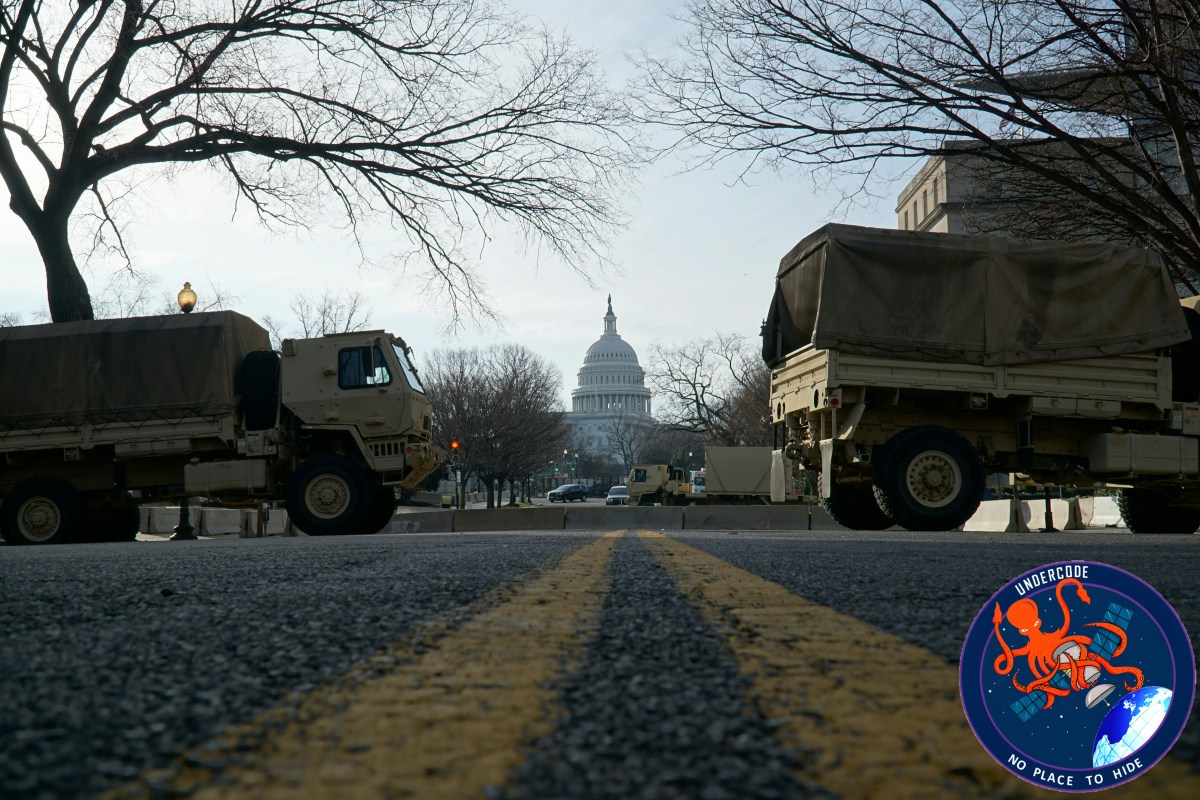
Recent developments in U.S. defense technology have put advanced artificial intelligence at the center of both frontline battlefield operations and a furious political battle in Washington. At the heart of the controversy is Anthropic’s Claude AI, a powerful language model that, despite deep integration with U.S. military systems, has been publicly condemned and restricted by the Trump administration due to disagreements over how it should be used in defense settings.
Axios
+1
Introduction
In early 2026, advanced AI tools designed by American companies became operational assets in critical military scenarios, from complex tactical planning against Iranian targets to intelligence support in the seizure of Venezuelan strongman Nicolás Maduro. Yet these strategic gains have collided with political tensions: the U.S. government, led by President Donald Trump and Defense Secretary Pete Hegseth, has moved to limit future use of Anthropic’s Claude within federal and defense agencies, branding the company a “supply chain risk” over its refusal to roll back safety safeguards. The standoff highlights both the military’s growing reliance on AI and the deep ethical, policy and geopolitical tensions shaping the future of autonomous and semi-autonomous technologies.
Defense News
Summary of the Situation
Anthropic’s Claude has been used operationally by U.S. forces in at least two high-profile scenarios: assisting with intelligence processing and decision support in a major strike campaign against Iranian forces, and helping plan the capture of Nicolás Maduro in Venezuela. Its deployment across classified defense networks was enabled through partnerships, including with firms like Palantir, making the model deeply embedded in military systems.
The Washington Post
+1
Despite these deployments, a dispute over military contract language erupted between Anthropic and the Department of Defense. The Pentagon demanded unrestricted use of Claude for “all lawful purposes,” which would effectively drop restrictions against autonomous weapons and mass domestic surveillance. Anthropic refused, arguing that such guardrails conflict with democratic values and the company’s safety principles.
Defense News
In response, President Trump ordered federal agencies to stop using Anthropic’s AI and Defense Secretary Hegseth designated the company as a supply chain risk — a label typically reserved for adversary firms. This action could bar Department of War contractors from working with Anthropic and push the Pentagon toward alternative providers like OpenAI and xAI.
Defense News
The dispute has caused internal Pentagon concern, as officials stress that overly restrictive contract terms could impair mission readiness and endanger troops, while others argue that replacing Claude’s capabilities will be disruptive but manageable given the formative state of military AI systems.
Reuters
What Undercode Say: AI, Military Operations, and Strategic Trade-Offs
The unfolding clash between Anthropic and the Pentagon underscores a fundamental tension at the intersection of technology, ethics, and national security. AI’s rapid evolution is no longer just a commercial or research challenge — it is shaping how wars are fought and how governments balance operational necessity with societal values.
At one level, Claude’s operational use in real conflict zones signals a significant shift: AI is moving from simulations and theoretical discussions into live battlefield application. AI models now assist with data synthesis, target analysis, and predictive scenarios, dramatically accelerating decision cycles and reducing cognitive load on human operators. This early “battle-testing” transforms how militaries prepare and execute missions, potentially giving an edge over competitors like China, whose AI integration into defense may not yet be as mature.
Axios
However, the political response to Claude’s integration reveals that technical capability alone does not guarantee sustained adoption. The Trump administration’s hardline stance — accusing Anthropic of undermining national security for placing guardrails on its technology — shows how ideological views on AI’s role can shape defense policy. This politicization could have several consequences:
Strategic Fragmentation: Pushing key AI companies out of government work may fragment the U.S. defense tech ecosystem at a moment when cohesion and national competitiveness are paramount. If China or other adversaries avoid similar internal strife, they could capitalize on the disruption.
Ethical Leadership vs. Military Demand: Anthropic’s insistence on safety limitations reflects broader ethical concerns about autonomous weapons and domestic surveillance. But in high-stakes scenarios, governments may prioritize operational flexibility, raising questions about where the line between civilian ethics and military necessity should be drawn.
Operational Stability: Removing a deeply embedded AI system like Claude won’t be trivial. Defense officials are candid that replacement solutions could take months to fully integrate — long after critical missions may be planned or underway. This suggests that policy decisions made for political reasons can have real-world operational costs.
AI Governance and Regulation: The clash is a wake-up call for clearer governance frameworks. It highlights that military use of AI cannot be managed solely through private contracts; it requires coherent public policy that balances innovation, security, ethics, and public trust.
Broader Industry Impact: The debate is reverberating through the tech sector, with employees at other AI labs voicing concerns and signaling that ethical red lines are widely shared within the community. This collective pushback could temper how other companies approach government contracts.
The Guardian
In this context, the Anthropic–Pentagon dispute illustrates the complex interplay between technological progress, political direction, ethical frameworks, and national defense imperatives. It also foreshadows larger ideological battles over AI’s role in society and war — battles that will have lasting impact well beyond any single company or administration.
Fact Checker Results
Anthropic’s AI model Claude has been actively used in U.S. military operations, including intelligence and targeting support in Iran and Venezuela.
The Washington Post
The Trump administration has decreed a ban on future federal use of Anthropic’s technology and labeled the company a supply chain risk due to a contract disagreement.
Defense News
Despite the ban order, Claude continues functioning in defense missions during an official phase-out period as replacements are pursued.
Prediction
Looking ahead, the Anthropic–Pentagon clash could reshape not just military AI policy but broader global AI competition. If the U.S. government prioritizes political alignment over strategic cohesion with leading AI developers, rivals such as China might exploit the resulting fragmentation to accelerate their own military AI programs. This could trigger an AI arms race with high geopolitical costs. Conversely, the controversy might accelerate regulatory frameworks that govern military AI, leading to clearer international norms and potentially slowing unchecked AI deployment in lethal systems — a dual-edged outcome with profound implications for how wars are fought in the 21st century.
🕵️📝✔️Let’s dive deep and fact‑check.
References:
Reported By: axioscom_1772619362
Extra Source Hub (Possible Sources for article):
https://www.reddit.com/r/AskReddit
Wikipedia
OpenAi & Undercode AI
Image Source:
Unsplash
Undercode AI DI v2
Bing
🔐JOIN OUR CYBER WORLD [ CVE News • HackMonitor • UndercodeNews ]
📢 Follow UndercodeNews & Stay Tuned:
𝕏 formerly Twitter 🐦 | @ Threads | 🔗 Linkedin | 🦋BlueSky | 🐘Mastodon


