
Listen to this Post
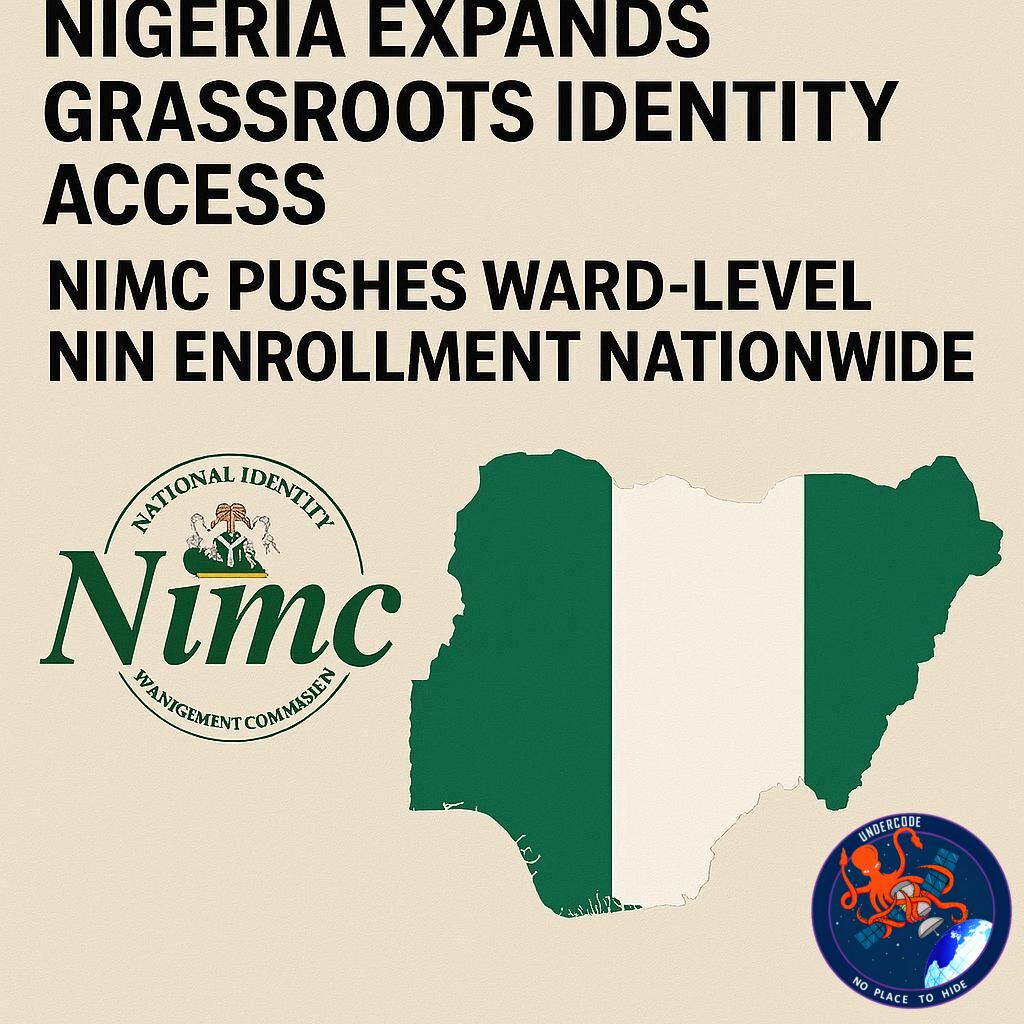
A New Phase in Nigeria’s Digital Identity Journey
Nigeria’s digital identity system has entered a new chapter. The National Identity Management Commission has officially taken its National Identification Number enrollment process closer to the people through a decentralised ward-level registration drive. The initiative, which began on February 16, 2026, aims to simplify access to identity registration and accelerate nationwide coverage.
For millions of Nigerians, the NIN is no longer optional. It has become a gateway to essential government services, financial inclusion, and digital participation. Now, the government is making it easier than ever to register, especially at the grassroots level.
NIMC Confirms Ongoing Ward-Level Enrollment
The National Identity Management Commission, widely known as NIMC, confirmed that its ward-level NIN enrollment drive is actively ongoing across the country.
The decentralized program allows citizens and legal residents to register at designated ward enrollment centres instead of traveling long distances to central offices.
The announcement was reported by PUNCH, which highlighted the Commission’s effort to bring identity services closer to communities nationwide.
Grassroots Registration Strategy in Motion
According to the commission’s Head of Corporate Communications, Dr. Kayode Adegoke, the exercise is progressing steadily and achieving its intended goal of expanding access at the grassroots level.
The ward-based approach is designed to reduce congestion in urban centers while increasing accessibility in rural and underserved communities.
By moving registration to the ward level, NIMC is effectively decentralizing identity capture and addressing one of the biggest bottlenecks in previous enrollment phases.
Why the NIN Remains Critical
The National Identification Number is an 11-digit unique number assigned to every individual after successful enrollment into Nigeria’s National Identity Database.
This number serves as a central identifier, linking an individual’s records across multiple government systems.
In recent years, the NIN has become mandatory for accessing numerous public services, including SIM registration, banking operations, government benefits, and other official transactions.
NIMC reiterated that citizens who have not yet enrolled should take advantage of the ongoing ward-level drive.
Official Channels and Public Advisory
The commission advised applicants to visit its official website to locate the nearest enrollment centre.
It also urged Nigerians to rely strictly on verified communication channels, including its official social media platforms, for accurate updates.
Applicants were encouraged to cooperate with registration officials and ensure they provide correct and complete information during the enrollment process.
Step-by-Step Enrollment Options in 2026
NIMC clarified that all Nigerian citizens and legal residents from birth onward are eligible for enrollment.
For convenience, pre-enrollment can be completed online through the designated portal before physical capture at a center.
Data modification services are also available through a separate self-service portal.
Additionally, the NINAUTH mobile application, accessible on both iOS and Android devices, provides digital identity services, including authentication support.
This digital expansion signals that NIMC is not only focusing on physical access but also strengthening digital identity infrastructure.
127 Million Nigerians Already Registered
Earlier reports from Legit.ng revealed that the total number of Nigerians enrolled in the NIN database reached 127 million as of December 2025.
Data from NIMC’s website showed that by October 31, 2025, enrollment had already hit 123.9 million.
Lagos State recorded the highest number of registered individuals, with over 13 million enrollees.
Gender distribution data indicated over 54.2 million females and about 69.7 million males had been captured as of October 2025.
Interestingly, NIMC noted that enrollment figures were relatively balanced across northern and southern regions, suggesting broad national participation.
What Undercode Say:
Decentralisation Is a Strategic Move
The ward-level approach is not just administrative convenience. It is a structural reform. By decentralising NIN registration, NIMC is solving a logistical challenge that has slowed digital identity penetration for years.
Urban centers were overwhelmed. Rural communities were underserved. This new approach directly addresses both problems.
Identity as Economic Infrastructure
A national identity system is not just about documentation. It is about economic architecture.
When 127 million people are in a verified database, financial institutions can assess credit risk more efficiently. Telecom operators can authenticate customers more securely. Government agencies can deliver targeted welfare programs with reduced fraud.
The NIN has evolved into a backbone for Nigeria’s digital economy.
The Link to Financial Inclusion
Nigeria’s unbanked population remains significant. A verified identity lowers the barrier to opening bank accounts and accessing digital financial services.
Ward-level enrollment could therefore accelerate financial inclusion in semi-urban and rural communities.
Identity access equals economic access.
Security and Data Protection Concerns
However, expansion also increases responsibility.
As enrollment scales, cybersecurity risks grow. The protection of biometric data and personal information becomes more critical than ever.
NIMC must continue strengthening data encryption, system redundancy, and breach prevention frameworks.
Public trust in digital identity systems depends entirely on security integrity.
Political and Social Implications
A strong identity database has governance implications.
From election processes to social welfare distribution, verified identity systems can reduce fraud and duplication.
But they also raise questions about surveillance and data governance.
Transparency and clear legal safeguards are essential to maintain citizen confidence.
The Race Toward Full Coverage
Nigeria’s population is estimated at over 220 million.
With 127 million enrolled, a substantial gap remains.
Ward-level drives could significantly narrow that gap if properly executed and monitored.
However, infrastructure consistency, electricity supply, trained personnel, and biometric equipment maintenance remain operational challenges.
Digital Identity as a Development Multiplier
Countries with comprehensive identity systems often see improved tax compliance, better welfare targeting, and more efficient public service delivery.
Nigeria appears to be moving toward that direction.
If the decentralised model works effectively, it could become a case study for other developing nations facing similar identity coverage challenges.
The success of this drive will depend not just on enrollment numbers, but on system reliability, integration with other institutions, and sustained public trust.
Fact Checker Results
✅ The ward-level NIN enrollment drive began on February 16, 2026, and is ongoing nationwide.
✅ Total NIN enrollment reached approximately 127 million as of December 2025.
✅ Lagos State recorded the highest number of registered individuals with over 13 million enrollees.
Prediction
Nigeria is likely to surpass 150 million NIN registrations within the next two years if ward-level enrollment remains consistent and infrastructure challenges are managed.
As digital identity integration deepens across banking, telecom, and public services, the NIN could evolve into a fully unified digital identity ecosystem for citizens and residents.
If cybersecurity investments match enrollment expansion, Nigeria’s identity system may become one of the most robust digital identity frameworks in Africa.
🕵️📝✔️Let’s dive deep and fact‑check.
References:
Reported By: www.legit.ng
Extra Source Hub (Possible Sources for article):
https://www.medium.com
Wikipedia
OpenAi & Undercode AI
Image Source:
Unsplash
Undercode AI DI v2
Bing
🔐JOIN OUR CYBER WORLD [ CVE News • HackMonitor • UndercodeNews ]
📢 Follow UndercodeNews & Stay Tuned:
𝕏 formerly Twitter 🐦 | @ Threads | 🔗 Linkedin | 🦋BlueSky | 🐘Mastodon


