
Listen to this Post
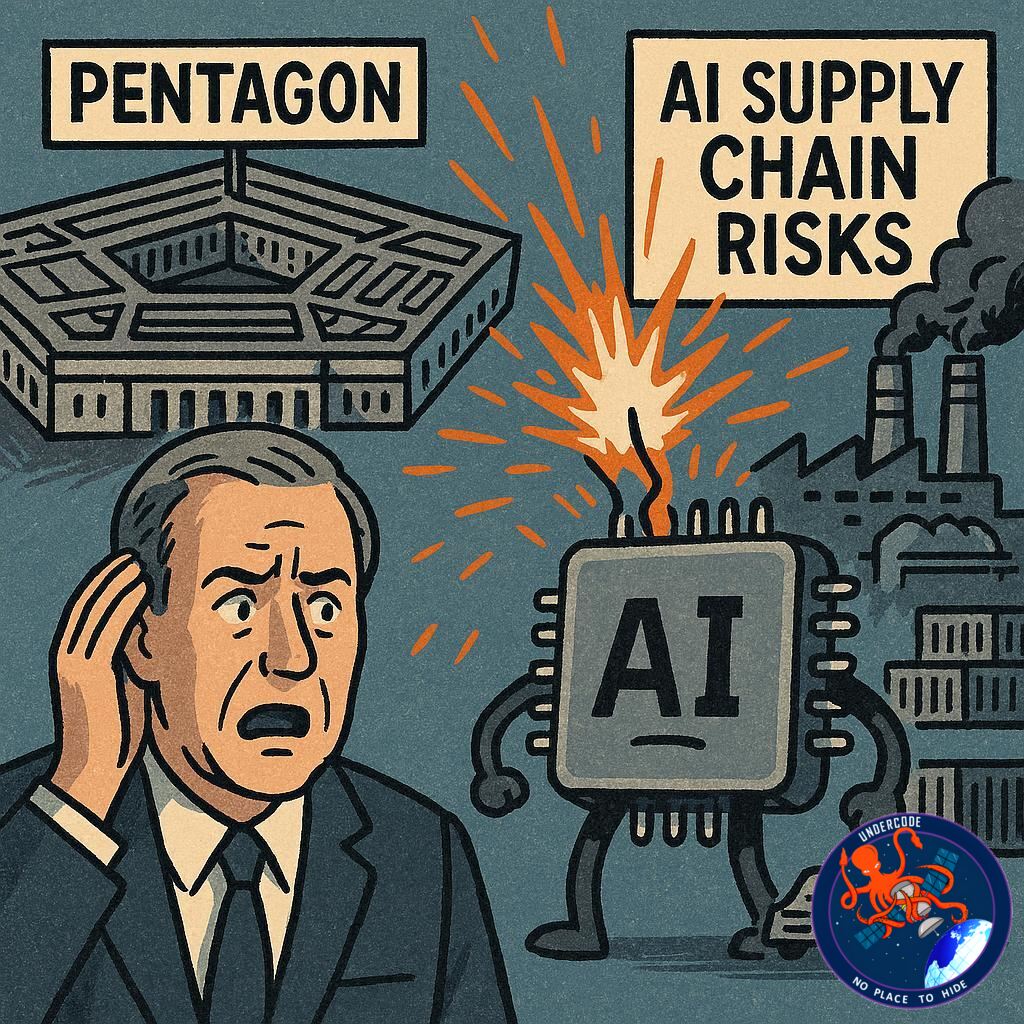
A Political Decision That Could Reshape the AI Landscape
Washington’s technology sector is pushing back after reports that the Pentagon may designate Anthropic as a supply chain risk. The move, if finalized, could do far more than disrupt one company. It could reshape how artificial intelligence tools are procured, integrated, and trusted across the federal government and beyond.
At the center of the debate is a contract dispute involving Anthropic’s AI system Claude and the U.S. Department of Defense. But what began as a disagreement over procurement terms now risks escalating into a policy decision with sweeping consequences for the broader tech ecosystem. Major players across cloud computing, software, and chip manufacturing are watching closely, and many are voicing concern.
Industry Coalition Urges Defense Secretary to Reconsider
A leading trade association representing technology, software, and AI companies in Washington formally urged Defense Secretary Pete Hegseth not to blacklist Anthropic. The letter, shared publicly, signals mounting anxiety across Silicon Valley and the defense contracting community.
The organization behind the appeal is the Information Technology Industry Council, known as ITI. Its members include some of the most influential companies in the global technology sector. Among them are Apple, Adobe, Amazon, CoreWeave, Google, Meta, and Microsoft.
The breadth of representation underscores how interconnected Anthropic’s tools are with enterprise workflows, including those serving government clients.
The Core Argument: Procurement Dispute vs. National Risk
In the letter, ITI President Jason Oxman argued that contract disagreements should be resolved through negotiation or through established procurement alternatives, not through a supply chain risk designation.
The concern is straightforward. If the Pentagon labels a company as a supply chain risk over a procurement dispute, it sets a precedent that could blur the line between contractual disagreements and national security determinations. That, according to the industry group, would inject uncertainty into the government’s ability to access best-in-class American technology.
Ripple Effects Beyond the Pentagon
Anthropic’s AI model Claude is integrated into numerous enterprise systems. Some of these systems are used by contractors and agencies throughout the federal government. If Anthropic were formally blacklisted, organizations that rely on Claude may face compliance challenges, forced migrations, or costly infrastructure changes.
The impact would not stop at AI vendors. Cloud providers, semiconductor manufacturers, and enterprise software developers that have embedded Claude into their workflows could face operational disruption.
Letter Sent Across Government Channels
The trade group did not limit its concerns to the Defense Department. The letter was also delivered to the Department of Commerce, the General Services Administration, and multiple White House offices.
This wide distribution suggests the industry sees the issue as more than a Defense Department matter. It reflects broader anxieties about how AI policy is being shaped at the federal level.
Background: Talks Break Down Over Claude
Defense Secretary Hegseth reportedly said that Anthropic would receive a supply chain risk designation after negotiations broke down over the Pentagon’s use of Claude. However, Anthropic has not received formal notification of such a designation.
Complicating matters further, President Trump directed federal agencies to remove Claude from operations. Agencies have already begun phasing out the system in response to that directive.
The combination of executive direction and potential formal designation has accelerated uncertainty within both government and private sector circles.
Industry Response Expands
Sources familiar with the situation indicate that additional industry letters are being drafted for submission to the White House. Companies fear that the precedent could harm their own businesses if supply chain risk designations become tools for resolving contractual disputes.
The pushback is not just about Anthropic. It is about preserving predictability in federal procurement and maintaining confidence in American AI infrastructure.
What Undercode Say:
This Is Not Just About One AI Company
The controversy surrounding Anthropic reflects a deeper tension between national security policy and commercial innovation. When AI becomes embedded in government operations, the stakes rise dramatically.
A supply chain risk designation is not a minor administrative label. It signals that a vendor may pose systemic vulnerabilities to government systems. Traditionally, such designations are reserved for cybersecurity threats, foreign ownership concerns, or proven operational risks.
If a contractual disagreement becomes grounds for such a designation, the boundary between procurement management and national security risk assessment becomes blurred.
The Precedent Could Reshape Federal AI Procurement
Government contractors depend on stability. If vendors can be reclassified as risks during negotiations, firms may hesitate to integrate cutting-edge AI into critical systems. The cost of switching AI providers can be immense, especially when models are deeply embedded in software architectures.
The Pentagon relies on rapid innovation to maintain technological superiority. Artificial intelligence is central to that mission, from logistics optimization to intelligence analysis. Creating uncertainty around AI vendors could slow adoption at a time when geopolitical competition in AI is intensifying.
The Ecosystem Is Deeply Interconnected
Modern AI companies do not operate in isolation. They depend on cloud infrastructure, chip manufacturers, and enterprise software platforms. When a single AI model is flagged, the effect can cascade through these partnerships.
For example, if a cloud provider offers Claude as part of its enterprise AI stack, customers may suddenly face compliance risks. That forces vendors to redesign offerings or remove features, potentially weakening competitiveness against global rivals.
The supply chain risk concept was originally developed to guard against hostile foreign actors. Applying it in the context of a domestic procurement dispute risks diluting its credibility.
Political Signals and Market Reactions
Executive directives to remove a specific AI system from government operations send strong market signals. Investors, partners, and enterprise clients take note. Even the possibility of a formal designation can influence stock prices, procurement decisions, and strategic roadmaps.
In highly competitive AI markets, perception matters almost as much as performance. If Claude is perceived as politically vulnerable, customers may diversify toward alternatives even without a formal ban.
That, in turn, could alter competitive dynamics among major AI developers.
Innovation vs. Control
There is an ongoing debate in Washington about how tightly AI systems should be controlled in federal environments. Concerns range from data sovereignty to operational transparency.
However, policy tools must match the problem. If the issue is pricing, licensing terms, or contract scope, procurement frameworks already exist to handle those matters.
Elevating such disputes to supply chain risk designations introduces systemic consequences that may outweigh the original disagreement.
The Bigger Strategic Picture
The United States is engaged in a global race for AI leadership. Government partnerships with domestic AI firms are a strategic asset.
Undermining trust in those partnerships could inadvertently weaken the very ecosystem policymakers aim to protect.
The real risk may not be Anthropic itself, but the chilling effect that unpredictable designations could create across the industry.
Stability, transparency, and clear standards will be essential if the government wants to maintain access to the most advanced AI systems built by American companies.
Fact Checker Results
✅ Major technology companies are represented by the Information Technology Industry Council, which sent the letter to federal officials.
✅ Defense Secretary Pete Hegseth reportedly indicated Anthropic could receive a supply chain risk designation following contract disputes.
❌ There is no public confirmation yet that Anthropic has formally received an official supply chain risk designation.
Prediction
🔮 If the Pentagon proceeds with a formal designation, expect legal challenges and intensified lobbying from major tech firms.
🔮 Federal agencies may accelerate diversification of AI vendors to reduce political and operational exposure.
🔮 The episode could trigger clearer federal guidelines separating procurement disputes from national security risk classifications.
🕵️📝✔️Let’s dive deep and fact‑check.
References:
Reported By: axioscom_1772653522
Extra Source Hub (Possible Sources for article):
https://www.digitaltrends.com
Wikipedia
OpenAi & Undercode AI
Image Source:
Unsplash
Undercode AI DI v2
Bing
🔐JOIN OUR CYBER WORLD [ CVE News • HackMonitor • UndercodeNews ]
📢 Follow UndercodeNews & Stay Tuned:
𝕏 formerly Twitter 🐦 | @ Threads | 🔗 Linkedin | 🦋BlueSky | 🐘Mastodon


