
Listen to this Post
Introduction: Geopolitical Shockwaves Ripple Through Global Financial Markets
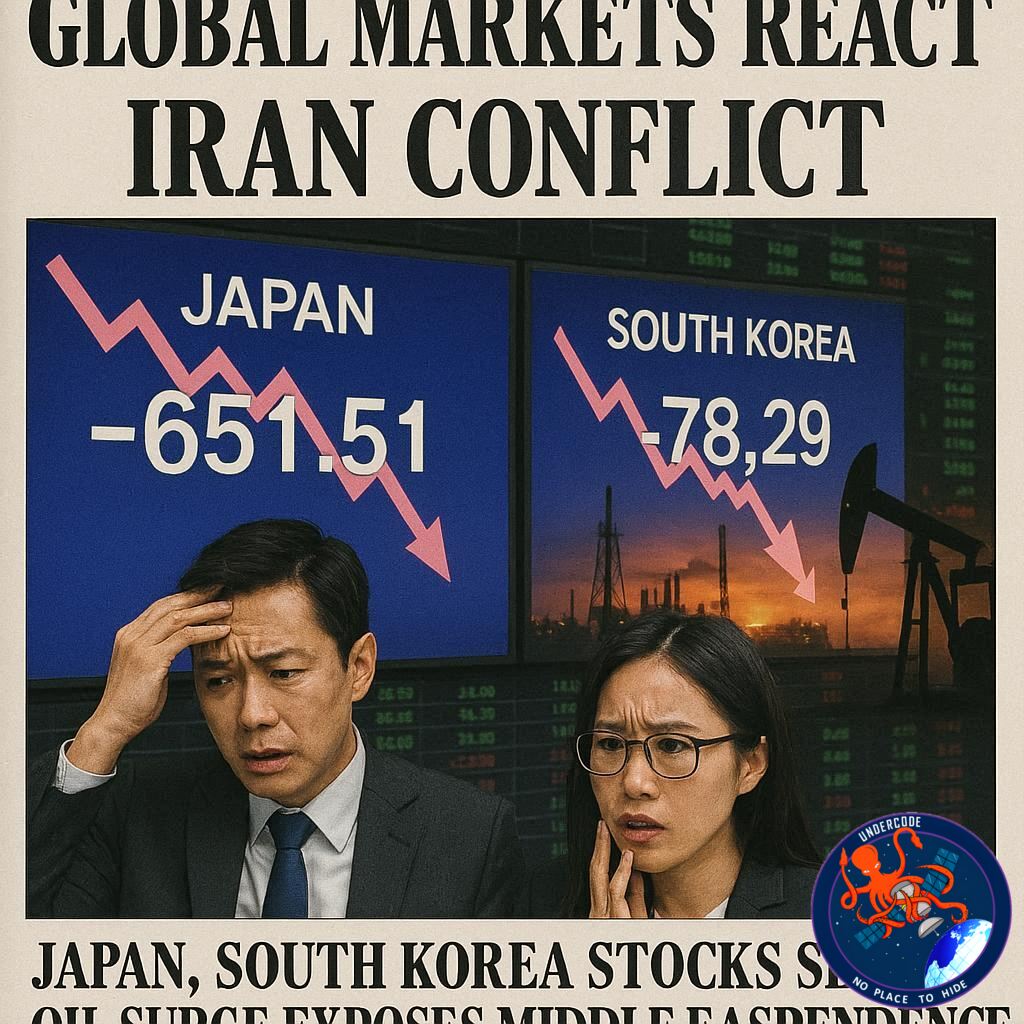
One week after the military strike on Iran by the United States and Israel, global financial markets are experiencing widespread turbulence. What initially appeared to be a regional military escalation has quickly transformed into a financial stress test for investors worldwide. Stock markets, particularly in technology-heavy economies like Japan and South Korea, have entered a sharp correction phase. At the same time, oil prices have surged dramatically, reminding markets of the fragile energy balance tied to Middle Eastern supply routes. Investors are now confronting a complex mix of geopolitical risk, inflation concerns, and fears of slowing economic growth.
Market Reaction After the Iran Strike
During the period from March 2 to March 6, financial markets across the globe experienced a broad decline in major asset classes following the attack on Iran. Equity markets suffered the most visible losses, with Japan and South Korea hit particularly hard. These two markets had previously outperformed global peers earlier in the year, largely driven by optimism surrounding artificial intelligence companies and semiconductor-related businesses. However, that momentum reversed rapidly as investors rushed to lock in profits and reduce exposure to risk-sensitive sectors.
The sell-off spread quickly among technology and AI-related stocks, which had been the engines of the rally since the beginning of the year. As geopolitical uncertainty intensified, many institutional investors shifted their strategies from growth-oriented equities to safer assets. The sudden change in sentiment triggered waves of adjustment selling, pushing major indexes in Tokyo and Seoul downward.
At the same time, oil prices surged sharply. Energy markets reacted immediately to the possibility of disruption in the Middle East, the world’s most important oil-producing region. The rally in crude oil became the strongest move among major assets during the week. Investors began pricing in the risk of supply instability, particularly because many Asian economies rely heavily on energy imports from the region.
Currency markets reflected the same flight-to-safety behavior. The U.S. dollar strengthened as global investors sought stability amid geopolitical uncertainty. Historically, the dollar tends to benefit during crises because it remains the dominant reserve currency and a key safe-haven asset. As capital flowed into dollar-denominated assets, other currencies faced downward pressure.
Meanwhile, bond markets and commodity markets started reflecting deeper macroeconomic concerns. Higher oil prices raised fears that inflation could reaccelerate just as many economies are trying to stabilize growth. Rising energy costs can quickly filter into transportation, manufacturing, and consumer prices, potentially complicating central bank policy decisions.
For countries such as Japan and South Korea, the situation is particularly sensitive. Both economies depend heavily on imported fossil fuels, especially crude oil and liquefied natural gas from the Middle East. Any prolonged instability in that region can quickly translate into higher production costs and reduced economic competitiveness. As a result, investors began reassessing the vulnerability of these economies to external energy shocks.
The result was a synchronized shift in market psychology. Equity enthusiasm driven by AI innovation gave way to caution. Oil became the leading asset, while stocks that had recently captured global investor excitement suddenly faced strong downward pressure. The broader financial landscape now reflects a market trying to balance technological optimism with geopolitical reality.
Structural Vulnerability of Energy Importing Economies
Japan and South
Energy vulnerability becomes even more significant when global inflation is already a concern. Rising oil prices tend to feed directly into transportation costs, manufacturing expenses, and consumer prices. As energy becomes more expensive, central banks may find it harder to support economic growth through accommodative monetary policy.
For technology-driven markets, this creates an additional layer of risk. Even high-growth sectors like AI and semiconductors cannot fully escape macroeconomic pressure if energy costs surge and economic momentum slows.
Safe-Haven Dynamics Strengthen the U.S. Dollar
In times of geopolitical uncertainty, capital tends to concentrate in assets perceived as stable. The recent market reaction followed this historical pattern closely. As investors reduced exposure to equities, capital flowed into the U.S. dollar.
The dollar’s strength reflects its unique role in the global financial system. Many commodities, including oil, are priced in dollars, which naturally increases demand for the currency when energy markets become volatile. At the same time, U.S. Treasury markets remain among the deepest and most liquid financial markets in the world, offering investors a perceived safe harbor during crises.
This shift can place additional pressure on Asian currencies and financial markets. A stronger dollar often tightens global liquidity conditions, making it more expensive for emerging and import-dependent economies to finance trade and investment.
Oil Market Rally Highlights Geopolitical Risk Premium
The strongest market movement during the week came from crude oil prices. Energy traders quickly incorporated the possibility of prolonged instability in the Middle East into their pricing models. Even without direct disruption to oil production, geopolitical risk alone can drive significant price increases.
Markets also understand that the Middle East remains central to global energy supply. Any escalation involving major regional players can create uncertainty around shipping routes, pipelines, and production infrastructure. This uncertainty is enough to trigger speculative buying and supply risk premiums in oil markets.
If elevated oil prices persist, the ripple effects could extend across industries, influencing inflation rates, central bank policies, and global trade balances.
What Undercode Say: Strategic Market Shifts Beneath the Headlines
AI Market Euphoria Meets Geopolitical Reality
The sharp correction in Japanese and South Korean stocks highlights a critical truth about modern financial markets. Even the most promising technological sectors cannot escape geopolitical shockwaves. Artificial intelligence companies have been driving a powerful narrative of future economic transformation, but investors are now reminded that macroeconomic forces still dominate market direction during crises.
AI stocks became crowded trades throughout the past year. When uncertainty rises, crowded trades tend to unwind quickly. Investors lock in profits not because the long-term story changes, but because risk tolerance collapses temporarily.
Energy Security Returns as a Global Strategic Priority
One of the most important lessons from this market reaction is the renewed focus on energy security. For decades, globalization allowed many advanced economies to rely heavily on imported energy without significant market concern. However, geopolitical fragmentation is beginning to challenge that assumption.
Japan and South Korea represent textbook examples of energy import dependency. Both countries have world-class manufacturing sectors and technological leadership, yet their energy supply chains remain externally exposed. When oil prices surge, the cost structure of entire industrial sectors shifts almost instantly.
Inflation Risk May Reawaken in Unexpected Ways
The surge in oil prices carries another long-term implication. Many global economies spent the past year attempting to stabilize inflation after aggressive central bank tightening cycles. A sudden rise in energy prices can quickly reverse that progress.
Oil remains embedded in almost every supply chain. Transportation, plastics, chemicals, aviation, agriculture, and logistics all rely on petroleum products. When oil climbs rapidly, the inflationary effects ripple across multiple sectors simultaneously.
This creates a difficult environment for central banks. Lower interest rates might support economic growth, but they could also accelerate inflation if energy costs remain high.
Market Psychology Is Now Driving Volatility
Another key factor shaping current market movements is psychological risk perception. Markets are not only reacting to actual economic data but also to the anticipation of future instability.
When geopolitical conflicts escalate, investors often price in worst-case scenarios even before they occur. The fear of supply disruptions, military escalation, or sanctions can influence asset prices long before any concrete economic damage appears.
This psychological feedback loop amplifies volatility. It can cause sharp sell-offs in equities, rapid rallies in commodities, and sudden shifts in currency markets.
The Hidden Connection Between AI Growth and Energy Demand
Ironically, the same AI sector that drove stock market rallies is also deeply connected to energy consumption. Advanced data centers, semiconductor fabrication plants, and cloud infrastructure require enormous electricity resources.
As the world builds more AI infrastructure, energy demand will likely rise significantly. This creates an unusual paradox. The industries expected to drive the next wave of economic growth may also intensify global energy demand, increasing exposure to oil and energy market volatility.
The Global Economy Is Entering a New Risk Era
The current market reaction suggests a broader transformation in how investors assess global risk. For many years, financial markets operated under the assumption that geopolitical conflicts would remain contained and economically manageable.
Recent events are gradually challenging that belief. Supply chains, energy markets, and technology industries are becoming increasingly intertwined with geopolitical dynamics.
The result is a new era of financial volatility where economic growth, energy security, and geopolitical strategy are tightly interconnected.
Fact Checker Results
✅ Oil prices often surge during geopolitical tensions in the Middle East due to supply risk concerns.
✅ The U.S. dollar historically strengthens during global crises as investors seek safe-haven assets.
❌ AI sector corrections do not necessarily indicate a long-term decline in artificial intelligence demand.
Prediction
📊 Oil market volatility will likely remain elevated if Middle East tensions persist.
📊 Technology stocks, especially AI companies, may experience intermittent corrections as geopolitical risks influence investor sentiment.
📊 Energy security strategies in Asia could accelerate investment in renewables, nuclear power, and diversified supply chains.
🕵️📝✔️Let’s dive deep and fact‑check.
References:
Reported By: xtechnikkeicom_baf3b015e66fccdb42342aac
Extra Source Hub (Possible Sources for article):
https://www.reddit.com/r/AskReddit
Wikipedia
OpenAi & Undercode AI
Image Source:
Unsplash
Undercode AI DI v2
Bing
🔐JOIN OUR CYBER WORLD [ CVE News • HackMonitor • UndercodeNews ]
📢 Follow UndercodeNews & Stay Tuned:
𝕏 formerly Twitter 🐦 | @ Threads | 🔗 Linkedin | 🦋BlueSky | 🐘Mastodon


