
Listen to this Post
Introduction: A Small Change With Big Security Implications
Online meetings have become a central part of modern work. Platforms like Microsoft Teams are now used daily for collaboration, remote communication, and decision-making across companies worldwide. However, as digital workplaces expand, so do the risks associated with unauthorized access, automated tools, and malicious software attempting to infiltrate meetings unnoticed.
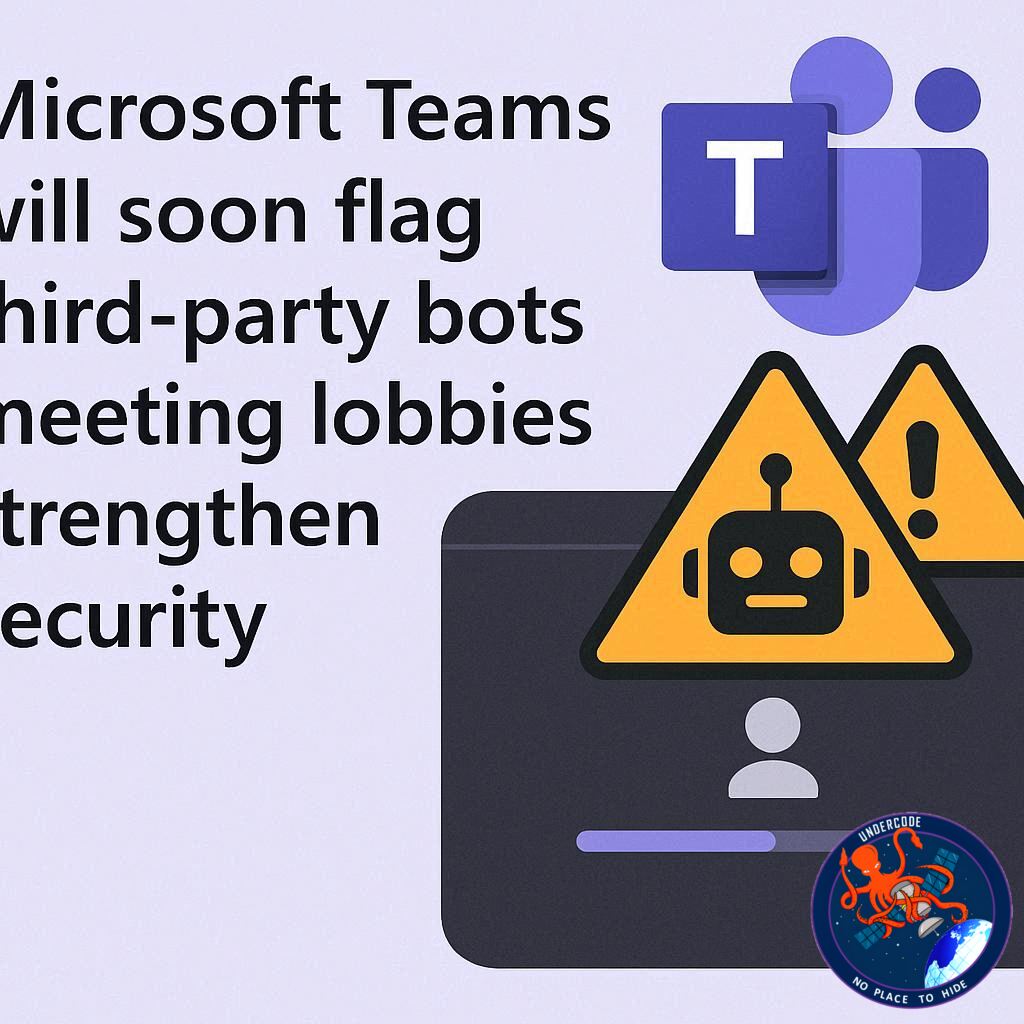
To address this growing concern, Microsoft has announced a new feature designed to increase transparency and control during meetings. Soon, Teams will automatically identify and clearly label third-party bots attempting to join meeting lobbies. This new capability will give organizers a clearer view of who or what is trying to enter their meetings and ensure automated tools cannot slip in unnoticed.
The update represents another step in
Microsoft Introduces Clear Bot Identification in Teams Lobbies
According to a newly published entry in the Microsoft 365 product roadmap, the company is currently developing a feature that will automatically tag external third-party bots when they attempt to join a Teams meeting. The feature is expected to become available in May 2026 and will roll out globally.
Once deployed, the update will work across multiple platforms including Windows, macOS, Android, and iOS. It will also be supported in both standard multi-tenant environments and Government Community Cloud (GCC) deployments.
Currently, bots that attempt to join meetings can sometimes appear similar to normal participants while waiting in the meeting lobby. This can create confusion for organizers who may accidentally approve them along with legitimate attendees.
With the upcoming change, Teams will clearly mark external bots in the lobby so that meeting organizers can easily distinguish them from human participants. Instead of blending into the list of waiting users, automated systems will be visually identified as bots.
This means that organizers must deliberately approve the bot before it can enter the meeting. They will no longer be able to admit bots accidentally while approving multiple attendees at once.
Microsoft explained that this process is designed to ensure full transparency. Organizers will have clear visibility of any automated entity attempting to join a meeting and must explicitly grant permission before it can participate.
The company emphasized that the change prevents external bots from being admitted without awareness. This provides meeting hosts with greater control over who or what is present during conversations, especially in sensitive business discussions.
Why Bot Identification Matters in Online Meetings
Automated bots are commonly used in modern meetings for helpful tasks. Many organizations rely on them for features such as transcription, note-taking, analytics, or meeting summaries. However, not all bots are harmless.
Malicious actors can deploy compromised or rogue applications that attempt to infiltrate meetings for surveillance, data collection, or social engineering purposes. When bots appear similar to normal users, it becomes easier for attackers to hide them within the participant list.
By labeling bots clearly in the lobby stage, Teams ensures that organizers are aware that a non-human participant is requesting access.
This simple visual indicator could significantly reduce the risk of unauthorized automated tools gaining access to confidential discussions.
The change also improves transparency in meetings where approved bots are legitimately used. Participants will know when automation is present and what tools might be recording or analyzing conversations.
Microsoft’s Expanding Security Measures in Teams
The new bot-labeling system is only one part of
Earlier in 2026, the company announced another upcoming feature that will allow users to report suspicious calls directly from the Teams interface. This capability is expected to roll out around mid-March.
With the new reporting tool, users will be able to flag unwanted or suspicious calls as potential scams or phishing attempts.
In addition, Microsoft has already introduced several fraud-protection mechanisms designed to warn users about social engineering attacks.
These warnings appear when external callers attempt to impersonate trusted organizations, a tactic frequently used by cybercriminals to trick employees into revealing sensitive information.
The company has also strengthened administrative controls to combat abuse of the platform. Since December, administrators have been able to block external Teams users through the Microsoft Defender security portal.
This capability allows organizations to prevent unknown external users from contacting employees through Teams, which is particularly important in defending against cybercrime groups that use collaboration tools as part of phishing campaigns.
Attackers, including ransomware groups, have increasingly used business communication platforms as a new channel to approach victims and build trust before launching attacks.
The Growing Security Challenge of Collaboration Platforms
As remote and hybrid work models continue to dominate, communication platforms have become prime targets for cyber threats.
Tools like Microsoft Teams now function as central hubs for meetings, file sharing, messaging, and project coordination. This concentration of activity makes them extremely valuable to attackers seeking access to corporate environments.
If a malicious actor gains entry into a meeting, they may be able to observe confidential discussions, collect sensitive information, or manipulate conversations.
Bots present an additional challenge because they operate automatically and can perform tasks such as recording audio, capturing transcripts, or analyzing meeting data in real time.
Without proper identification mechanisms, these automated systems could potentially be used for surveillance or data theft without participants realizing it.
Microsoft’s decision to explicitly label bots in meeting lobbies reflects the growing awareness that collaboration platforms require the same level of security scrutiny as email systems or enterprise networks.
What Undercode Say:
The Rise of Automation Inside Meetings
Automation is rapidly transforming digital collaboration. Bots are increasingly used for scheduling meetings, generating transcripts, translating languages, and summarizing discussions.
While these tools improve productivity, they also introduce new security concerns. The line between helpful automation and potential surveillance becomes blurry when users cannot clearly identify automated participants.
Microsoft’s decision to label bots directly addresses this transparency problem.
A Subtle Yet Powerful Security Layer
At first glance, simply tagging bots in the lobby might appear to be a minor feature. In reality, it creates an important security checkpoint.
Many cyber incidents occur not because systems are technically compromised, but because humans make quick decisions without full awareness. When meeting hosts approve multiple participants simultaneously, they may unintentionally admit unknown entities.
Forcing organizers to explicitly approve bots adds friction in the exact place where mistakes often occur.
This design follows a well-known cybersecurity principle: making risky actions require deliberate confirmation.
Social Engineering Is Moving Into Collaboration Platforms
Historically, email was the main battlefield for phishing attacks. Today, attackers are shifting toward real-time communication platforms.
Hackers now impersonate vendors, executives, or IT staff through chat messages or calls. Once trust is established, they request sensitive information or encourage employees to run malicious software.
Bots could potentially amplify these tactics by automating interactions or recording discussions without consent.
By strengthening bot visibility and call reporting, Microsoft is acknowledging that collaboration tools have become a new frontline in cybersecurity.
Transparency Is the Future of AI and Bots
As artificial intelligence becomes more embedded in workplace software, transparency will become essential.
Users must always know when they are interacting with automation instead of humans.
Clear bot labeling is a foundational step toward responsible AI integration. It ensures participants remain aware of the presence of automated tools that might process their conversations.
Over time, similar transparency rules may become standard across all enterprise collaboration platforms.
Security Features Are Becoming Competitive Advantages
Security improvements are no longer just technical upgrades. They are also strategic business decisions.
Organizations increasingly evaluate collaboration platforms based on how well they protect internal communication.
By proactively adding features like bot identification, call reporting, and external user blocking, Microsoft strengthens Teams’ position as a secure enterprise communication platform.
These updates demonstrate that security is evolving alongside collaboration technology rather than being treated as an afterthought.
Fact Checker Results
✅ Microsoft has officially listed the bot-labeling feature in the Microsoft 365 roadmap with a planned rollout in May 2026.
✅ The feature will require meeting organizers to explicitly admit third-party bots waiting in the lobby.
✅ Microsoft has recently introduced additional Teams protections including call reporting and external user blocking.
Prediction
🔮 Collaboration platforms will introduce stricter identity verification for all meeting participants, including AI assistants.
🔮 Future meetings may automatically display bot capabilities such as recording, transcription, or analytics.
🔮 Enterprise organizations will begin enforcing policies that restrict which third-party bots can enter meetings.
🕵️📝✔️Let’s dive deep and fact‑check.
References:
Reported By: www.bleepingcomputer.com
Extra Source Hub (Possible Sources for article):
https://www.instagram.com
Wikipedia
OpenAi & Undercode AI
Image Source:
Unsplash
Undercode AI DI v2
Bing
🔐JOIN OUR CYBER WORLD [ CVE News • HackMonitor • UndercodeNews ]
📢 Follow UndercodeNews & Stay Tuned:
𝕏 formerly Twitter 🐦 | @ Threads | 🔗 Linkedin | 🦋BlueSky | 🐘Mastodon


