
Listen to this Post
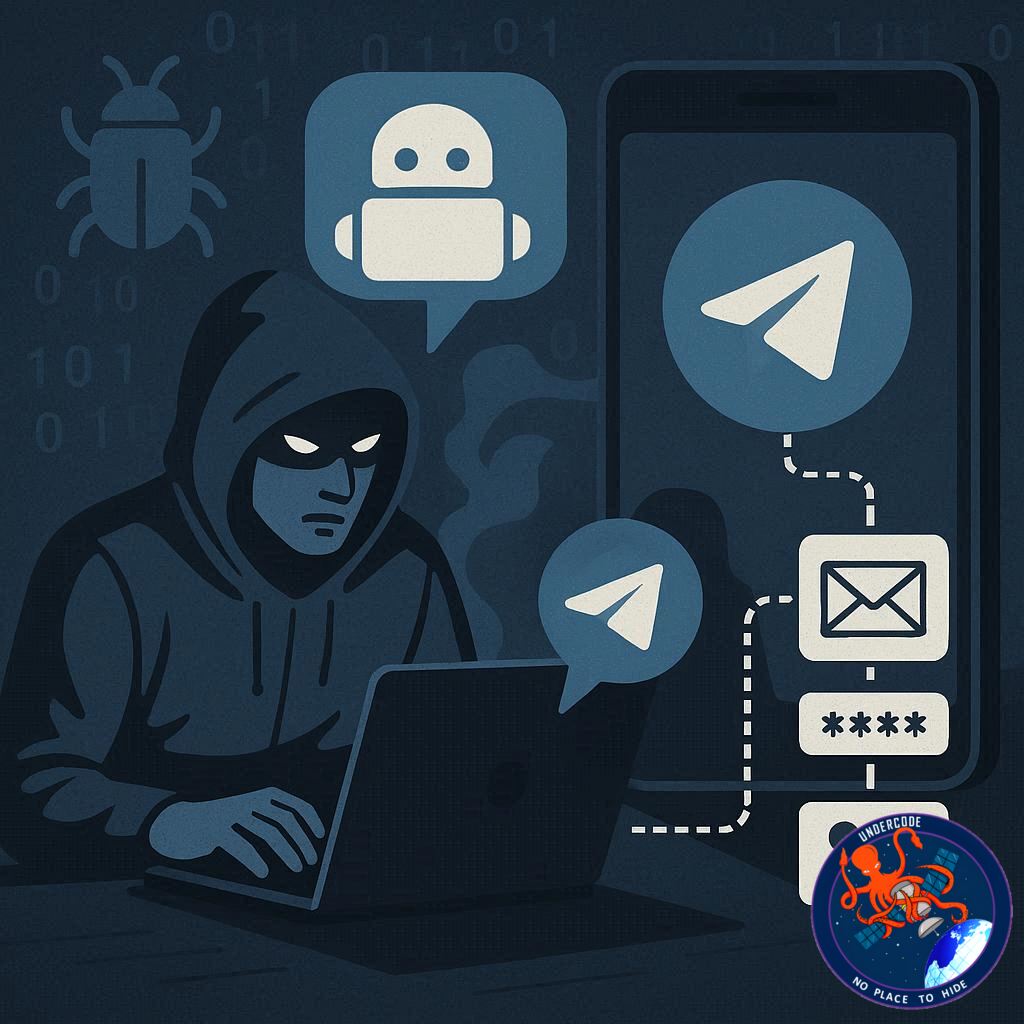
Introduction: When Messaging Tools Become Cybercrime Infrastructure
Messaging platforms are typically associated with fast communication, encrypted chats, and vibrant communities. Yet, in the constantly evolving battlefield of cybersecurity, even legitimate tools can be weaponized. Recently, security researchers uncovered a troubling tactic: cybercriminals exploiting Telegram’s Bot API as a covert channel to steal sensitive data from infected systems.
The campaign highlights how attackers are increasingly blending legitimate infrastructure with malicious techniques to bypass security monitoring. Malware strains such as Agent Tesla and WSH RAT are now using Telegram bots to quietly extract credentials, files, and other valuable data from compromised machines.
Because Telegram’s infrastructure is widely trusted and heavily used around the world, malicious traffic directed to its servers can easily blend with normal activity. This makes detection harder and allows attackers to maintain persistent access to stolen information.
The discovery serves as another reminder that modern cyber threats are no longer limited to shady servers or obscure networks. Instead, attackers increasingly exploit mainstream platforms that organizations rely on daily.
the Original Report
Cybersecurity researchers have identified a new tactic used by threat actors to steal sensitive information from infected computers by leveraging Telegram’s Bot API.
In this campaign, malware such as Agent Tesla and WSH RAT uses Telegram bots as a command-and-control and data exfiltration mechanism. Instead of sending stolen data to traditional attacker-controlled servers, the malware communicates directly with Telegram’s API.
The process typically involves sending HTTP POST requests to Telegram’s bot interface. These requests contain stolen data such as login credentials, system information, and files collected from the victim’s machine.
Within these requests, attackers embed bot tokens and chat IDs. The bot token acts as an authentication key that allows the malware to interact with the Telegram bot, while the chat ID determines the specific conversation or channel where the stolen data will be delivered.
Once the malware gathers information from the compromised system, it packages the data and sends it directly to the attacker’s Telegram account through the bot. This effectively transforms Telegram into a delivery pipeline for stolen information.
The technique offers several advantages for attackers. Telegram’s infrastructure is stable, globally accessible, and rarely blocked in corporate networks. Additionally, encrypted communications and legitimate traffic patterns make the malicious activity harder to detect.
Because Telegram is widely used, security tools may treat communication with its servers as normal behavior. As a result, malicious data transfers can remain hidden inside routine network activity.
Researchers also observed that the malware’s requests clearly reveal bot tokens and chat identifiers, which could potentially help defenders track or disrupt malicious bot operations.
To mitigate the threat, security experts recommend blocking connections to Telegram’s Bot API endpoint, specifically the address associated with the bot interface.
By preventing systems from accessing the bot API, organizations can interrupt the malware’s ability to send stolen data to attackers.
However, this defensive measure may not always be feasible for companies that legitimately rely on Telegram bots for automation or communication.
The discovery demonstrates how threat actors continue adapting their tactics to exploit trusted services. Instead of building custom infrastructure that may be easily flagged, attackers increasingly piggyback on popular platforms.
Ultimately, the report highlights the growing complexity of modern cyber threats and the importance of monitoring outbound network traffic, even when it appears to be directed at legitimate services.
What Undercode Say:
The Strategic Abuse of Trusted Platforms
The exploitation of Telegram bots for malware data exfiltration is not just another technical trick—it represents a broader strategic shift in cybercrime. Attackers are increasingly abusing legitimate platforms to avoid detection, transforming everyday services into covert cybercrime infrastructure.
Traditional malware relied on dedicated command-and-control servers, which security teams could block or blacklist. Today, attackers realize that hiding inside trusted ecosystems dramatically increases their survival rate.
When malicious traffic travels through legitimate services like Telegram, defenders face a dilemma: block the service entirely or risk allowing data leaks.
Why Telegram Became an Attractive Target
Telegram’s architecture makes it particularly appealing to cybercriminals.
First, the platform offers an easy-to-use Bot API that allows automated communication through simple HTTP requests. This simplicity enables malware developers to integrate Telegram communication into their malicious code with minimal effort.
Second, Telegram’s global infrastructure ensures reliable message delivery. Attackers do not need to maintain their own servers, which reduces operational costs and risk.
Third, Telegram traffic is rarely blocked at the enterprise level because it is widely used for communication and collaboration.
These factors combine to make Telegram an ideal “free command-and-control platform.”
Malware Evolution: Agent Tesla and WSH RAT
Malware families like Agent Tesla and WSH RAT are not new, but their techniques are evolving rapidly.
Agent Tesla has long been known as a credential-stealing malware that targets browsers, email clients, and VPN applications. Its operators continuously update the malware to improve persistence and stealth.
WSH RAT, on the other hand, provides remote access capabilities, allowing attackers to control infected machines, download additional payloads, and extract files.
By integrating Telegram-based exfiltration methods, these malware strains become even more dangerous because their communication channels are harder to disrupt.
The Hidden Risk of Legitimate APIs
The use of legitimate APIs is becoming one of the most concerning trends in cybersecurity.
APIs are designed to enable seamless communication between software systems. Unfortunately, this same functionality can be abused by malicious software.
Attackers simply mimic normal API behavior. From a network perspective, the traffic appears identical to legitimate application requests.
This creates a blind spot for many security systems that rely heavily on domain reputation or simple traffic filtering.
Why Traditional Security Measures Struggle
Most organizations focus heavily on blocking known malicious domains. However, when malware communicates with legitimate services like Telegram, that strategy becomes ineffective.
Even advanced endpoint protection tools may fail to flag this behavior if the traffic patterns appear normal.
This means security teams must move toward behavioral analysis, anomaly detection, and deep network monitoring rather than relying solely on blacklists.
Corporate Networks Are Especially Vulnerable
Corporate environments are particularly vulnerable to this tactic.
Employees often use messaging platforms for collaboration, automation, or customer communication. As a result, blocking Telegram entirely may not be an option.
Attackers exploit this reality. They know that traffic to popular platforms is unlikely to raise immediate alarms.
This makes Telegram-based exfiltration campaigns especially effective against organizations with relaxed outbound traffic controls.
The Growing Trend of “Living Off the Land” Cybercrime
This Telegram abuse fits into a broader cybersecurity trend known as “living off the land.”
Instead of building custom malicious infrastructure, attackers rely on tools and services that already exist within the digital ecosystem.
Examples include using cloud storage services, social media platforms, messaging apps, and legitimate APIs for malicious operations.
Because these tools are trusted and widely used, security systems often struggle to differentiate between normal and malicious activity.
Why Blocking the Bot API Is Only a Partial Solution
Security researchers recommend blocking access to the Telegram Bot API, but this solution is not always practical.
Organizations that rely on Telegram bots for legitimate automation would experience operational disruption if the API were blocked entirely.
Additionally, attackers could simply shift to other services such as Discord, Slack, or cloud storage platforms.
This highlights a fundamental challenge in cybersecurity: blocking one channel often leads attackers to adopt another.
The Bigger Lesson for Cybersecurity Teams
The real takeaway from this discovery is that modern cybersecurity defenses must evolve.
Monitoring outbound traffic patterns, detecting unusual API usage, and implementing behavioral analytics are becoming essential components of defense strategies.
Organizations must also maintain visibility into how internal systems interact with external services.
Without this visibility, malware can quietly leak sensitive information through channels that appear perfectly legitimate.
🔍 Fact Checker Results
Verification of Malware Techniques
✅ Security researchers have documented malware families using Telegram bots for command-and-control and data exfiltration.
Verification of Targeted Malware Families
✅ Agent Tesla and WSH RAT are known credential-stealing and remote-access malware used in multiple cybercrime campaigns.
Verification of Mitigation Strategy
✅ Blocking or monitoring access to Telegram’s Bot API is a recognized defensive measure against this specific exfiltration technique.
📊 Prediction
The abuse of messaging platforms for cybercrime is likely to expand significantly in the coming years. As security tools become better at identifying malicious infrastructure, attackers will increasingly hide inside trusted ecosystems such as chat applications, cloud storage platforms, and collaboration tools.
Telegram is unlikely to remain the only platform targeted. Cybercriminal groups are expected to experiment with other APIs and automation systems to create resilient command-and-control networks that blend seamlessly into normal internet traffic.
Future malware variants may also encrypt exfiltrated data more aggressively, fragment transmissions across multiple services, or rotate between different platforms to avoid detection. This evolution will force cybersecurity teams to shift from static blocking methods toward behavioral threat detection and AI-driven monitoring systems.
Ultimately, the battle between attackers and defenders will increasingly revolve around the same question: how to distinguish legitimate digital communication from malicious activity hidden in plain sight.
🕵️📝✔️Let’s dive deep and fact‑check.
References:
Reported By: x.com
Extra Source Hub (Possible Sources for article):
https://www.facebook.com
Wikipedia
OpenAi & Undercode AI
Image Source:
Unsplash
Undercode AI DI v2
Bing
🔐JOIN OUR CYBER WORLD [ CVE News • HackMonitor • UndercodeNews ]
📢 Follow UndercodeNews & Stay Tuned:
𝕏 formerly Twitter 🐦 | @ Threads | 🔗 Linkedin | 🦋BlueSky | 🐘Mastodon


