
Listen to this Post
Introduction: A Nation Cut Off From the Internet
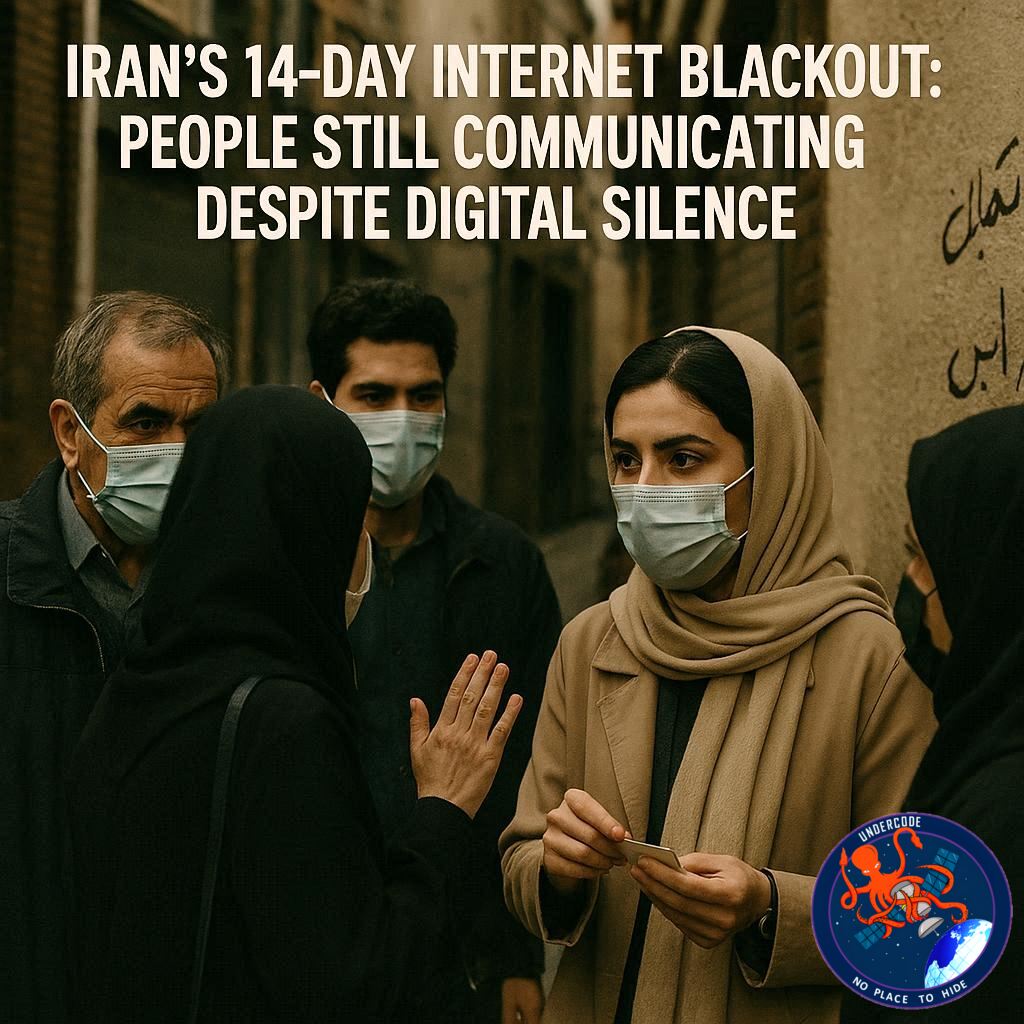
For more than two weeks, Iran has been experiencing one of the most severe internet blackouts in recent years. According to the connectivity monitoring organization NetBlocks, the country’s internet access has been restricted for over 14 days, leaving millions of people struggling to communicate with the outside world.
Experts say the disruption is not the result of infrastructure damage or foreign military actions. Instead, analysts believe the shutdown was deliberately implemented by Iranian authorities to limit the spread of information and suppress potential dissent. As the blackout continues, citizens inside Iran are searching for alternative ways to stay connected with family members, journalists, and activists beyond the country’s borders.
Despite the near-total disruption of internet services, information has not stopped flowing completely. People are turning to older technologies, encrypted tools, satellite signals, and creative digital workarounds to bypass the restrictions. These methods show how resilient communication networks can be even under heavy censorship.
A Digital Silence Imposed by Authorities
Connectivity experts at NetBlocks confirmed that the blackout appears to be a government-controlled shutdown rather than technical damage caused by conflict.
Research chief Isik Mater explained that the pattern of the outage clearly points to a deliberate action designed to restrict information flow. Human rights groups agree with that assessment.
According to Raha Bahreini, a researcher at Amnesty International, the internet shutdown appears to be a strategic attempt to silence dissent and limit the spread of protest-related information.
Such blackouts are increasingly used by governments worldwide as a digital control tool. By shutting down connectivity, authorities can disrupt the coordination of protests, slow the spread of independent reporting, and reduce international visibility into internal events.
Shortwave Radio Returns as an Emergency Tool
One of the most unexpected communication tools resurfacing during the blackout is shortwave radio.
The Amsterdam-based nonprofit Radio Zamaneh began broadcasting a nightly Persian-language news program during recent protests. The broadcast airs every night at 11:00 PM Tehran time, delivering news updates and information to listeners across the country.
Executive director Rieneke van Santen explained that shortwave radio is extremely difficult for governments to block because the signals travel long distances across borders.
Unlike internet services that rely on centralized infrastructure, shortwave radio can reach listeners using inexpensive portable radios. This makes it a powerful fallback communication channel during emergencies or censorship events.
For many Iranians, a simple radio receiver has suddenly become one of the most reliable sources of uncensored information.
Phone Calls Offer a Fragile Connection
Even during the blackout, some communication lines remain partially open through traditional landline phone calls.
Digital rights researcher Mahsa Alimardani from the organization Witness noted that people outside Iran are still receiving calls from family members inside the country.
However, these conversations are usually brief and cautious. Many callers avoid discussing political topics out of fear that authorities may be monitoring the calls.
International calling cards are often required for these conversations, but users report they rarely deliver the promised call time. A card advertised for 60 minutes may run out after only a few minutes.
For many families, the goal of these calls is simple: letting loved ones abroad know they are still alive.
VPN Tools Struggle Under Extreme Restrictions
Virtual private networks, commonly known as VPNs, are normally used to bypass internet censorship by encrypting traffic and routing it through foreign servers.
But VPN services cannot function if internet connectivity itself is almost completely shut down.
Even so, a small portion of Iran’s network remains active. According to NetBlocks, national connectivity levels dropped to roughly one percent of normal capacity, yet that small percentage still represents thousands of active users.
Specialized circumvention tools developed by the Toronto-based company Psiphon have historically been popular among Iranian users. Before the blackout, the service recorded as many as six million daily users in the country.
Today, that number has dropped dramatically to fewer than 100,000 active connections.
Another widely used circumvention platform is Lantern, which offers similar encrypted routing technologies designed to bypass government filtering.
However, reaching these networks now requires advanced technical knowledge, making them accessible only to the most experienced users.
Living Without Internet in Modern Iran
For ordinary citizens, the blackout has been psychologically exhausting.
A lawyer from Tehran told reporters she has almost no access to outside information. According to her experience, only one out of ten people she knows can currently connect to the internet.
The situation has created a sense of isolation and anxiety. Many Iranians rely heavily on digital tools to communicate with family members living abroad, and those connections have largely disappeared.
Some people are taking serious personal risks to access the internet. The lawyer explained that she must travel to a friend’s home where multiple VPN services are installed, hoping that one of them will work.
These connections are unreliable and expensive. VPN access can cost anywhere from $35 to $140, making it inaccessible to many citizens already facing economic hardship.
Satellite Broadcasting: The Toosheh Filecasting Network
Another creative workaround involves satellite television signals.
The US nonprofit NetFreedom Pioneers developed a system called Toosheh that broadcasts encrypted data through satellite TV channels.
The process works in an unusual way. Users record the satellite broadcast using a set-top box and save the data onto a USB drive. They then use a special mobile or desktop app to decrypt the downloaded information.
Once decoded, the files can be copied and shared between households, effectively spreading information through offline networks.
By 2025, the system was estimated to have roughly three million users in Iran. Since the blackout began, thousands more have begun relying on it as a primary information source.
Because users only receive a broadcast signal, the government cannot track who downloads the content.
Starlink: A Rare and Risky Internet Lifeline
Some Iranians have managed to connect to the global internet using satellite terminals from Starlink, the satellite internet service operated by Elon Musk’s company SpaceX.
However, the technology is extremely rare within the country.
On Iran’s black market, Starlink terminals reportedly cost around $2,000, placing them far beyond the financial reach of most citizens.
Even more dangerous is the legal risk. Human rights investigators say authorities have conducted raids on homes suspected of using Starlink equipment.
Individuals caught communicating with the outside world through unauthorized channels may face severe penalties, including long prison sentences.
Despite these risks, satellite internet remains one of the few reliable ways to bypass government-imposed digital isolation.
What Undercode Say:
Internet Shutdowns Are Becoming a Modern Censorship Weapon
The Iranian blackout highlights a growing global trend: governments using internet shutdowns as a method of information control.
Over the past decade, digital connectivity has become central to political movements, journalism, and civil rights activism. Social media platforms allow protests to organize quickly and attract international attention.
By shutting down the internet entirely, authorities attempt to disrupt these dynamics before they gain momentum.
However, history shows that communication rarely disappears completely. Instead, it adapts.
Old Technologies Are Becoming New Resistance Tools
One of the most fascinating aspects of the Iranian blackout is the return of older communication technologies.
Shortwave radio, satellite broadcasts, and even USB-based file sharing are resurfacing as vital information channels.
These technologies were designed decades ago, long before modern internet infrastructure existed. Yet their decentralized nature makes them extremely difficult to censor.
In many ways, the situation demonstrates that technological resilience often lies in simplicity.
Digital Circumvention Tools Are Entering a New Phase
Services like Psiphon and Lantern represent the next generation of digital resistance tools.
Instead of simply hiding traffic through encryption, these platforms disguise data as different types of internet activity. This makes it harder for censorship systems to detect and block them.
But the Iranian blackout also reveals their limitations. When governments cut connectivity at the infrastructure level, even advanced VPN systems struggle to function.
Future circumvention tools may need to combine satellite access, mesh networking, and decentralized routing to remain effective during large-scale shutdowns.
The Psychological Impact of Digital Isolation
Beyond technical issues, internet shutdowns have a powerful psychological effect on populations.
For millions of people, the internet is their primary connection to news, education, employment, and family relationships.
When that connection disappears overnight, it creates fear, uncertainty, and a sense of isolation.
In Iran’s case, the blackout has lasted more than two weeks, which for many citizens feels like an information vacuum.
The emotional strain of this disconnection should not be underestimated.
Global Implications for Digital Freedom
Iran is not the only country experimenting with large-scale internet shutdowns.
Around the world, governments are exploring similar tactics during elections, protests, or political crises.
This trend raises serious questions about the future of global digital rights. If governments can easily disconnect entire populations from the internet, the concept of a free and open web becomes increasingly fragile.
The Iranian situation is therefore more than a national story. It is part of a broader debate about who controls the world’s digital infrastructure.
Fact Checker Results
✅ NetBlocks reported that Iran experienced a prolonged internet shutdown lasting more than two weeks.
✅ Tools like Psiphon and Lantern are widely known circumvention platforms used to bypass censorship.
❌ Satellite services such as Starlink are not widely available in Iran and remain rare due to cost and legal risks.
Prediction
🔮 Internet shutdowns will likely become more common as governments attempt to control information during political unrest.
📡 Satellite internet services like Starlink and future low-orbit networks may become crucial tools for bypassing national censorship barriers.
🌐 Decentralized communication technologies, including mesh networks and offline data-sharing systems, will likely play a larger role in maintaining global information flow during future blackouts.
🕵️📝✔️Let’s dive deep and fact‑check.
References:
Reported By: www.channelstv.com
Extra Source Hub (Possible Sources for article):
https://www.stackexchange.com
Wikipedia
OpenAi & Undercode AI
Image Source:
Unsplash
Undercode AI DI v2
Bing
🔐JOIN OUR CYBER WORLD [ CVE News • HackMonitor • UndercodeNews ]
📢 Follow UndercodeNews & Stay Tuned:
𝕏 formerly Twitter 🐦 | @ Threads | 🔗 Linkedin | 🦋BlueSky | 🐘Mastodon


