
Listen to this Post
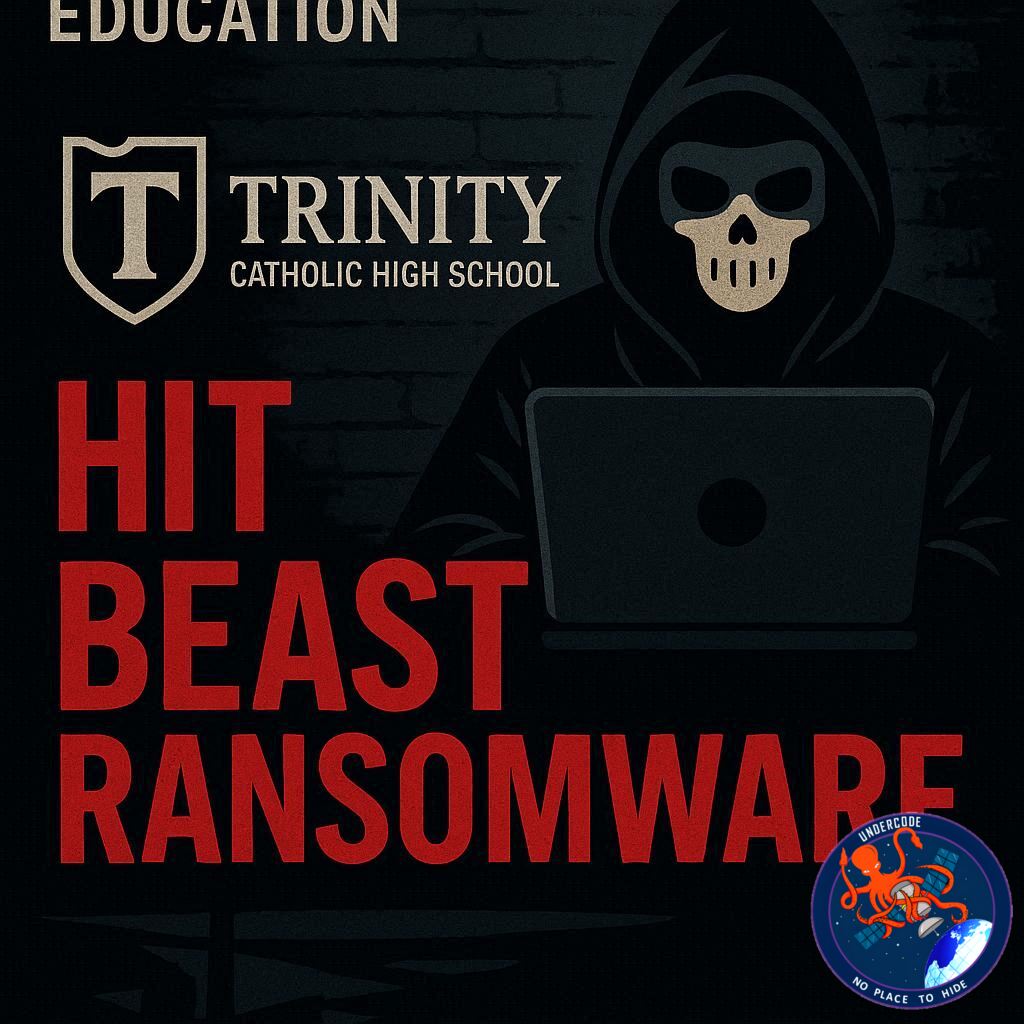
Introduction: When Cybercrime Targets Classrooms
Schools are increasingly becoming prime targets for cybercriminals. What once seemed like attacks reserved for corporations or government agencies is now hitting educational institutions with alarming frequency. In the latest incident, Trinity Catholic High School in the United States reportedly suffered a ransomware attack carried out by a threat actor known as “Beast.”
The breach allegedly involved the theft of sensitive data and a demand for payment in exchange for a decryption key. While details remain limited, the attack highlights a growing trend: cybercriminal groups are exploiting vulnerabilities in school networks to extract money and potentially expose confidential information.
Ransomware Incident at Trinity Catholic High School
Reports indicate that Trinity Catholic High School experienced a ransomware attack attributed to the cybercriminal actor “Beast.” According to cybersecurity monitoring sources, the attackers managed to infiltrate the school’s digital systems and exfiltrate data before deploying ransomware across parts of the network.
Ransomware attacks typically involve encrypting files and systems, rendering them inaccessible to the victim organization. The attackers then demand payment in exchange for a decryption key that would allow the institution to restore access to its data. In this case, the threat actor reportedly demanded a ransom payment to unlock the compromised systems.
The breach also allegedly included data exfiltration, meaning that the attackers copied sensitive information from the school’s systems before locking them. This tactic has become increasingly common among ransomware groups, as it allows them to pressure victims further by threatening to leak stolen data publicly if the ransom is not paid.
Educational institutions often store sensitive information such as student records, staff data, financial documents, and internal communications. If such data is leaked or sold on underground forums, it could lead to identity theft, privacy violations, and long-term reputational damage for the institution involved.
While the full scope of the breach has not yet been publicly disclosed, incidents like this often trigger investigations by cybersecurity teams and potentially law enforcement authorities. Schools must evaluate the extent of the intrusion, determine what information may have been compromised, and implement recovery and mitigation strategies.
Cybersecurity experts frequently emphasize that schools are particularly vulnerable targets because they tend to operate with limited IT security budgets compared to large corporations. This can lead to outdated software, weak access controls, or insufficient monitoring systems that attackers can exploit.
The emergence of ransomware gangs targeting education highlights a broader trend in cybercrime. Attackers increasingly choose victims not only based on financial value but also on how quickly they might feel pressured to pay a ransom. Schools, hospitals, and local governments often fall into this category due to the disruption caused when their systems are locked.
Although it remains unclear whether Trinity Catholic High School intends to negotiate with the attackers or pursue alternative recovery methods, the incident serves as a stark reminder of the growing cybersecurity risks facing educational institutions worldwide.
What Undercode Says:
Ransomware’s Expanding Target List
The attack against Trinity Catholic High School reflects a larger pattern emerging in the ransomware ecosystem. Cybercriminal groups are steadily expanding beyond corporate targets and focusing on institutions that rely heavily on operational continuity but lack robust cybersecurity defenses. Schools fit this profile perfectly.
Why Schools Are Attractive Targets
Educational institutions maintain vast amounts of sensitive data. Student records, personal identification information, academic histories, and financial documents can all hold significant value on underground markets. Unlike large corporations, many schools lack dedicated cybersecurity teams capable of responding quickly to advanced threats.
Double Extortion Has Become the New Standard
The reported data exfiltration in this attack suggests the use of a “double extortion” strategy. Instead of simply encrypting files, attackers steal data first. This allows them to apply additional pressure by threatening public exposure if the ransom is not paid. Even organizations with backups can be forced into difficult decisions when reputational damage becomes a factor.
The Rise of Smaller but Aggressive Threat Actors
The group identified as “Beast” may not yet be widely recognized compared to larger ransomware syndicates. However, smaller or emerging groups are increasingly active in the cybercrime ecosystem. Many operate under ransomware-as-a-service (RaaS) models, which allow less technically skilled criminals to launch sophisticated attacks using rented malware infrastructure.
Operational Disruption Can Be Devastating for Schools
A ransomware incident at a high school can halt administrative operations, disrupt digital learning systems, and affect communications between teachers, students, and parents. Scheduling platforms, grading systems, and internal portals often become inaccessible during such attacks.
Financial Pressure Often Leads to Difficult Decisions
Unlike corporations with large cybersecurity budgets, many schools cannot easily absorb the financial and operational costs of prolonged downtime. This creates a scenario where attackers assume victims may feel pressured to pay the ransom quickly in order to restore normal operations.
The Broader Education Sector Is Under Siege
Recent cybersecurity reports indicate that schools and universities are among the fastest-growing targets for ransomware attacks globally. Attackers recognize that educational networks frequently contain legacy systems and large numbers of connected devices, making them easier to compromise.
Cybersecurity Awareness Remains a Critical Weak Point
Many attacks begin with simple phishing emails or compromised credentials. Staff members or students may unknowingly provide attackers with entry points through malicious attachments, fake login pages, or insecure personal devices connected to school networks.
Incident Response Determines the Outcome
When ransomware strikes, the response strategy can determine whether the damage escalates. Organizations must quickly isolate infected systems, investigate how attackers entered the network, and restore operations through backups or system rebuilds.
Long-Term Impact Goes Beyond the Initial Breach
Even after systems are restored, the effects of a ransomware attack can linger. Institutions may face regulatory scrutiny, legal consequences, or loss of trust from parents and students concerned about data privacy.
A Wake-Up Call for Education Cybersecurity
The Trinity Catholic High School incident serves as another warning sign that educational institutions must treat cybersecurity as a core operational priority rather than an optional technical upgrade. Investments in network monitoring, endpoint protection, and staff training could significantly reduce the risk of future attacks.
🔍 Fact Checker Results
Verification of the Reported Attack
✅ Cybersecurity monitoring accounts frequently report ransomware claims made by threat actors on underground forums or leak sites.
Evidence of Data Exfiltration
⚠️ While reports suggest data theft occurred, independent confirmation from the school or authorities has not yet been publicly verified.
Ransom Demand Claims
✅ Demanding payment for a decryption key is a standard tactic used in ransomware attacks across multiple industries.
📊 Prediction
More Schools Will Become Targets
The attack against Trinity Catholic High School is unlikely to be an isolated event. As ransomware groups continue searching for victims with weaker defenses, educational institutions will remain attractive targets.
Data Leak Threats Will Increase
Future attacks will likely focus even more on data exfiltration rather than just encryption. Threat actors increasingly rely on the fear of public exposure to pressure victims into paying.
Cybersecurity Spending in Education Will Rise
Incidents like this will likely push schools and school districts to increase cybersecurity investments, adopt stronger digital defenses, and implement incident response frameworks designed specifically for the education sector.
🕵️📝✔️Let’s dive deep and fact‑check.
References:
Reported By: x.com
Extra Source Hub (Possible Sources for article):
https://www.github.com
Wikipedia
OpenAi & Undercode AI
Image Source:
Unsplash
Undercode AI DI v2
Bing
🔐JOIN OUR CYBER WORLD [ CVE News • HackMonitor • UndercodeNews ]
📢 Follow UndercodeNews & Stay Tuned:
𝕏 formerly Twitter 🐦 | @ Threads | 🔗 Linkedin | 🦋BlueSky | 🐘Mastodon


