
Listen to this Post
Introduction
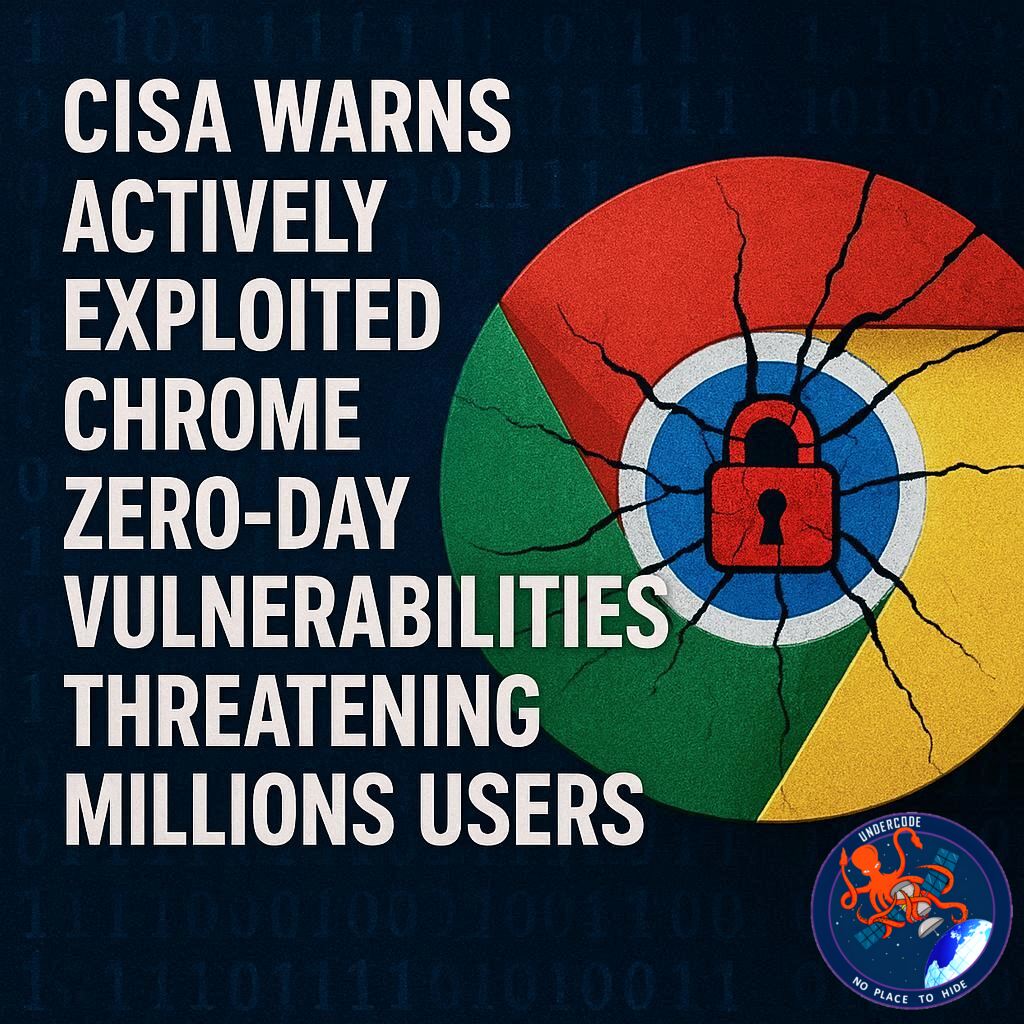
Modern web browsers sit at the center of nearly every digital workflow. From enterprise applications to personal banking, they serve as the primary gateway to the internet. That central role also makes them a high-value target for cybercriminals. Recently, the Cybersecurity and Infrastructure Security Agency (CISA) issued an urgent warning about two critical zero-day vulnerabilities affecting Google Chrome and the broader Chromium ecosystem.
Both vulnerabilities are already being exploited in real-world attacks, raising immediate concerns for organizations and individual users alike. Because Chrome technologies power multiple browsers and platforms, the potential exposure extends far beyond a single application. To address the threat, CISA added the flaws to its Known Exploited Vulnerabilities catalog and ordered U.S. federal agencies to patch affected systems before March 27, 2026. Private organizations are also being strongly urged to act quickly.
The alert highlights a persistent challenge in cybersecurity: even the most widely used and security-hardened software can contain hidden flaws capable of exposing millions of systems worldwide.
Critical Chrome Zero-Day Vulnerabilities Explained
A Growing Threat in Core Browser Components
Security researchers identified two separate vulnerabilities within core browser technologies that power modern web applications. Because these components are deeply embedded in many platforms, the impact extends across desktops, mobile devices, and cloud-connected environments.
CISA confirmed that attackers are already exploiting both flaws, making immediate remediation critical for preventing compromise.
Skia Graphics Engine Flaw (CVE-2026-3909)
The first vulnerability, CVE-2026-3909, exists within the Skia graphics engine, the open-source rendering library responsible for drawing text, images, and graphical elements across many applications.
Skia plays a foundational role in the visual layer of several technologies, including ChromeOS devices and the Android operating system. It is also widely used in applications built with the Flutter development framework.
The flaw involves an out-of-bounds memory write error. Attackers can exploit it by convincing users to open a specially crafted webpage containing malicious HTML content. When triggered, the vulnerability can corrupt memory inside the rendering engine.
Such memory corruption can lead to browser crashes, system instability, or even arbitrary code execution depending on how the exploit is designed. Because the Skia engine is integrated across many platforms, exploitation could affect a wide variety of applications and devices beyond Chrome itself.
Chromium V8 JavaScript Engine Vulnerability (CVE-2026-3910)
The second vulnerability, CVE-2026-3910, targets the V8 JavaScript engine used by Chromium-based browsers.
The V8 engine is responsible for executing JavaScript code that powers modern websites, web apps, and dynamic user interfaces. Nearly every interactive webpage relies on this component to function.
In this case, the flaw stems from improper memory buffer restrictions. Attackers can manipulate memory operations through specially crafted web scripts delivered via malicious webpages.
If exploited successfully, attackers may execute arbitrary code within the browser environment. Although browsers rely on sandbox protections to isolate processes, attackers frequently chain vulnerabilities together to escape these security barriers and gain deeper system access.
Because the Chromium engine underpins several major browsers, the impact is not limited to Chrome. The vulnerability also affects:
Google Chrome
Microsoft Edge
Opera
This shared infrastructure significantly expands the number of potentially vulnerable users worldwide.
Why These Vulnerabilities Are Dangerous
Even though there is currently no confirmed connection to ransomware campaigns, security experts consider these flaws highly attractive to attackers.
One reason is the effectiveness of drive-by download attacks. In these scenarios, victims become infected simply by visiting a compromised or malicious website.
Memory corruption vulnerabilities like the ones identified here are particularly valuable to threat actors because they can be used to:
Bypass modern browser security mechanisms
Gain an initial foothold within a system
Launch multi-stage exploitation chains
Deploy additional malware or surveillance tools
The most concerning factor is the low interaction required for exploitation. Users often only need to load a webpage for the attack to trigger, making detection difficult.
Immediate Mitigation Steps Recommended by CISA
To reduce exposure, CISA has mandated urgent remediation steps for federal agencies and strongly encourages organizations worldwide to follow the same guidance.
Security teams should immediately:
Update all Chromium-based browsers to the latest patched versions
Install security updates for ChromeOS and Android devices
Patch applications developed using Flutter or other Skia-based frameworks
Follow vendor-specific mitigation guidance when patches are unavailable
Consider temporarily discontinuing unsupported or vulnerable software
Educate users about phishing and suspicious links
Rapid patch deployment remains one of the most effective defenses against zero-day threats. Delays in applying updates significantly increase the risk of successful compromise.
What Undercode Say:
The Browser as the New Cybersecurity Battlefield
Modern cybersecurity battles increasingly revolve around the web browser. Unlike traditional attack vectors that targeted operating systems directly, browsers now function as the primary gateway to enterprise networks, cloud services, and internal applications.
This makes vulnerabilities within rendering engines and JavaScript interpreters particularly valuable to attackers.
The Skia and V8 vulnerabilities illustrate how deeply integrated browser components have become across the digital ecosystem. A flaw discovered inside a single rendering library can propagate risk across multiple operating systems, development frameworks, and consumer devices.
This type of dependency chain significantly complicates security management.
The Hidden Risk of Shared Software Ecosystems
Many organizations believe switching browsers reduces security risks. However, Chromium-based browsers share a massive portion of the same codebase.
This means vulnerabilities discovered in one browser frequently affect others simultaneously.
When the V8 engine is compromised, browsers such as Chrome, Edge, and Opera all inherit the same security exposure. Organizations relying on browser diversity as a security strategy may therefore be operating under a false sense of protection.
The real defensive strategy lies in rapid patch management rather than software variation.
Exploit Chaining and Advanced Attacks
Another important factor is exploit chaining.
Modern browsers include strong sandboxing mechanisms designed to prevent attackers from gaining full system access. However, attackers rarely rely on a single vulnerability.
Instead, they combine multiple flaws into an exploit chain that bypasses sandbox protections and escalates privileges.
A memory corruption bug like CVE-2026-3909 could provide initial access, while another vulnerability might allow sandbox escape. Once attackers break out of the browser environment, they can deploy malware, steal credentials, or pivot deeper into a network.
Enterprise Security Implications
For large organizations, the real challenge is patch deployment speed.
Enterprise environments often contain thousands of endpoints with different update schedules, device policies, and compatibility requirements. These factors frequently delay critical patches.
Attackers understand this delay and often launch exploitation campaigns during the window between vulnerability disclosure and widespread patch adoption.
This period is sometimes called the “patch gap,” and it remains one of the most dangerous phases in vulnerability management.
The Importance of User Awareness
Even with advanced detection systems, many browser-based attacks still rely on user interaction.
Phishing emails, malicious advertisements, and compromised websites remain common entry points for exploitation attempts.
User awareness programs therefore remain an essential security layer. Educating employees about suspicious links and unsafe browsing behaviors can significantly reduce exposure to drive-by attacks.
The Future of Browser Security
The discovery of these vulnerabilities reinforces a broader reality: browser security is becoming one of the most critical front lines in cybersecurity.
As web technologies evolve and applications increasingly move to the browser, attackers will continue targeting rendering engines, JavaScript interpreters, and web APIs.
Organizations that prioritize patch automation, threat monitoring, and secure browsing practices will be far better prepared to defend against the next wave of browser-based threats.
Fact Checker Results
✅ CISA officially added the vulnerabilities to its Known Exploited Vulnerabilities catalog.
✅ Both vulnerabilities affect core components used by multiple Chromium-based browsers.
❌ There is currently no confirmed evidence linking these vulnerabilities directly to ransomware campaigns.
Prediction
🔍 Browser vulnerabilities will continue increasing as more enterprise applications move to web platforms.
⚠️ Attackers will increasingly chain multiple browser flaws together to bypass sandbox protections.
🚨 Automated patch management systems will become essential for organizations to defend against future zero-day exploitation waves.
🕵️📝✔️Let’s dive deep and fact‑check.
References:
Reported By: cyberpress.org
Extra Source Hub (Possible Sources for article):
https://www.twitter.com
Wikipedia
OpenAi & Undercode AI
Image Source:
Unsplash
Undercode AI DI v2
Bing
🔐JOIN OUR CYBER WORLD [ CVE News • HackMonitor • UndercodeNews ]
📢 Follow UndercodeNews & Stay Tuned:
𝕏 formerly Twitter 🐦 | @ Threads | 🔗 Linkedin | 🦋BlueSky | 🐘Mastodon


