
Listen to this Post
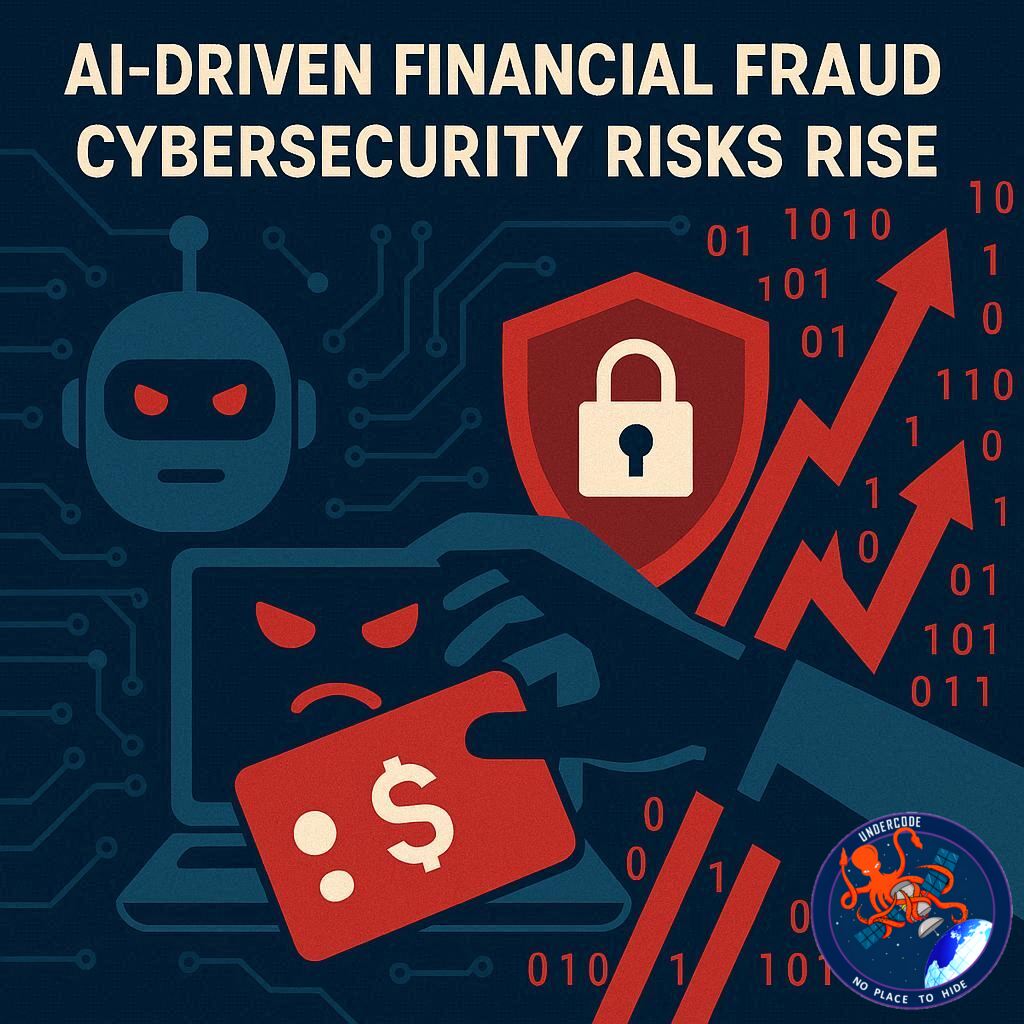
The digital world is rapidly evolving, and so are the threats that lurk within it. Recent reports reveal that AI-driven financial fraud is not only more sophisticated but alarmingly more profitable than traditional scams. From deepfake extortion to AI-assisted dependency attacks, cybersecurity experts are warning that attackers are leveraging artificial intelligence to scale their operations, exploit human trust, and compromise entire infrastructures. Organizations and individuals alike are facing a new era of cybercrime that demands advanced defenses and constant vigilance.
AI Fraud: A Profitable New Threat
According to cybersecurity researchers, AI-driven financial fraud is now 4.5 times more profitable and scalable than conventional scams. Criminals are using AI tools to create highly convincing deepfake content, tricking victims into paying ransoms or transferring funds. Unlike traditional scams, these attacks can adapt in real-time, learning from defenses to increase success rates. This evolution signals a growing need for both training and AI-powered countermeasures to detect and mitigate threats before they escalate.
AI Coding Assistants and Dependency Attacks
Another emerging concern involves AI coding assistants, which are hallucinating fake PyPI (Python Package Index) package names. Attackers can pre-register these fictitious packages and embed malicious code, which, when used in projects, can give hackers shell access and compromise entire systems. These vulnerabilities are amplified by hardcoded credentials, missing authentication mechanisms, and other insecure coding practices. Cybersecurity experts warn that without proactive measures, full infrastructure takeovers are increasingly possible.
The Scale of AI Threats in Cybersecurity
AI-based attacks are not just a technical issue—they represent a business and societal risk. Financial institutions, tech companies, and even government agencies face mounting exposure. Attackers can automate social engineering, conduct real-time fraud analysis, and exploit systemic weaknesses with minimal human effort. The integration of AI into both offensive and defensive cybersecurity strategies is now a critical factor for organizational resilience.
What Undercode Says:
AI’s Strategic Advantage in Financial Fraud
AI allows fraudsters to simulate highly realistic interactions, from fake invoices to personalized phishing messages. This strategic advantage multiplies the potential victim pool and increases the speed of exploitation, making detection much harder for traditional security protocols. Companies must adopt AI monitoring tools that can recognize behavioral anomalies at scale.
Deepfakes and Extortion: The Human Factor
Deepfake extortion leverages psychological manipulation, targeting executives and private individuals with convincing impersonations. Awareness campaigns and employee training are as critical as technical defenses. Human vigilance, paired with AI-based detection, forms a dual-layer security approach.
Dependency Attacks and Coding Risks
The hallucination of fake packages by AI coding assistants exposes a subtle yet dangerous risk. Malicious actors pre-register packages that developers inadvertently install, creating hidden backdoors. Strengthening dependency verification and implementing strict access controls are non-negotiable in preventing full-scale system compromises.
The AI Arms Race in Cybersecurity
As attackers adopt AI, defenders must also embrace it. Adaptive AI systems can simulate attack vectors, identify vulnerabilities, and automate threat response. Organizations investing in AI-driven security platforms gain a measurable advantage in the fight against increasingly sophisticated fraud.
Economic Implications of AI-Driven Fraud
With AI-enhanced attacks yielding 4.5 times more profit than traditional scams, financial losses could escalate dramatically. Insurers, banks, and online marketplaces must revise risk assessments, fraud detection protocols, and incident response strategies to account for this new economic threat landscape.
Legal and Ethical Considerations
Governments and regulatory bodies are beginning to scrutinize AI-powered fraud. Establishing clear legal frameworks, international cooperation, and mandatory reporting can curb misuse while encouraging ethical AI deployment.
Organizational Preparedness
Companies must implement layered defenses, including AI threat detection, employee training, and robust authentication protocols. Regular audits and real-time monitoring are essential to stay ahead of adaptive attackers.
Threat Intelligence Sharing
Collaboration between private and public sectors can accelerate threat detection. Sharing anonymized attack patterns, AI-driven fraud signatures, and dependency vulnerabilities will reduce exposure across industries.
Continuous Learning for Cyber Teams
Cybersecurity teams need continuous education on emerging AI threats. Simulation exercises, AI-driven red teaming, and scenario planning help teams anticipate novel attack vectors before they materialize.
Global Impact of AI Fraud
AI-enabled attacks are not geographically constrained. Cross-border financial transactions, cloud infrastructures, and remote work environments increase global exposure. International coordination is essential for timely prevention and mitigation.
Future of AI in Cyber Defense
AI will not only be the weapon of choice for attackers but also the shield for defenders. Predictive AI analytics, automated patching, and anomaly detection are becoming indispensable tools in the cybersecurity arsenal.
🔍 Fact Checker Results
AI Fraud Profitability: ✅ Verified – Studies indicate AI-driven financial scams outperform traditional methods by 4–5x.
Deepfake Extortion: ✅ Verified – Incidents of AI-generated extortion targeting executives have been documented.
Dependency Attacks via AI Coding Assistants: ✅ Verified – Pre-registered PyPI packages pose a real risk if left unchecked.
📊 Prediction
AI-driven financial fraud will continue to grow in both scale and sophistication over the next 3–5 years. Organizations that fail to adopt AI-based defenses and employee training programs may see unprecedented financial and reputational losses. Conversely, companies that integrate adaptive AI monitoring and threat intelligence will gain a significant advantage, potentially reducing attack success rates by over 60%. Regulatory frameworks will tighten, requiring transparency and ethical AI usage, which could further deter opportunistic cybercriminals.
If you want, I can also create a visually structured infographic summarizing these AI threats and countermeasures to make it more engaging for readers.
🕵️📝✔️Let’s dive deep and fact‑check.
References:
Reported By: x.com
Extra Source Hub (Possible Sources for article):
https://www.github.com
Wikipedia
OpenAi & Undercode AI
Image Source:
Unsplash
Undercode AI DI v2
Bing
🔐JOIN OUR CYBER WORLD [ CVE News • HackMonitor • UndercodeNews ]
📢 Follow UndercodeNews & Stay Tuned:
𝕏 formerly Twitter 🐦 | @ Threads | 🔗 Linkedin | 🦋BlueSky | 🐘Mastodon


