
Listen to this Post
Introduction: A Familiar Price Shock Returns
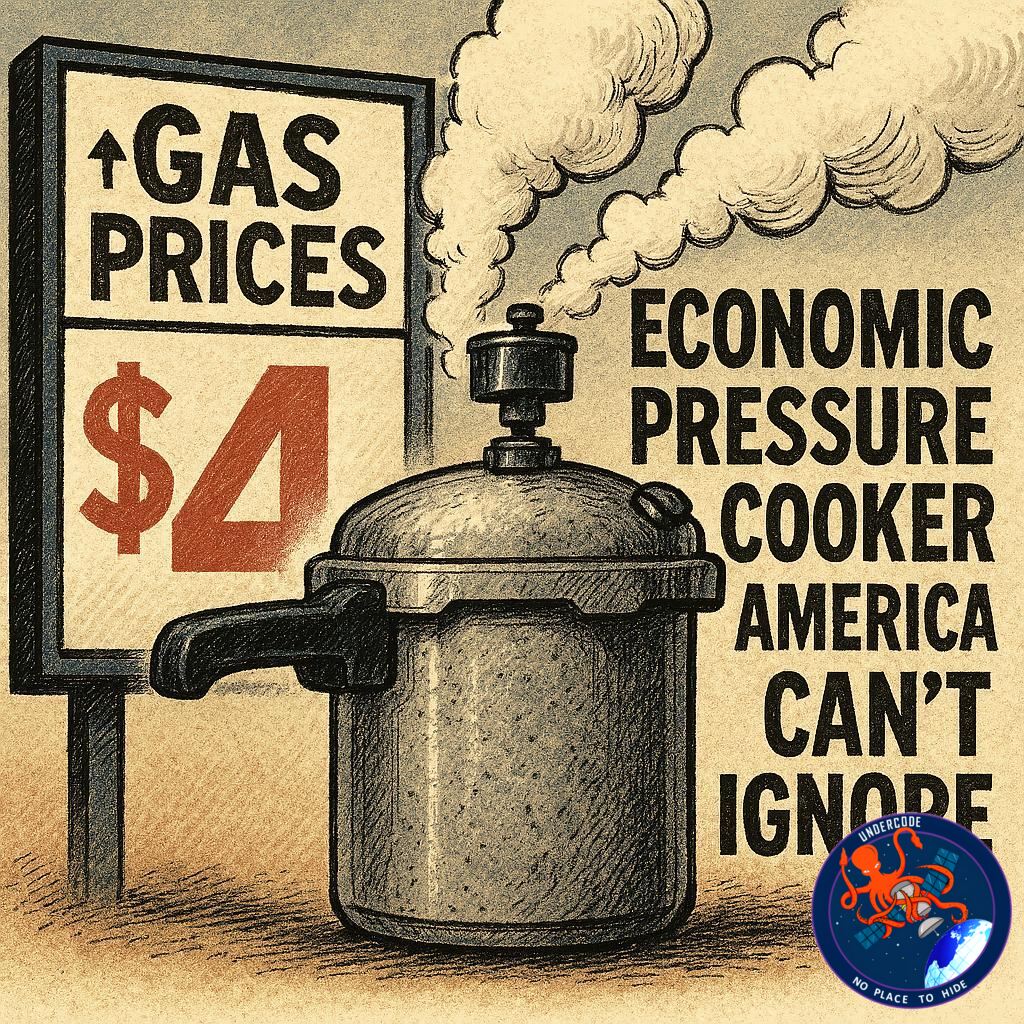
The United States is once again approaching a psychological and economic tipping point as gasoline prices edge closer to $4 per gallon nationwide—a level not seen since 2022. While this benchmark may feel routine in high-cost states like California or Hawaii, it carries far greater weight across the broader economy, especially in regions where lower fuel costs have long been the norm. Beyond the numbers, this surge signals deeper economic strain, influencing everything from household budgets to national growth projections. As energy markets tighten and global tensions persist, Americans are bracing for a ripple effect that could reshape spending habits, inflation trends, and economic confidence.
The $4 Threshold: More Than Just a Number
The national average price nearing $4 per gallon represents more than a simple increase at the pump—it acts as a psychological barrier for consumers and a warning signal for economists. While some regions already operate above this level, the nationwide average reaching this point amplifies its impact, making it a shared economic concern rather than a localized issue. For many households, especially those with limited financial flexibility, this milestone intensifies financial stress and forces difficult budgeting decisions.
Breaking Down the Math Behind Rising Gas Prices
Economic analysis reveals how closely oil prices are tied to broader financial conditions. For every $10 increase in the price of a barrel of oil, several measurable effects occur: economic growth slows slightly, inflation rises, gas prices increase by roughly $0.24 per gallon, and households face an annual financial burden of approximately $450 USD. Since oil prices have surged by more than $30 per barrel due to geopolitical tensions, the cumulative effect has been substantial, pushing gasoline prices significantly higher than pre-conflict levels, when the national average stood at $2.98 per gallon.
Economic Growth Under Pressure
Although the U.S. economy is massive—valued at around $30 trillion—it is not immune to sustained pressure from rising energy costs. A $30 increase in oil prices may shave about 0.3 percentage points off GDP growth. While this may seem modest in isolation, the compounding effect over time can slow economic momentum. Economists emphasize that even resilient economies have vulnerabilities, and energy costs are one of the most sensitive pressure points.
The Tipping Point: Demand Destruction
As prices climb beyond certain thresholds—such as oil exceeding $125 per barrel or gasoline surpassing $4.25 per gallon—consumer behavior begins to shift noticeably. This phenomenon, often referred to as “demand destruction,” occurs when high prices force consumers to reduce consumption. Americans are already adapting by cutting back on travel, consolidating errands, or reducing discretionary spending. While this can eventually lead to lower prices, supply constraints in global oil markets complicate the adjustment process.
Inflation Accelerates Beyond Expectations
The rise in oil prices has not only affected gasoline costs but has also intensified inflation across multiple sectors. While a $30 increase in oil prices would typically result in a $0.75 rise in gas prices, actual increases have exceeded expectations, climbing closer to $0.93 per gallon. This discrepancy suggests stronger inflationary pressures than standard models predict.
Before the recent surge, inflation was running at an annual rate of 2.4%. However, projections indicate it could jump to 3.5% and potentially exceed 4% in the coming months. These increases are not limited to gasoline—they extend to diesel, jet fuel, and even agricultural inputs like fertilizer, amplifying costs throughout the economy.
The Hidden Ripple Effects on Households
The true burden of rising energy costs often unfolds gradually. Beyond immediate fuel expenses, second- and third-order effects—such as higher transportation and production costs—translate into increased prices for everyday goods. Even if geopolitical tensions were to ease quickly, these downstream effects would continue to impact households for months. By the end of the year, many Americans may still feel the financial strain originating from today’s energy price spikes.
A Changing Economic Landscape
The current economic environment differs significantly from previous periods of high gas prices. In earlier years, strong job growth and rising wages helped offset inflationary pressures. Today, however, job creation has slowed, wage growth has moderated, and the unemployment rate remains higher than in previous peaks. This shift leaves households more vulnerable to rising costs.
Debt and Cost of Living Pressures Intensify
After years of elevated inflation, many Americans are already grappling with higher living costs and increasing debt levels. For lower-income households in particular, the combination of stagnant wages and rising expenses creates a precarious financial situation. Gasoline price increases, therefore, act as an additional burden on already strained budgets.
The Federal Reserve’s Limited Tools
The Federal Reserve faces a complex challenge in addressing rising inflation without triggering an economic slowdown. While interest rate adjustments can influence borrowing and spending, they have limited impact on supply-driven issues like energy prices. This creates the risk of a stagflation-like environment, where economic growth slows while inflation remains high.
Persistent Uncertainty Weighs on the Economy
One of the most significant challenges facing the economy is prolonged uncertainty. Ongoing geopolitical conflicts and unstable energy markets create an unpredictable environment that discourages investment and spending. This uncertainty itself acts as a drag on economic activity, making recovery more difficult and prolonging financial stress for households and businesses alike.
What Undercode Say:
Energy Prices as the Silent Economic Trigger
Energy has always functioned as the hidden backbone of economic systems, and this moment highlights just how sensitive modern economies are to fuel costs. A move toward $4 gas is not just a consumer inconvenience—it is a systemic signal that underlying supply chains are under stress. Historically, energy spikes have preceded broader economic slowdowns, and the current trajectory suggests a similar pattern could be forming.
The Psychological Impact on Consumer Behavior
What makes the $4 threshold particularly powerful is not just its economic impact but its psychological weight. Consumers tend to react sharply to round-number price points, and $4 has become a symbolic “pain level.” Once crossed, it often triggers behavioral shifts that ripple across industries, from retail to travel. This psychological response can accelerate economic slowdown faster than raw data might predict.
Inflation’s Compounding Nature
One of the most underestimated risks in the current environment is how inflation compounds over time. Energy costs do not exist in isolation—they feed into transportation, manufacturing, and food production. As these costs stack, they create a cascading effect that is difficult to reverse quickly. Even if oil prices stabilize, the inflationary momentum may persist well into the future.
The Fragility of Household Finances
American households are entering this period of rising costs in a weaker financial position than in previous cycles. Savings accumulated during earlier economic stimulus periods have largely diminished, while debt levels have increased. This creates a scenario where even moderate price increases can have outsized effects on spending behavior and financial stability.
The Illusion of Economic Resilience
While the U.S. economy is often described as resilient, this resilience can sometimes mask underlying vulnerabilities. A large economy can absorb shocks temporarily, but prolonged stress—especially from essential costs like energy—can expose cracks over time. The current situation suggests that resilience may be tested more severely if energy prices remain elevated.
Supply Constraints vs. Demand Adjustments
A key tension in the current market is the imbalance between supply constraints and demand adjustments. While high prices typically reduce demand, ongoing supply disruptions limit how quickly prices can fall. This creates a prolonged period of elevated costs, which is more damaging than short-term spikes.
The Risk of Policy Limitations
Monetary policy tools, such as interest rate adjustments, are not well-suited to address supply-driven inflation. This creates a policy gap where traditional interventions may have limited effectiveness. As a result, economic policymakers may find themselves reacting rather than proactively managing the situation.
Global Interdependence Amplifies Local Pain
The global nature of energy markets means that local consumers are heavily influenced by international events. Conflicts, trade disruptions, and production decisions in distant regions can have immediate consequences at domestic gas pumps. This interconnectedness amplifies the unpredictability of energy prices.
Long-Term Behavioral Shifts
If elevated gas prices persist, they could lead to lasting changes in consumer behavior. Increased interest in fuel-efficient vehicles, remote work, and alternative energy sources may accelerate. These shifts could reshape industries and redefine economic patterns over the coming decade.
Economic Uncertainty as a Persistent Drag
Uncertainty itself has become a measurable economic factor. When businesses and consumers lack confidence in future conditions, they tend to delay spending and investment. This hesitation slows economic activity, creating a feedback loop that reinforces stagnation.
🔍 Fact Checker Results
Verified Economic Relationships
✅ Oil price increases are historically linked to higher inflation and slower GDP growth.
Consumer Behavior Patterns
✅ Demand destruction is a well-documented response to sustained high fuel prices.
Inflation Projections
❌ Exact inflation forecasts remain uncertain due to unpredictable geopolitical factors.
📊 Prediction
Short-Term Outlook
In the coming months, gas prices are likely to hover around or slightly above the $4 threshold, especially if geopolitical tensions persist and supply constraints remain unresolved.
Medium-Term Economic Impact
Inflation is expected to stay elevated, potentially exceeding 4%, while consumer spending may weaken as households adjust to higher costs.
Long-Term Structural Changes
Sustained high energy prices could accelerate a transition toward alternative energy, reshape transportation habits, and permanently alter consumer spending patterns.
🕵️📝✔️Let’s dive deep and fact‑check.
References:
Reported By: edition.cnn.com
Extra Source Hub (Possible Sources for article):
https://www.reddit.com/r/AskReddit
Wikipedia
OpenAi & Undercode AI
Image Source:
Unsplash
Undercode AI DI v2
Bing
🔐JOIN OUR CYBER WORLD [ CVE News • HackMonitor • UndercodeNews ]
📢 Follow UndercodeNews & Stay Tuned:
𝕏 formerly Twitter 🐦 | @ Threads | 🔗 Linkedin | 🦋BlueSky | 🐘Mastodon


