
Listen to this Post
 A Region at the Crossroads of Demographic Decline and Technological Opportunity
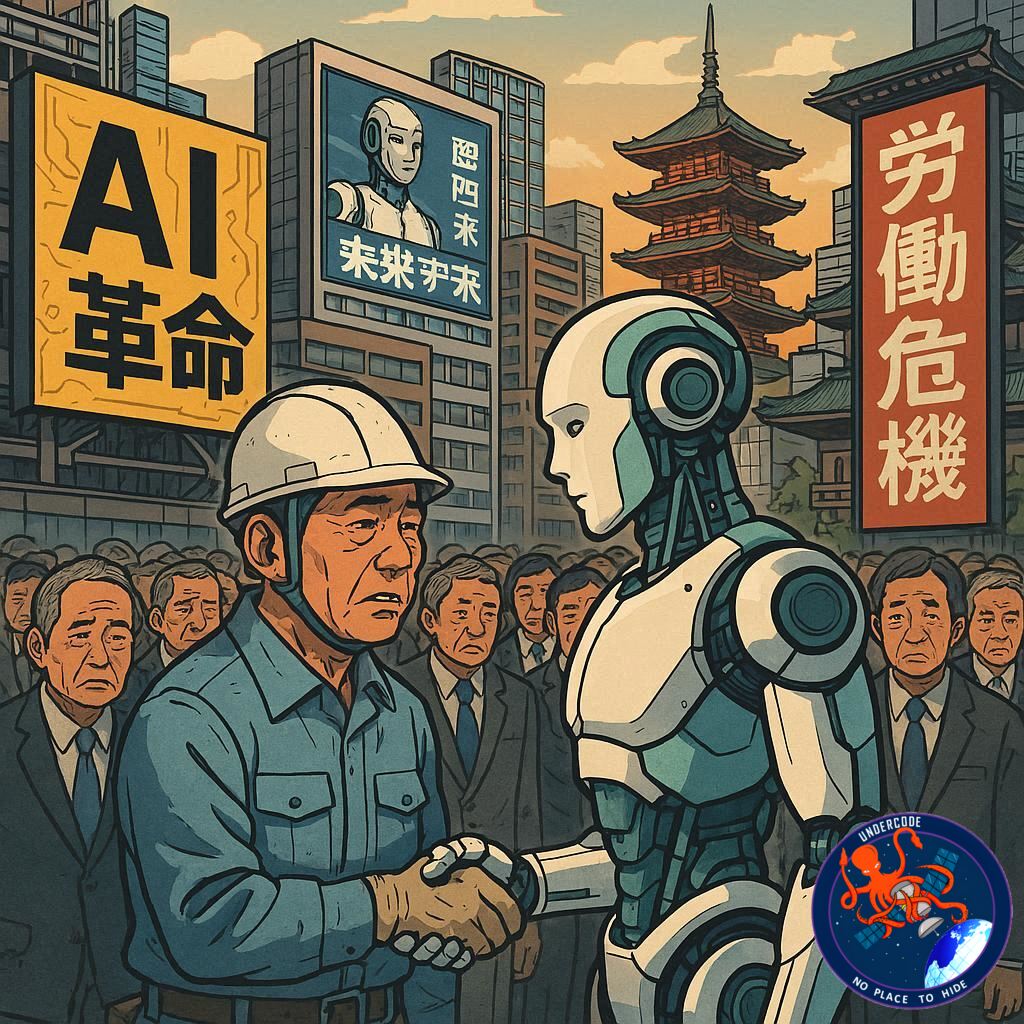
Japan is entering a critical phase where demographic decline is no longer a distant concern but an immediate economic threat. Among its major regions, Kansai stands out as one of the fastest-aging and shrinking populations, creating a unique pressure point for industries that rely heavily on human labor. As the workforce contracts, the urgency to adopt automation and artificial intelligence intensifies. This shift is not just about efficiency, but survival. Experts increasingly point toward “physical AI” as a transformative solution, integrating intelligent systems directly into machines and real-world operations. The Kansai region, with its strong industrial base and history of manufacturing innovation, is now being positioned as a potential leader in this next wave of technological evolution. Insights from economic researchers highlight that while Japan faces structural challenges, regions like Kansai may paradoxically benefit by becoming testing grounds for advanced automation. The question is no longer whether AI will be adopted, but how quickly and effectively it can offset the shrinking labor pool while maintaining economic vitality.
The Shrinking Workforce Crisis Reshaping Japan’s Economic Landscape
Japan’s labor shortage is no longer cyclical, it is structural and deeply rooted in demographic trends. The working-age population, particularly those between 15 and 64, is declining at a pace that disrupts traditional economic assumptions. Even in periods of economic slowdown, labor shortages persist, creating an unusual condition where unemployment does not rise significantly because there are simply not enough workers available. This imbalance forces companies to rethink hiring, operations, and long-term strategies. In Kansai, the situation is even more pronounced due to faster population decline compared to other metropolitan areas. Industries such as manufacturing, logistics, and healthcare are feeling the strain most acutely. Businesses are increasingly unable to maintain productivity using conventional labor models, pushing them toward automation as a necessity rather than a choice. The result is a shift in how value is created, moving from human-intensive processes to technology-driven systems that can operate continuously and efficiently without reliance on large workforces.
Automation and Physical AI Emerging as Urgent Solutions
To counteract labor shortages, automation has become a central pillar of Japan’s economic adaptation strategy. However, the next stage goes beyond simple mechanization. Physical AI represents a deeper integration of artificial intelligence into machines that can perceive, learn, and interact with the physical world. This includes advanced robotics, smart manufacturing systems, and autonomous logistics networks. Kansai’s industrial ecosystem provides fertile ground for such innovations, with established supply chains, engineering expertise, and a culture of precision manufacturing. Companies are beginning to invest in AI-powered robotics capable of performing complex tasks previously reserved for skilled human workers. These systems are not only replacing labor but also enhancing productivity by reducing errors and increasing operational speed. The transition is gradual but inevitable, as businesses recognize that maintaining competitiveness requires embracing technologies that can compensate for demographic limitations while opening new avenues for growth.
Kansai’s Strategic Advantage in the AI-Driven Economy
Despite its demographic challenges, Kansai holds several advantages that position it as a potential leader in physical AI development. The region has a long-standing reputation for manufacturing excellence, supported by a dense network of small and medium-sized enterprises that specialize in precision components and industrial innovation. This ecosystem is particularly well-suited for integrating AI into physical systems, as it allows for rapid prototyping and iterative development. Additionally, Kansai’s universities and research institutions contribute to a steady pipeline of technical expertise, fostering collaboration between academia and industry. This synergy creates an environment where new technologies can be tested and scaled efficiently. While Tokyo remains a financial and administrative hub, Kansai’s strength lies in its ability to translate theoretical advancements into practical applications. As global demand for automation grows, the region could leverage its capabilities to become a key exporter of AI-driven industrial solutions.
The Economic Implications of AI Adoption in Japan
The widespread adoption of AI and automation carries significant economic implications. On one hand, it offers a solution to labor shortages, enabling businesses to sustain operations and even expand despite a declining workforce. On the other hand, it raises questions about the future of employment, skill requirements, and income distribution. As machines take over routine tasks, the demand for highly skilled workers capable of designing, managing, and maintaining these systems will increase. This shift necessitates a transformation in education and workforce development, ensuring that individuals can adapt to new roles within an AI-driven economy. For Kansai, the challenge lies in balancing technological advancement with social stability, ensuring that the benefits of automation are distributed broadly rather than concentrated among a few sectors or companies.
What Undercode Say: The Real Story Behind Japan’s AI Push and Kansai’s Hidden Potential
Japan’s situation is often framed as a crisis, but beneath that narrative lies a strategic inflection point that could redefine its global position. Labor shortages are forcing innovation at a pace that many other developed economies have not yet experienced. Kansai, in particular, represents a microcosm of this transformation, where necessity is accelerating technological adoption in ways that might otherwise take decades. The concept of physical AI is not just a technological upgrade, it is a reconfiguration of how economies function when human labor is no longer abundant.
What stands out is how Japan’s constraints are shaping a unique innovation pathway. Unlike regions with abundant labor, where automation is often resisted due to social and political concerns, Japan has fewer barriers to adoption. This creates a real-world laboratory where advanced robotics and AI systems can be deployed at scale. Kansai’s manufacturing heritage plays a critical role here, as it provides the infrastructure needed to translate AI theory into tangible products and systems.
However, there is an underlying risk that is often overlooked. Rapid automation can lead to uneven economic outcomes if not managed carefully. Small businesses that cannot afford AI investments may fall behind, widening the gap between technologically advanced firms and traditional enterprises. This could create a dual economy where productivity gains are concentrated in a limited number of sectors. Kansai’s dense network of small and medium enterprises makes this both a challenge and an opportunity. If supported properly, these businesses could collectively drive a new wave of distributed innovation.
Another critical dimension is global competition. Countries like the United States and China are investing heavily in AI, but their focus often leans toward software and digital ecosystems. Japan’s strength in physical AI offers a differentiated approach, one that combines hardware excellence with intelligent systems. Kansai could become a global hub for this niche, exporting not just products but entire operational frameworks for automation. This would position the region as a leader in the next phase of industrial evolution.
The societal impact also cannot be ignored. As machines take over more functions, the definition of work itself will change. Japan may need to rethink employment structures, potentially embracing shorter workweeks, reskilling programs, and new forms of economic participation. Kansai’s ability to adapt socially will be just as important as its technological progress. The region’s success will depend not only on innovation but on its capacity to integrate that innovation into a stable and inclusive economic model.
Ultimately, Kansai’s trajectory will serve as a case study for other aging societies. If it can successfully leverage physical AI to offset demographic decline while maintaining economic vitality, it could provide a blueprint for the future. The real story is not just about technology replacing labor, but about redefining how economies grow when traditional assumptions no longer apply.
Fact Checker Results
✅ Japan is experiencing a significant decline in its working-age population, contributing to labor shortages.
✅ Kansai is projected to face faster population decline compared to other major Japanese regions.
❌ Physical AI adoption is still emerging and not yet fully widespread across all industries.
Prediction
📊 AI-driven automation in Kansai will accelerate within the next decade, especially in manufacturing and logistics.
📊 The region may emerge as a global leader in physical AI exports, leveraging its industrial ecosystem.
📊 Workforce transformation policies will become essential to balance technological growth with social stability.
🕵️📝✔️Let’s dive deep and fact‑check.
References:
Reported By: xtechnikkeicom_71e6e228b96c7259d8c19deb
Extra Source Hub (Possible Sources for article):
https://www.stackexchange.com
Wikipedia
OpenAi & Undercode AI
Image Source:
Unsplash
Undercode AI DI v2
Bing
🔐JOIN OUR CYBER WORLD [ CVE News • HackMonitor • UndercodeNews ]
📢 Follow UndercodeNews & Stay Tuned:
𝕏 formerly Twitter 🐦 | @ Threads | 🔗 Linkedin | 🦋BlueSky | 🐘Mastodon


