
Listen to this Post
Introduction: A Strategic Shift Toward AI-Driven Infrastructure
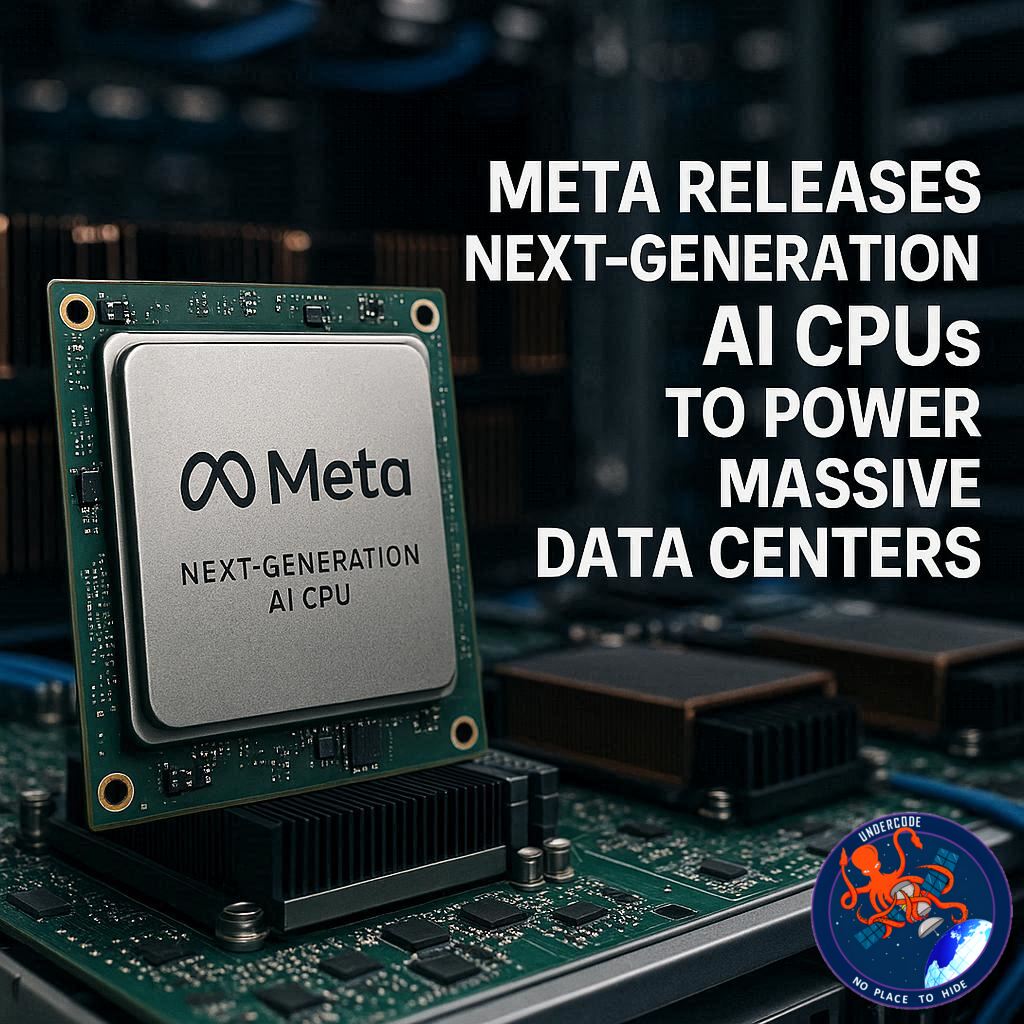
The race to dominate artificial intelligence is no longer just about software breakthroughs. It has moved deeper into the hardware layer, where performance, efficiency, and scalability define the limits of innovation. In a major step toward reshaping the backbone of AI infrastructure, Meta has partnered with Arm to develop an entirely new class of CPUs designed specifically for AI workloads and large-scale computing environments. This collaboration signals a clear shift away from traditional processor designs toward purpose-built silicon capable of handling the explosive demands of modern AI systems.
Summary: A New CPU Architecture Built for the AI Era
Meta’s announcement introduces a strategic partnership with Arm aimed at developing advanced CPUs tailored for artificial intelligence workloads and general-purpose computing. CPUs remain the core processing units responsible for enabling both AI training and inference, but traditional designs are increasingly unable to keep up with the scale and complexity of modern AI systems. As Meta continues pushing toward its vision of widespread AI integration and personal superintelligence, its data centers are rapidly exceeding the capabilities of existing CPU architectures.
To address this limitation, Meta and Arm are co-developing multiple generations of cutting-edge processors optimized for high-density computing environments. These CPUs are designed to deliver massive computational power within limited physical space, making them ideal for AI-focused data centers and large-scale deployments that operate at gigawatt levels. This approach reflects a broader industry trend where efficiency per rack and per watt has become just as important as raw performance.
The first product from this collaboration is the Arm AGI CPU, marking Arm’s entry into data center processors specifically engineered for the AI era. This processor is designed to deliver significantly improved performance per rack while maintaining higher efficiency compared to legacy CPUs. Meta will act as the lead partner and co-developer, ensuring the chip is optimized for its ecosystem, including its family of applications and its custom MTIA silicon solutions.
The Arm AGI CPU is not intended to remain exclusive to Meta. Instead, it will be made available to the wider AI ecosystem through Arm, signaling an effort to standardize next-generation AI infrastructure across the industry. Additionally, Meta plans to release its board and rack designs for the CPU through the Open Compute Project, further promoting open innovation and collaboration in data center design.
Executives from both companies emphasize the importance of this partnership. Meta highlights the need for a diverse and adaptable silicon portfolio to deliver AI experiences at a global scale, while Arm points to the collaboration as a natural evolution of its compute platform into high-performance data center CPUs optimized for large-scale AI deployments. Together, the companies aim to combine Arm’s expertise in power-efficient computing with Meta’s infrastructure capabilities to build the foundation for the next generation of AI systems.
Ultimately, these new CPUs will become part of Meta’s expanding silicon portfolio, contributing to a flexible and scalable hardware stack designed to meet the growing demands of AI and deliver advanced computing experiences to billions of users worldwide.
What Undercode Say: The Real Meaning Behind Meta’s Hardware Push
Meta’s move into co-developing CPUs is not just a technical upgrade, it is a strategic necessity. The era of relying on off-the-shelf processors is fading fast, especially for companies operating at hyperscale. AI workloads are fundamentally different from traditional computing tasks. They require parallelism, memory bandwidth, and energy efficiency at levels that legacy CPUs were never designed to handle.
This partnership reveals a deeper transformation happening across the tech industry. Control over silicon is becoming as critical as control over algorithms. By working directly with Arm, Meta is effectively reducing its dependency on third-party hardware vendors while gaining the ability to fine-tune performance for its specific AI models and services. This mirrors similar strategies seen across the industry, where companies are investing heavily in custom chips to gain a competitive edge.
The introduction of the Arm AGI CPU also highlights a key bottleneck in AI scaling: infrastructure density. It is no longer enough to build larger data centers. The challenge now is fitting more compute power into the same physical footprint without exponentially increasing energy consumption. This is where Arm’s efficiency-first architecture becomes valuable. Lower power usage combined with high performance allows for better scaling without unsustainable energy costs.
Another important angle is the integration of this CPU with Meta’s existing custom silicon, such as its MTIA chips. This suggests a heterogeneous computing strategy, where different types of processors handle specialized tasks within the same system. Instead of relying on a single type of chip, Meta is building an ecosystem where CPUs, GPUs, and custom accelerators work together seamlessly. This approach is likely to define the future of AI infrastructure.
The decision to open-source board and rack designs through the Open Compute Project is equally significant. It positions Meta not just as a consumer of technology, but as a leader shaping industry standards. By sharing its designs, Meta encourages wider adoption of its architecture while also benefiting from community-driven improvements. This creates a feedback loop that accelerates innovation across the ecosystem.
However, this move also raises competitive questions. As more companies develop custom silicon, the gap between tech giants and smaller players may widen. Building and optimizing hardware at this level requires massive investment, expertise, and infrastructure. This could lead to increased centralization of AI power among a few dominant companies.
From a long-term perspective, the collaboration between Meta and Arm represents a shift toward vertically integrated AI systems. Software, hardware, and infrastructure are becoming tightly coupled. This integration allows for greater efficiency and performance, but it also reduces flexibility and increases complexity in development.
There is also a subtle but important signal in Arm’s expansion into data center CPUs. Traditionally dominant in mobile and low-power devices, Arm is now positioning itself as a serious competitor in the high-performance computing space. With the rise of AI, power efficiency is no longer a secondary concern, it is a primary constraint. This plays directly into Arm’s strengths and could reshape the competitive landscape of server processors.
In essence, this partnership is not just about building a better CPU. It is about redefining how AI infrastructure is designed, scaled, and controlled. It reflects a future where the boundaries between hardware and software blur, and where companies that master both layers will lead the next wave of technological innovation.
Fact Checker Results
✅ Meta and Arm officially announced a partnership to develop AI-focused CPUs.
✅ The Arm AGI CPU is designed specifically for data centers and AI workloads.
❌ The announcement does not confirm immediate mass-market availability timelines for all sectors.
Prediction
🔮 AI-specific CPUs will become standard infrastructure within the next 3–5 years.
🔮 More tech giants will shift toward fully custom silicon ecosystems.
🔮 Energy-efficient architectures like Arm will dominate future AI data centers.
🕵️📝✔️Let’s dive deep and fact‑check.
References:
Reported By: about.fb.com
Extra Source Hub (Possible Sources for article):
https://www.reddit.com/r/AskReddit
Wikipedia
OpenAi & Undercode AI
Image Source:
Unsplash
Undercode AI DI v2
Bing
🔐JOIN OUR CYBER WORLD [ CVE News • HackMonitor • UndercodeNews ]
📢 Follow UndercodeNews & Stay Tuned:
𝕏 formerly Twitter 🐦 | @ Threads | 🔗 Linkedin | 🦋BlueSky | 🐘Mastodon


