
Listen to this Post
Introduction
The evolving battlefield of cyberspace is no longer just about espionage—it is about national security, global deterrence, and the blurred lines between digital and kinetic warfare. At the RSAC 2026 Conference in San Francisco, four former National Security Agency (NSA) directors convened to share insights into the United States’ offensive cyber strategy, exploring the limits of cyber engagement and the critical thresholds that could trigger a military response. Their discussion exposed not only the operational complexities of cyberwarfare but also the strategic debates shaping the future of national defense.
Key Insights
The panel, titled “Inside Offensive Cyber: Lessons from Four NSA Directors,” featured Tim Haugh, Paul Nakasone, Mike Rogers, and Keith Alexander, who collectively represent decades of leadership in US cyber operations. Alexander, appointed by former President Barack Obama to create and lead US Cyber Command, was succeeded by Rogers, Nakasone, and Haugh. Their discussion followed the release of President Donald Trump’s latest cyber strategy, which emphasized offensive action and deterrence as central pillars of national security.
Offensive cyber operations encompass a wide spectrum of activities—from dismantling threat actor infrastructure and surveillance to high-profile attacks like Stuxnet, which significantly disrupted Iran’s nuclear program. While these operations often remain classified, the panel revealed the shift of cyberwarfare from a secretive tool to a public-facing capability, highlighting the growing involvement of the private sector in national cyber defense.
Alexander emphasized that the internet has already become a battleground. “Because it is, we have to be the best at it because our nation is the most digitized nation in the world,” he said. Early skeptics feared that militarizing cyberspace would escalate global conflict, but the panel argued that maintaining superiority is essential for national security.
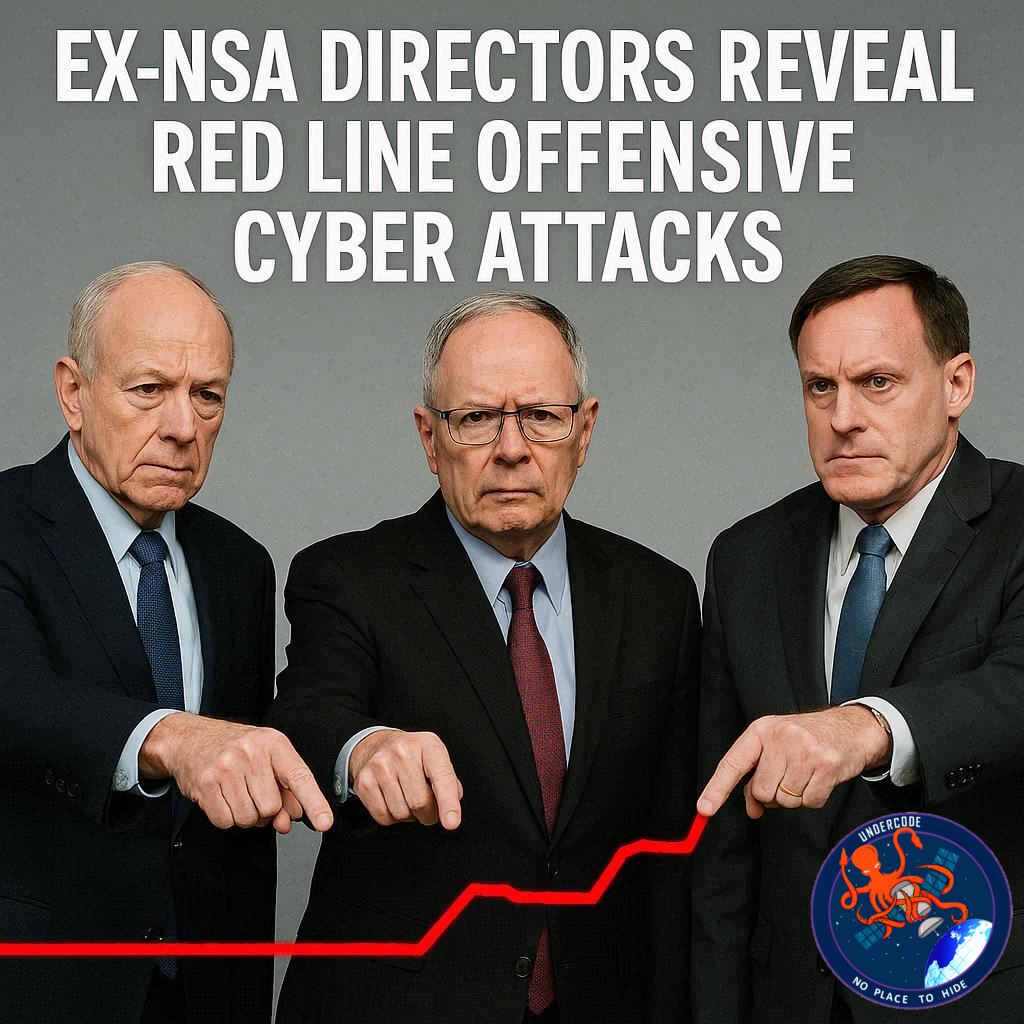
A central question was the so-called “red line” in cyberattacks—what severity of cyber activity warrants a kinetic response. Nakasone stated plainly that the red line is ultimately determined by the president, with commanders and policymakers providing options based on severity and potential consequences. Rogers noted that during the Obama administration, criteria were proposed for kinetic retaliation, especially when cyberattacks could directly cause loss of life. Alexander cautioned against rigid rules, arguing that flexibility allows leaders to adapt responses to the context of each attack.
The discussion also examined whether the US still prioritizes cyber. Amid reports of agency layoffs and reduced government presence at RSAC, Rogers criticized the lack of coordinated political leadership and the absence of a unified federal data privacy or cyber legislative framework. He contrasted this with the energy and innovation within the private sector, emphasizing that both government and industry must work together to advance cyber resilience. Alexander struck a more measured tone, asserting that key players continue to train, operate, and progress despite political and structural challenges.
What Undercode Say: An Analytical Perspective
The panel’s insights underscore a fundamental tension in US cybersecurity policy: the balance between offensive capability and strategic restraint. Cyberwarfare is inherently asymmetric; attacks can be executed with precision and speed, but attribution is complex, and escalation risks are high. By leaving the “red line” definition to the president, the US preserves strategic ambiguity—a tool that can deter adversaries but also risks inconsistent responses if political priorities shift between administrations.
Another critical observation is the growing dependence on private sector infrastructure for both defense and offense. Unlike traditional military assets, much of the US digital ecosystem is commercially owned, meaning any offensive operation often involves coordination with private networks. This raises legal, ethical, and operational questions, particularly regarding sovereignty and collateral impact on civilian systems.
The panel highlighted a gap between strategic vision and political execution. Rogers’ critique reveals systemic vulnerabilities: without clear federal legislation, cyber initiatives may remain reactive rather than proactive. This disconnect also reflects a broader challenge in national security governance—the difficulty of synchronizing politically fragmented institutions with technologically agile private actors.
From a historical perspective, the US has repeatedly leveraged cyber operations as a force multiplier, from disrupting Iran’s nuclear program to monitoring adversarial networks. The evolution of NSA and Cyber Command illustrates a deliberate trajectory: building capabilities in secret, gradually normalizing offensive operations, and increasingly integrating cyber into national defense doctrine. Yet, the pace of technological change outstrips policy frameworks, creating friction that could hinder rapid, effective responses in a crisis.
The discussion also sheds light on the ethical dimensions of offensive cyber. Unlike conventional warfare, cyberattacks can target critical civilian infrastructure, blur lines between military and civilian domains, and leave long-term, hard-to-reverse damage. Alexander’s insistence on flexibility hints at the challenges in codifying ethical boundaries into law without undermining operational effectiveness.
Strategically, the panel suggests a dual approach: maintain cutting-edge offensive capabilities while investing in cyber diplomacy, threat intelligence sharing, and public-private partnerships. The US cannot rely solely on military deterrence; international norms, collaboration with allies, and resilience measures are equally essential. The absence of coordinated cyber legislation is a vulnerability that adversaries may exploit, highlighting the need for Congress and the executive to align policies with technological realities.
Finally, the panel signals a shift in cyber warfare from a clandestine, intelligence-driven activity to an integrated component of national power. Offensive cyber operations are no longer isolated missions—they are entwined with economic security, geopolitical influence, and national defense posture. The debate over the “red line” reflects the broader challenge of defining boundaries in a domain where speed, stealth, and unpredictability dominate.
Fact Checker Results
✅ The Stuxnet operation significantly disrupted Iran’s nuclear program, attributed to US and Israeli collaboration, though not officially confirmed.
✅ US Cyber Command was established under Keith Alexander during the Obama administration to coordinate military cyber operations.
❌ The RSAC 2026 Conference did not have an official government presence comparable to prior years; some agencies withdrew their participation.
Prediction
📊 Offensive cyber operations will continue to expand in scope and sophistication, with the US emphasizing integrated strategies combining private sector partnerships, military deterrence, and intelligence sharing. Expect increased debate over legal frameworks, red-line thresholds, and international norms, with the next five years likely seeing both publicized and covert cyber interventions in response to global threats.
🕵️📝✔️Let’s dive deep and fact‑check.
References:
Reported By: www.darkreading.com
Extra Source Hub (Possible Sources for article):
https://www.twitter.com
Wikipedia
OpenAi & Undercode AI
Image Source:
Unsplash
Undercode AI DI v2
Bing
🔐JOIN OUR CYBER WORLD [ CVE News • HackMonitor • UndercodeNews ]
📢 Follow UndercodeNews & Stay Tuned:
𝕏 formerly Twitter 🐦 | @ Threads | 🔗 Linkedin | 🦋BlueSky | 🐘Mastodon


