
Listen to this Post
Introduction: A New Era of Effortless Global Communication
Language barriers have long been one of the biggest obstacles in human connection. Whether traveling abroad, speaking with relatives, or navigating international business, the inability to understand another language can limit meaningful interaction. Now, that barrier is rapidly disappearing. With the latest update, Google Translate introduces a powerful feature for iPhone users that allows real-time conversation translation directly through headphones. This advancement is not just a technical upgrade—it represents a shift toward seamless, natural communication across cultures.
The newly released “Live translate with headphones” feature enables users to instantly understand spoken language in over 70 languages, all while preserving tone and context. This is a major step forward in making translation feel less robotic and more human. By combining audio processing with real-time AI translation, Google is pushing the boundaries of what mobile technology can achieve in everyday life.
the Original Announcement
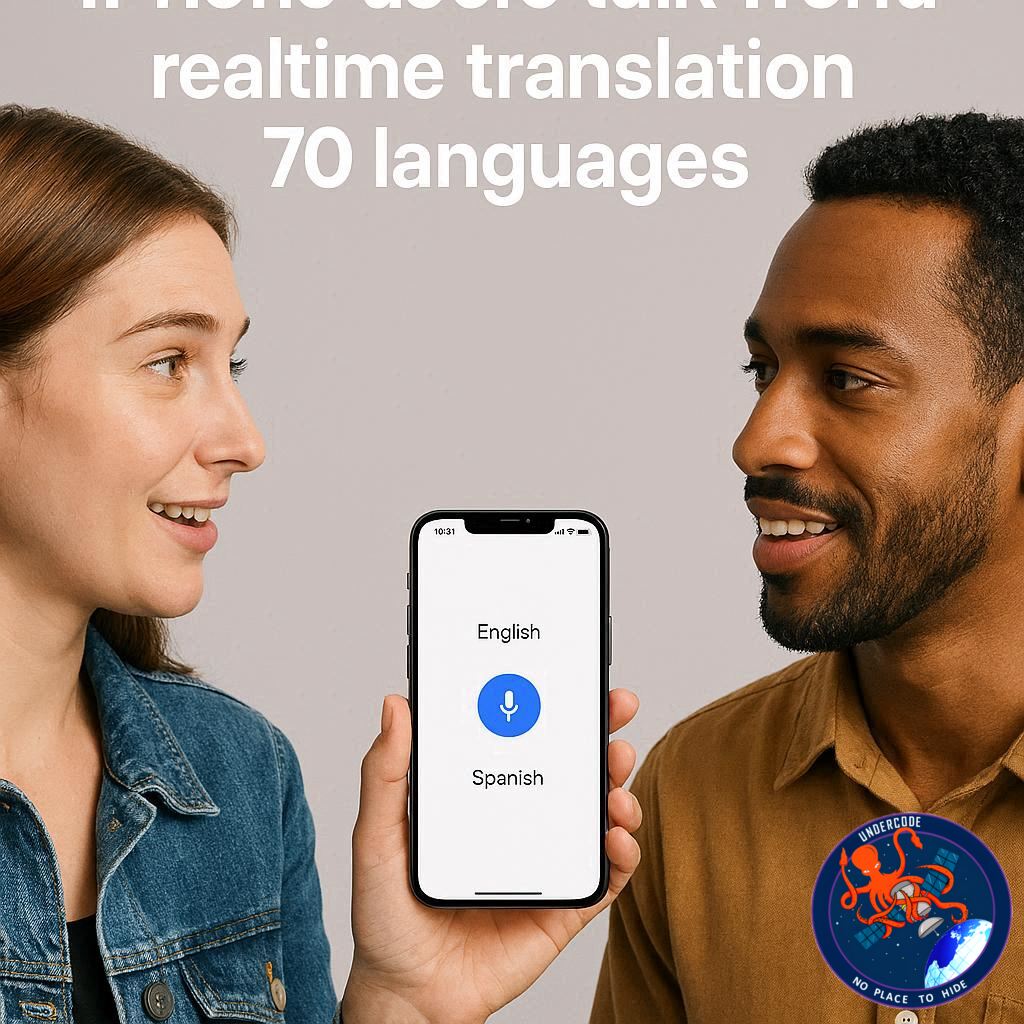
Google has officially rolled out its Live translate with headphones feature to iOS devices, expanding accessibility beyond Android users. This feature allows iPhone users wearing headphones to translate conversations in real time across more than 70 languages. The rollout also extends to multiple countries, including France, Germany, Italy, Japan, Spain, Thailand, and the United Kingdom, making it widely available for global users.
According to Google Product Manager Sasha Kapur, the feature is designed to help people connect instantly and naturally. It works through the Google Translate app, where users can activate the Live translate option and select a listening mode. Once enabled, the app captures spoken language and delivers translated audio directly into the user’s headphones.
One of the standout aspects of this feature is its ability to preserve tone, emphasis, and cadence. Unlike traditional translation tools that often sound flat or mechanical, this system aims to reflect how something is said—not just what is said. This makes conversations easier to follow and more authentic.
The feature was initially launched in beta late last year, already supporting a wide range of languages such as English, Spanish, French, German, Chinese, Hindi, Arabic, and many more. It includes both widely spoken and regional languages, making it highly inclusive. Examples range from European languages like Italian and Dutch to Asian languages like Korean and Thai, and even less commonly supported ones like Zulu and Uzbek.
Google highlights practical use cases for the feature, including family interactions and travel scenarios. For instance, Kapur mentions using it during family dinners where Punjabi is spoken, demonstrating its usefulness in personal settings. Travelers can also rely on it to navigate foreign environments more easily, similar to Apple’s own translation features available on select AirPods models.
To use the feature, users simply open the Google Translate app, tap on the Live translate option (where available), and choose the listening mode. The process is designed to be intuitive, requiring minimal setup while delivering powerful results.
In essence, this update transforms smartphones and headphones into real-time translation devices, making multilingual communication more accessible than ever before.
What Undercode Says:
A Quiet Revolution in Everyday Technology
What Google has introduced may seem like just another app feature, but in reality, it represents a profound shift in how humans interact. Real-time translation has existed for years, but integrating it seamlessly into everyday tools like headphones changes the equation entirely. It moves translation from a deliberate action to a passive experience.
Competing with Apple on Its Own Turf
Apple has already introduced similar features within its ecosystem, particularly with AirPods. However, Google’s approach is more inclusive. Instead of restricting functionality to specific hardware, Google allows this feature to work with virtually any pair of headphones. This open approach could give Google a competitive advantage, especially among users who don’t want to invest in premium Apple accessories.
The Importance of Tone and Context
One of the biggest challenges in translation technology is maintaining emotional nuance. Words alone are not enough—tone, pacing, and emphasis carry meaning. Google’s focus on preserving these elements suggests a deeper level of AI sophistication. If successful, this could significantly reduce misunderstandings in cross-language communication.
Real-World Use Cases Are Driving Adoption
Unlike many tech features that struggle to find practical applications, this one solves immediate, real-world problems. Travelers can ask for directions without awkward pauses. Families with multilingual backgrounds can communicate more fluidly. Even business professionals can use it for quick, informal conversations without needing a human translator.
Accessibility and Inclusion
Supporting over 70 languages is not just a technical milestone—it’s a social one. Many translation tools prioritize widely spoken languages, leaving others underserved. By including languages like Amharic, Zulu, and Punjabi, Google is making a conscious effort to be more inclusive. This could have a meaningful impact in regions where language barriers limit access to information and opportunities.
Potential Limitations Still Exist
Despite its promise, the technology is not perfect. Real-time translation depends heavily on audio clarity, internet connectivity, and contextual understanding. Accents, slang, and background noise can still pose challenges. While the feature is impressive, users should be aware that it may not always deliver flawless results.
Privacy Concerns Cannot Be Ignored
Any feature that listens to conversations raises questions about privacy. Users may wonder how their data is processed, stored, or used. Google will need to maintain transparency and robust security measures to ensure trust. Without that, even the most advanced features risk limited adoption.
The Future of Language Learning
Interestingly, tools like this could change how people approach learning languages. If real-time translation becomes reliable enough, fewer people may feel the need to learn new languages. On the other hand, it could also serve as a learning aid, helping users understand pronunciation and context more effectively.
A Step Toward Universal Communication
This feature brings us closer to a long-standing dream: universal communication without language barriers. While we are not fully there yet, innovations like this are clear indicators of the direction technology is heading.
Market Impact and Industry Direction
Google’s move will likely push competitors to accelerate their own translation technologies. As AI continues to evolve, we can expect even more advanced features, such as offline translation, emotion detection, and real-time transcription with context awareness.
Fact Checker Results
Accuracy of Feature Availability
The rollout of Live translate with headphones on iOS is confirmed and aligns with Google’s official announcement. ✅
Language Support Claims
The claim of supporting over 70 languages is accurate and consistent with Google Translate’s current capabilities. ✅
Real-Time Tone Preservation
While Google states it preserves tone and cadence, real-world performance may vary depending on conditions. ❌
Prediction
📊 The Rise of Invisible Translation
Real-time translation will soon become a background feature embedded in everyday devices, making language barriers nearly invisible in daily life.
📊 Increased Dependence on AI Communication
As tools like this improve, people will rely more on AI for communication, potentially reducing the urgency to learn foreign languages.
📊 Expansion Beyond Headphones
Future versions will likely integrate directly into augmented reality glasses and other wearables, enabling visual and audio translation simultaneously.
🕵️📝✔️Let’s dive deep and fact‑check.
References:
Reported By: 9to5mac.com
Extra Source Hub (Possible Sources for article):
https://www.pinterest.com
Wikipedia
OpenAi & Undercode AI
Image Source:
Unsplash
Undercode AI DI v2
Bing
🔐JOIN OUR CYBER WORLD [ CVE News • HackMonitor • UndercodeNews ]
📢 Follow UndercodeNews & Stay Tuned:
𝕏 formerly Twitter 🐦 | @ Threads | 🔗 Linkedin | 🦋BlueSky | 🐘Mastodon


