
Listen to this Post
Introduction: A New Wave of Software Supply Chain Attacks
Cybersecurity threats continue to evolve at a relentless pace, and March 2026 has delivered yet another alarming example of how attackers are exploiting trust in open-source ecosystems. This time, malicious actors targeted Python developers by compromising widely used packages, embedding hidden payloads designed to steal sensitive data and infiltrate cloud environments. The attack highlights a growing trend: adversaries are no longer just targeting systems directly—they are poisoning the tools developers rely on every day.
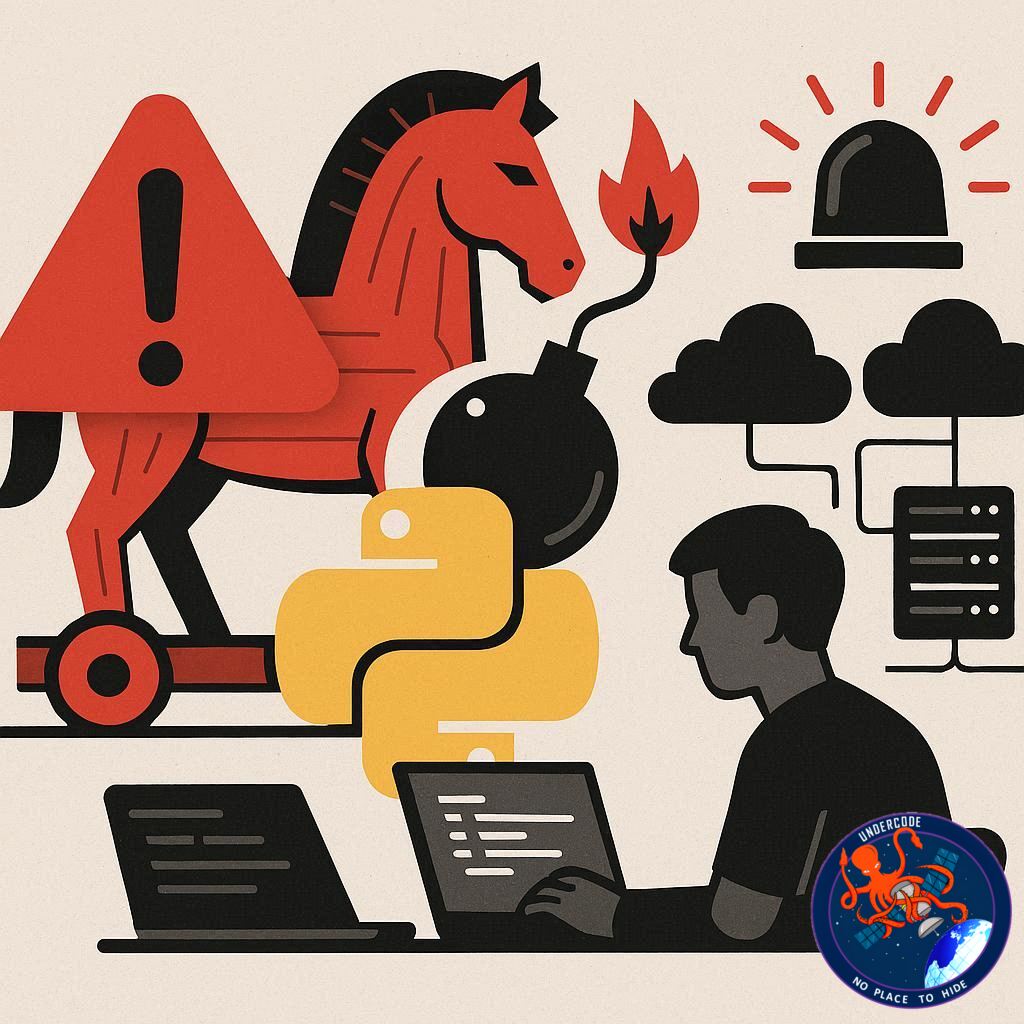
This incident revolves around the trojanization of LiteLLM Python packages hosted on PyPI, a central repository trusted by millions of developers worldwide. By injecting malicious code into seemingly legitimate packages, attackers managed to create a stealthy and highly effective attack vector capable of compromising local systems, cloud credentials, and even cryptocurrency wallets.
the Original Incident
In March 2026, cybersecurity researchers uncovered a sophisticated attack campaign targeting developers through compromised LiteLLM Python packages distributed on PyPI. These packages were modified to include malicious payloads encoded in Base64, allowing attackers to conceal their true intent while bypassing basic detection mechanisms. Once installed, the malicious code would execute silently in the background, extracting sensitive data from the victim’s environment.
The payloads were designed with multiple objectives in mind. First, they scanned local systems for files that could contain valuable information, such as configuration files, API keys, and authentication tokens. Second, they specifically targeted cloud credentials, enabling attackers to potentially gain access to cloud services and infrastructure. Third, the malware included functionality to locate and extract cryptocurrency wallet data, signaling financial motivation behind the attack.
One of the most concerning aspects of this campaign was its persistence mechanism. The attackers leveraged .pth files—a lesser-known feature in Python environments—to ensure that the malicious code would execute automatically whenever Python was run. This approach allowed the malware to remain active even after system restarts or environment changes.
The attack also demonstrated a strong focus on modern development environments, particularly Kubernetes-based deployments. By targeting containerized environments, the attackers aimed to expand their reach beyond individual machines and into scalable, production-level systems. This significantly increased the potential impact, as compromised containers could lead to broader infrastructure breaches.
The discovery of this campaign quickly raised concerns within the cybersecurity community, as it highlighted vulnerabilities in the software supply chain. Developers often trust packages hosted on official repositories like PyPI, assuming they are safe to use. However, this incident proved that even trusted ecosystems can be exploited if proper verification and security practices are not followed.
In addition to this attack, reports surfaced about active exploitation campaigns targeting outdated iOS devices. Attack kits such as Coruna and DarkSword were reportedly being used to exploit vulnerabilities in iOS versions ranging from 13 to 18.7. Users were advised to update their devices or enable Lockdown Mode to mitigate risks, further emphasizing the widespread nature of modern cyber threats.
Overall, the events of March 2026 illustrate a broader trend in cybersecurity: attackers are increasingly targeting weak links in the digital ecosystem, from open-source software repositories to outdated mobile devices. The combination of stealth, persistence, and scalability makes these attacks particularly dangerous, requiring heightened awareness and proactive defense strategies from both developers and end users.
The Rise of Software Supply Chain Exploits
Software supply chain attacks are not new, but their frequency and sophistication have increased dramatically in recent years. By compromising trusted libraries, attackers gain indirect access to thousands—or even millions—of systems. This method is both efficient and difficult to detect, as the malicious code is often hidden within legitimate functionality.
In this case, the attackers chose a Python package, knowing that Python remains one of the most widely used programming languages in the world. The decision to target LiteLLM specifically suggests that attackers are carefully selecting packages with growing adoption, maximizing their reach.
Why Base64 Encoding Still Works for Attackers
At first glance, Base64 encoding is a simple and well-known technique. It is not encryption, but rather a way to encode binary data into text. However, its simplicity is precisely what makes it effective in attacks like this. Many security tools overlook Base64-encoded strings, especially when they appear in otherwise legitimate code.
By embedding payloads in Base64, attackers can evade basic static analysis and delay detection. Once decoded at runtime, the malicious instructions are executed seamlessly, leaving little trace for traditional security systems to catch.
Persistence Through .pth Files: A Clever Trick
The use of .pth files is particularly noteworthy. These files are typically used to extend Python’s module search path, but they can also execute arbitrary code when Python starts. This makes them an ideal persistence mechanism.
Unlike more obvious startup scripts, .pth files often go unnoticed by developers and system administrators. This allows the malware to remain active without raising suspicion, ensuring long-term access for the attackers.
Kubernetes as a High-Value Target
Modern applications are increasingly deployed in containerized environments, with Kubernetes serving as the backbone of many cloud infrastructures. By targeting these environments, attackers are not just compromising individual machines—they are potentially gaining access to entire clusters.
This shift in focus reflects a deeper understanding of modern development practices. Attackers are adapting their strategies to align with how software is built and deployed today, making their attacks more impactful than ever before.
Cloud Credentials: The Real Prize
While local file theft is concerning, the real value lies in cloud credentials. Access to cloud environments can allow attackers to deploy additional malware, exfiltrate data, or even launch further attacks from trusted infrastructure.
This makes cloud credentials one of the most sought-after targets in modern cyberattacks. Once compromised, they can serve as a gateway to a much larger attack surface.
Cryptocurrency Wallets: Financial Motivation Behind the Attack
The inclusion of cryptocurrency wallet targeting reveals another layer of intent. Attackers are not just interested in data—they are also pursuing direct financial gain. Cryptocurrency transactions are often irreversible, making them an attractive target for cybercriminals.
This dual-purpose approach—data theft and financial exploitation—demonstrates the evolving nature of cyber threats, where multiple objectives are pursued simultaneously.
Parallel Threats: Mobile Exploits on the Rise
At the same time as the Python package attack, reports emerged of active exploits targeting older iOS devices. This highlights a critical issue: outdated software remains one of the easiest entry points for attackers.
Users who delay updates or ignore security warnings are at significantly higher risk. The recommendation to enable Lockdown Mode underscores the severity of these threats.
What Undercode Say:
The Trust Crisis in Open Source Ecosystems
The LiteLLM incident underscores a growing trust crisis in open-source ecosystems. Developers rely heavily on third-party libraries to accelerate development, but this convenience comes at a cost. When a single package is compromised, the ripple effect can be enormous, affecting countless applications and services.
Attackers Are Thinking Like Developers
What stands out in this attack is how well it aligns with modern development workflows. The use of PyPI, Python environments, Kubernetes, and cloud credentials shows that attackers are no longer outsiders—they understand the tools and processes developers use daily.
Stealth Is the New Standard
This campaign was not about loud, destructive behavior. Instead, it focused on stealth, persistence, and data exfiltration. This reflects a broader shift in cybercrime, where attackers aim to remain undetected for as long as possible.
The Weakest Link Is Still Human Behavior
Despite advanced techniques, the success of such attacks often comes down to human behavior. Developers installing packages without thorough verification create opportunities for attackers. Security awareness remains one of the most critical defenses.
Security Tools Are Falling Behind
Traditional security tools struggle to detect threats hidden within legitimate codebases. This highlights the need for more advanced solutions, such as behavioral analysis and runtime monitoring.
The Expanding Attack Surface
With the rise of cloud computing and containerization, the attack surface has expanded significantly. Each new layer of abstraction introduces new vulnerabilities, making comprehensive security more challenging.
Financial Incentives Are Driving Innovation in Cybercrime
The inclusion of cryptocurrency targeting shows that financial incentives continue to drive innovation among attackers. As long as there is profit to be made, cybercriminals will continue to refine their techniques.
The Importance of Proactive Defense
Reactive measures are no longer sufficient. Organizations must adopt proactive strategies, including regular audits, dependency scanning, and zero-trust architectures.
Developers Are Now Frontline Defenders
Developers are no longer just builders—they are also defenders. Their choices directly impact the security of the systems they create.
The Need for Ecosystem-Level Security
Individual efforts are not enough. Platforms like PyPI must implement stronger verification and monitoring systems to prevent similar incidents in the future.
Fact Checker Results
🔍 Verification of Supply Chain Attack Claims
✅ The use of trojanized packages on repositories like PyPI is a well-documented attack vector and aligns with real-world incidents.
🔍 Validation of Persistence Techniques
✅ The abuse of .pth files for persistence is technically accurate and has been observed in Python-based attacks.
🔍 Assessment of Broader Threat Context
❌ While iOS exploit kits are plausible, specific attribution to named kits requires independent confirmation from verified security sources.
Prediction
📊 The Future of Open-Source Security
Open-source ecosystems will likely implement stricter package verification processes, including mandatory code signing and automated behavioral analysis.
📊 Developer-Focused Security Tools Will Surge
Expect a rise in tools specifically designed for developers, integrating security checks directly into coding environments and CI/CD pipelines.
📊 Supply Chain Attacks Will Become More Targeted
Future attacks will increasingly focus on niche but high-impact libraries, maximizing damage while minimizing detection risk.
🕵️📝✔️Let’s dive deep and fact‑check.
References:
Reported By: x.com
Extra Source Hub (Possible Sources for article):
https://www.twitter.com
Wikipedia
OpenAi & Undercode AI
Image Source:
Unsplash
Undercode AI DI v2
Bing
🔐JOIN OUR CYBER WORLD [ CVE News • HackMonitor • UndercodeNews ]
📢 Follow UndercodeNews & Stay Tuned:
𝕏 formerly Twitter 🐦 | @ Threads | 🔗 Linkedin | 🦋BlueSky | 🐘Mastodon


