
Listen to this Post
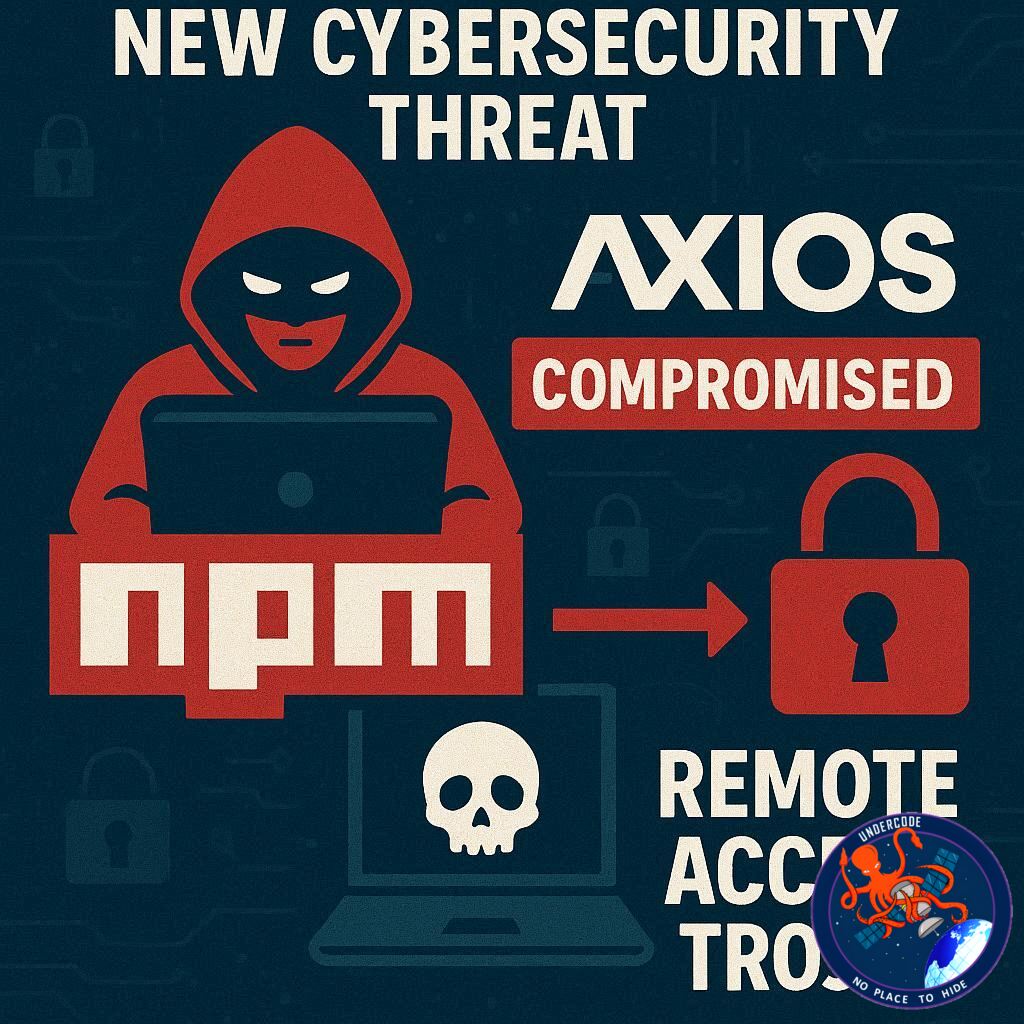
In today’s rapidly evolving cyber landscape, software supply chains have become prime targets for attackers. Recent reports reveal a sophisticated attack involving the widely used npm package Axios, where hackers exploited compromised credentials to inject malicious code into versions 1.14.1 and 0.30.4. This breach highlights the persistent vulnerability of developer ecosystems and the growing need for vigilance in dependency management. Beyond Axios, cybersecurity analysts are tracking multiple threats, from APT groups to cryptojacking campaigns, underscoring the increasing complexity of defending digital infrastructures.
Recent Cybersecurity Alerts
Attackers recently leveraged compromised developer credentials to release malicious versions of Axios, a popular JavaScript HTTP client library. The injected code introduced a hidden dependency that triggered a postinstall script executing a Remote Access Trojan (RAT), potentially giving attackers full control over affected systems. This incident is a stark reminder of the dangers posed by supply chain attacks, where malicious actors infiltrate trusted software packages to reach wider networks of users and organizations.
In parallel, Picus Security has highlighted 11 top MITRE ATT&CK techniques observed throughout 2025. Among the most significant are threats such as STATICPLUGIN, SadBridge Loader, and XLoader variants, as well as APT36 operations. The report also flags Kubernetes cryptojacking campaigns, where attackers exploit container environments for cryptocurrency mining. In total, Picus analyzed 147 network Indicators of Compromise (IoCs), demonstrating the broad spectrum of modern cyber threats and the advanced techniques attackers are deploying.
These incidents show that attackers are no longer just targeting individual machines but entire ecosystems, leveraging trusted channels like npm packages to bypass traditional security measures. This emphasizes the importance of proactive monitoring, multi-factor authentication for developer accounts, and the use of automated tools to detect abnormal package behavior.
Moreover, supply chain compromises such as the Axios attack can have cascading effects. Organizations depending on these libraries may unwittingly deploy vulnerable code into production environments, putting critical systems, sensitive data, and client information at risk. Security teams must now consider not only endpoint protection but also software provenance, code auditing, and package integrity verification as essential components of their cybersecurity strategy.
This growing threat landscape demonstrates that cybercriminals are innovating faster than many defensive systems can respond. The Axios compromise is part of a wider pattern of targeting high-trust software dependencies, reinforcing the need for a collaborative effort among developers, security researchers, and organizations to protect digital supply chains.
What Undercode Says:
Supply Chain Attacks Are Escalating: The Axios incident exemplifies a critical shift in attacker strategies. By compromising widely used packages, threat actors can reach countless downstream users in a single attack.
RATs and Hidden Dependencies Are Dangerous: The postinstall script executing a Remote Access Trojan shows attackers are embedding deep persistence mechanisms that bypass casual inspection. Organizations must implement runtime monitoring and integrity checks for all third-party dependencies.
APT and Malware Evolution: Techniques used by groups like APT36, SadBridge Loader, and XLoader variants demonstrate that adversaries are combining traditional malware, lateral movement, and advanced evasion to maintain long-term access.
Kubernetes Cryptojacking Signals Cloud Risk: Container environments are increasingly targeted. Misconfigured clusters or compromised images can serve as a launchpad for cryptocurrency mining or other malicious operations, signaling that cloud security is no longer optional.
Network Indicators Provide Actionable Intel: The 147 IoCs analyzed offer organizations actionable paths for threat hunting, allowing them to preempt attacks rather than simply react.
Developer Credential Security Is Crucial: The initial breach through compromised credentials highlights human and operational weaknesses. Multi-factor authentication, access auditing, and strict credential hygiene are non-negotiable for any modern development pipeline.
Awareness and Automation Are Key: Continuous monitoring, automated dependency scanning, and anomaly detection must become part of the standard security lifecycle to mitigate these evolving threats.
Collaboration Between Security Researchers and Developers: Sharing threat intelligence, IoCs, and mitigation strategies can drastically reduce the time attackers have to exploit vulnerabilities.
Regulatory and Compliance Pressure: With increasing supply chain attacks, governments and regulators may impose stricter security requirements on open-source packages and critical dependencies.
Future Implications for DevSecOps: Security must be integrated into every stage of software development, from coding and testing to deployment, to prevent attackers from exploiting trusted channels.
Fact Checker Results ✅
✅ Axios npm packages 1.14.1 and 0.30.4 were confirmed compromised with a malicious postinstall RAT.
✅ Picus Security documented 147 network IoCs, including threats like STATICPLUGIN and SadBridge Loader.
❌ No evidence yet suggests that all Axios users were impacted; risk depends on whether malicious versions were installed.
Prediction 📊
The Axios compromise signals a continuing rise in supply chain attacks, particularly targeting widely used open-source libraries. Expect attackers to increasingly embed malware in trusted packages, especially in DevOps pipelines. Organizations investing in dependency scanning, automated threat detection, and real-time monitoring will significantly reduce exposure. By 2027, supply chain security may evolve into a primary compliance requirement, with stricter standards for software provenance and developer credential management. The combination of cloud adoption, containerization, and remote development will make attack surface monitoring and cross-platform threat intelligence sharing essential components of cybersecurity strategies.
If you want, I can also create a more visually engaging version with bullet points and charts for IoCs and attack trends to make this article even more appealing for readers. Do you want me to do that next?
🕵️📝✔️Let’s dive deep and fact‑check.
References:
Reported By: x.com
Extra Source Hub (Possible Sources for article):
https://www.digitaltrends.com
Wikipedia
OpenAi & Undercode AI
Image Source:
Unsplash
Undercode AI DI v2
Bing
🔐JOIN OUR CYBER WORLD [ CVE News • HackMonitor • UndercodeNews ]
📢 Follow UndercodeNews & Stay Tuned:
𝕏 formerly Twitter 🐦 | @ Threads | 🔗 Linkedin | 🦋BlueSky | 🐘Mastodon


