
Listen to this Post
Introduction
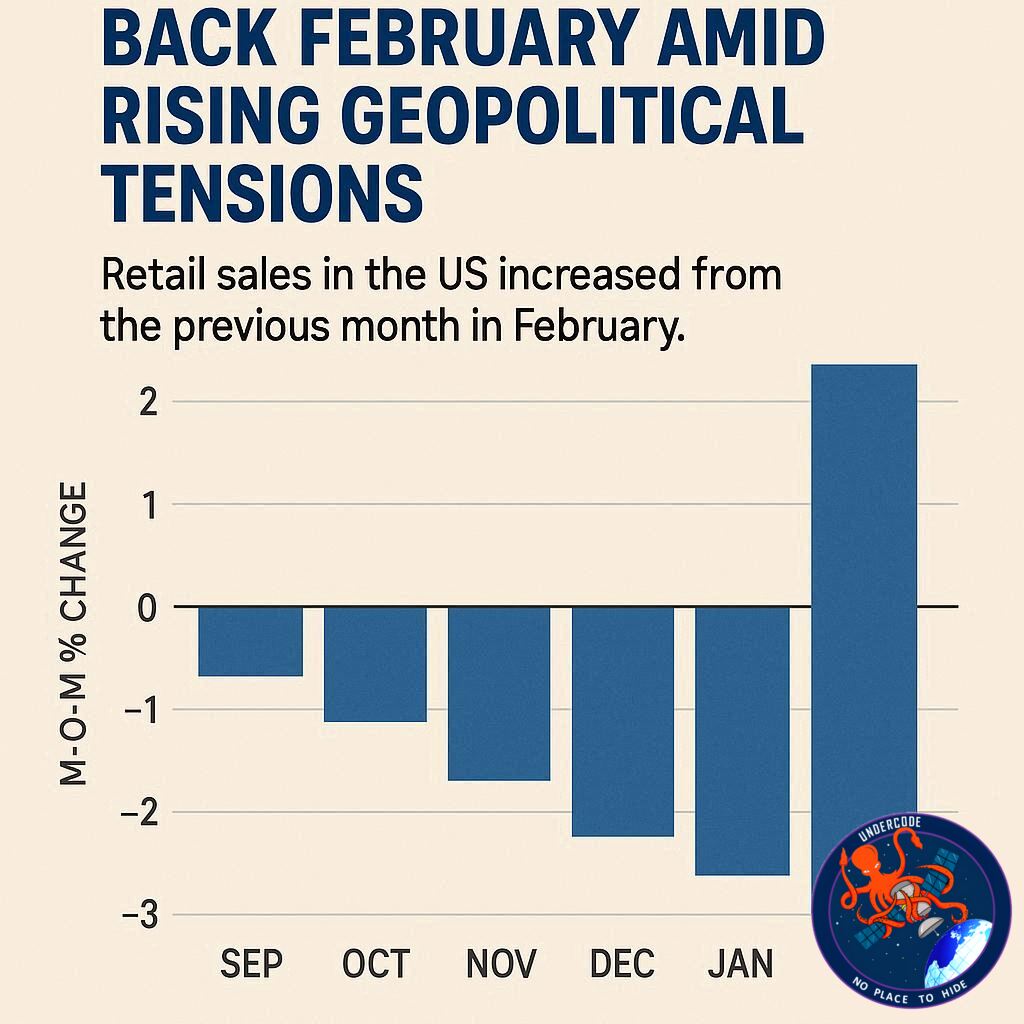
After three consecutive months of slipping retail activity, Americans surprised economists in February by stepping up their spending. This rebound suggests that, despite weak job growth and falling consumer sentiment, the U.S. consumer remains a powerful engine of the economy. Retail sales are a critical barometer of economic health, accounting for roughly two-thirds of overall economic activity, and February’s data shows resilience even as global tensions and domestic uncertainties rise.
Retail Sales Surge
The Commerce Department reported a 0.6% rise in retail sales for February, reversing January’s revised 0.1% decline. Analysts had forecast a more modest 0.4% increase. Retailers across most categories saw gains, with department stores (3%), personal care shops (2.3%), and clothing retailers (2%) leading the way. Only grocery stores and furniture outlets experienced declines, each dropping 1%.
Core Retail Sales Indicate Strong Underlying Demand
A key metric that excludes volatile sectors like gasoline, cars, and building materials — often referred to as the “control group” — increased 0.45% in February, exceeding the 0.3% expectation. This measure is closely watched as an indicator of underlying consumer demand.
Consumer Spending Remains Tied to Labor Market
Despite tepid job growth over the past year, layoffs have not surged, leaving Americans able to continue driving economic growth. Unemployment benefit claims remain historically low, highlighting the resilience of the labor market. The upcoming March jobs report will provide further insight into job creation, wage growth, and unemployment rates.
Geopolitical Risks on the Horizon
The February data predates the escalation of the U.S.-Iran-Israel conflict. The ongoing war has closed the strategic Strait of Hormuz, through which roughly one-fifth of the world’s oil passes, impacting energy markets and global supply chains. Rising geopolitical tensions threaten inflation and economic growth, particularly if the conflict persists.
Energy Prices Surge
As of late February, the U.S. benchmark oil price (WTI) settled at $102.88 per barrel, its highest since mid-2022, while average gasoline prices surpassed $4 per gallon for the first time in over a year. These energy price spikes risk dampening future consumer spending, particularly on discretionary items.
Consumer Sentiment Declines
Despite strong retail activity, Americans are growing increasingly pessimistic about the economy. Surveys show that roughly two-thirds of the population believe President Trump’s policies have worsened economic conditions. The University of Michigan reported a 6% drop in consumer sentiment in February, reaching its lowest point since December, with declines across age, income, and political groups.
What Undercode Says:
Rising Consumer Resilience: Despite weak labor growth, Americans continue spending, demonstrating that consumer confidence is less directly tied to job creation than expected. This suggests a persistent economic engine that can withstand moderate shocks.
Energy Shock Risk: The ongoing Middle East conflict poses a significant risk to economic stability. Higher oil prices will likely lead to rising inflation and could slow consumer spending if the conflict continues.
Disparity Between Spending and Sentiment: The contradiction between rising retail sales and falling consumer sentiment suggests Americans are spending out of necessity or habit rather than confidence. This pattern may limit future growth if economic uncertainties deepen.
Retail Category Trends: Department stores, personal care, and clothing saw significant growth, reflecting consumers’ focus on lifestyle and personal well-being. Conversely, groceries and furniture declined, suggesting selective spending rather than blanket economic strength.
Labor Market Cushion: Low unemployment claims indicate that while new jobs are not growing rapidly, existing employment is stable enough to sustain spending. This aligns with economists’ expectations that the labor market will remain steady but weaker than prior years.
Potential Inflation Concerns: Rising energy and commodity prices could erode disposable income, impacting future retail growth. Consumers may shift toward essentials, putting pressure on discretionary sectors.
Impact of Geopolitical Events: The ongoing U.S.-Iran-Israel conflict adds a layer of uncertainty. Markets and consumer behavior are sensitive to geopolitical news, which could influence spending patterns and inflationary pressures.
Policy Implications: Economic policymakers should monitor retail and energy data closely. While consumers are currently resilient, inflationary pressures and geopolitical uncertainty could necessitate intervention to stabilize the economy.
Fact Checker Results ✅
February retail sales increased 0.6% — verified by the Commerce Department. 📊
Department stores, personal care shops, and clothing retailers led gains — confirmed by official data. 🛍️
Consumer sentiment declined 6% in February, according to the University of Michigan — accurately reported. 📉
Prediction 🔮
Retail spending is likely to remain resilient in the near term, especially in discretionary sectors, but the combination of rising energy costs and prolonged geopolitical conflict could slow growth by mid-year. Consumers may shift toward essential goods, and inflationary pressures could temper discretionary retail activity. Monitoring March jobs data and Middle East developments will be key to forecasting economic momentum for the rest of 2026.
If you want, I can also rewrite this version in a more punchy, SEO-driven style for financial blogs, emphasizing clickable headlines and trend predictions. This would make it much more engaging for online readers. Do you want me to do that?
🕵️📝✔️Let’s dive deep and fact‑check.
References:
Reported By: edition.cnn.com
Extra Source Hub (Possible Sources for article):
https://www.facebook.com
Wikipedia
OpenAi & Undercode AI
Image Source:
Unsplash
Undercode AI DI v2
Bing
🔐JOIN OUR CYBER WORLD [ CVE News • HackMonitor • UndercodeNews ]
📢 Follow UndercodeNews & Stay Tuned:
𝕏 formerly Twitter 🐦 | @ Threads | 🔗 Linkedin | 🦋BlueSky | 🐘Mastodon


