
Listen to this Post
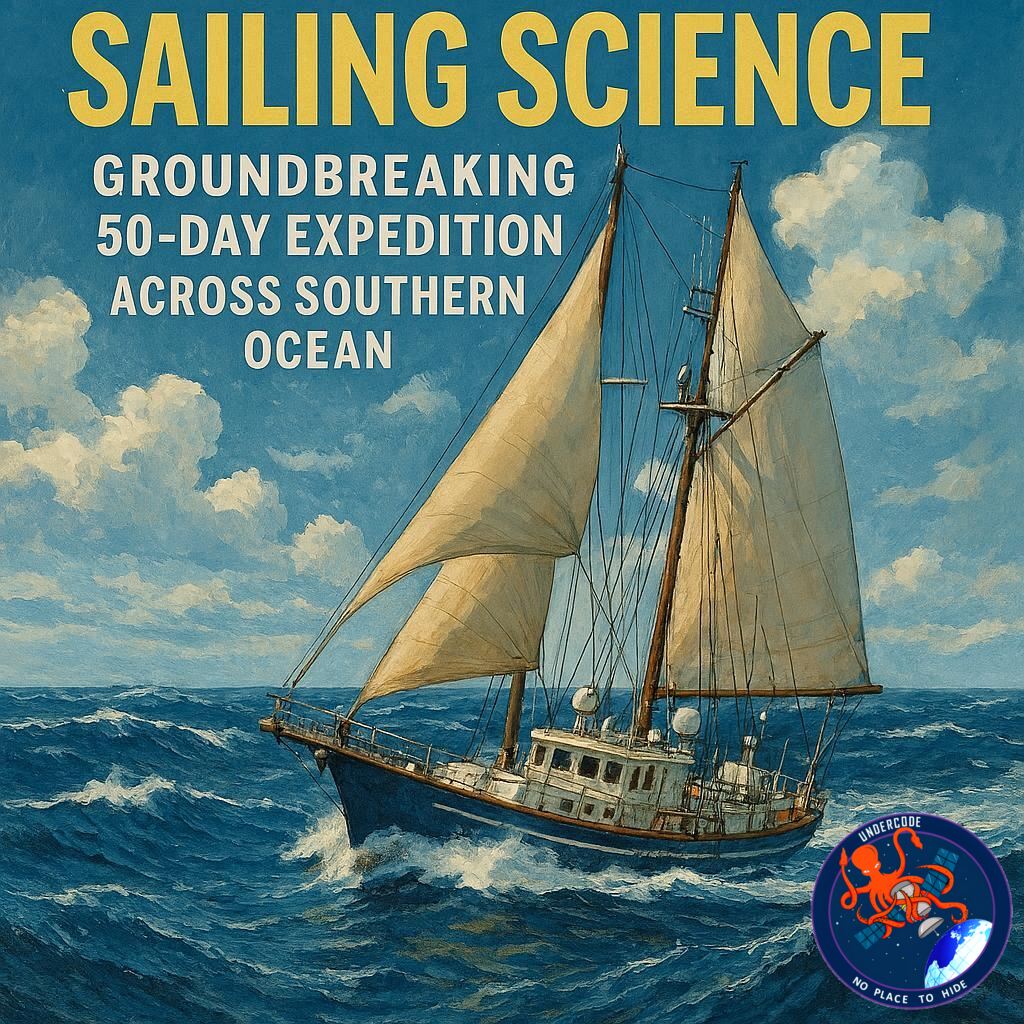
The Southern Ocean, a remote and powerful stretch of water encircling Antarctica, holds secrets vital to understanding Earth’s climate, marine ecosystems, and global biodiversity. From January to March 2026, an international team of scientists embarked on a remarkable 50-day journey aboard the sail-powered vessel Perseverance, covering 7,200 miles of some of the planet’s most extreme waters. Unlike conventional research ships, this expedition was designed to minimize environmental impact, relying primarily on wind power. The mission combined scientific rigor with sustainable exploration, providing an unprecedented window into the ocean’s microscopic world and its connection to life across the globe.
Expedition Overview
The PlanktoSpace mission brought together 18 participants, including researchers from NASA, the European Space Agency, CNRS, and the University of Maine. Their primary goal was to study the health of marine protected areas and the foundation of the ocean’s food web: plankton. These microscopic organisms, although invisible to the naked eye, play a critical role in global ecology. They influence ocean color, regulate carbon cycles, and sustain species from tiny krill to apex predators like leopard seals and penguins.
Using a suite of instruments, the team measured the ocean’s color to understand how sunlight interacts with plankton and other materials. Chlorophyll levels, the green pigment found in all phytoplankton, varied dramatically—up to 100-fold—between regions from New Zealand to Antarctica and Australia. The expedition navigated extreme weather and dangerous seas, which occasionally interfered with sensor readings due to air bubbles, highlighting the challenges of oceanographic research in harsh environments.
Beyond color measurements, the team collected water samples for genetic analysis, providing critical data for validating NASA’s Plankton, Aerosol, Cloud, and ocean Ecosystem (PACE) satellite observations. This in situ validation ensures that satellite data accurately reflects real-world ocean conditions. Additionally, instruments on board tracked microplastics and other human impacts, while a smartphone app, iSPEX Water, allowed citizen scientists to contribute surface-level measurements aligned with NASA’s satellite data.
All collected data will be shared with NASA databases, enabling researchers worldwide to study the Southern Ocean’s health and track changes over time from space. This expedition represents a unique integration of hands-on science, citizen engagement, and advanced satellite technology.
What Undercode Say:
The PlanktoSpace mission demonstrates a pioneering model for sustainable, collaborative ocean research. By relying on sail power, the expedition drastically reduced its carbon footprint compared to traditional research vessels, highlighting that large-scale scientific missions can coexist with environmental stewardship. The use of satellite validation, particularly through the PACE mission, bridges oceanography and remote sensing, providing a critical feedback loop that strengthens the reliability of global marine monitoring.
Scientifically, focusing on plankton underscores the growing recognition that micro-scale organisms have macro-scale impacts on climate and ecosystems. Plankton diversity not only influences marine food webs but also drives carbon absorption, affecting global climate systems. The expedition’s mapping of chlorophyll concentrations highlights how dynamic these populations are across vast ocean regions, revealing patterns that could inform conservation strategies for marine protected areas.
Moreover, integrating citizen science tools like iSPEX Water represents a shift toward democratizing data collection, enabling the public to contribute meaningfully to large-scale research efforts. The mission also tackles pollution monitoring, tracking microplastics in real time, which is crucial for understanding human impacts on remote oceans. Collectively, these efforts highlight the growing synergy between hands-on research, technological innovation, and public engagement in tackling environmental challenges.
Strategically, the data collected will have long-term implications. Researchers can compare seasonal changes, track the impacts of climate variability, and inform policy decisions on conservation. Combining high-resolution satellite imagery with in situ genetic analysis offers a template for future multi-disciplinary expeditions worldwide. The Southern Ocean, long considered inaccessible and dangerous, is increasingly becoming a laboratory for global climate science, showcasing the importance of international collaboration in tackling planetary-scale issues.
Fact Checker Results:
✅ The 50-day expedition traveled 7,200 miles using primarily sail power, significantly reducing fuel use compared to traditional research ships.
✅ Instruments measured chlorophyll concentrations to monitor plankton, validating NASA’s PACE satellite data.
✅ Additional data on microplastics and citizen science integration aligns with the described research methods.
Prediction:
🌊 The PlanktoSpace model could inspire a new generation of eco-conscious, sail-powered scientific expeditions.
🛰️ Satellite validation missions like PACE will increasingly rely on in situ ocean sampling for accuracy, particularly in remote regions.
🔬 Public engagement through citizen science may expand, allowing broader participation in global marine monitoring efforts.
If you want, I can also create a visual infographic summary of the expedition showing chlorophyll changes, microplastic tracking, and citizen science integration—it would make this article much more engaging for readers.
Do you want me to make that?
🕵️📝✔️Let’s dive deep and fact‑check.
References:
Reported By: science.nasa.gov
Extra Source Hub (Possible Sources for article):
https://www.reddit.com
Wikipedia
OpenAi & Undercode AI
Image Source:
Unsplash
Undercode AI DI v2
Bing
🔐JOIN OUR CYBER WORLD [ CVE News • HackMonitor • UndercodeNews ]
📢 Follow UndercodeNews & Stay Tuned:
𝕏 formerly Twitter 🐦 | @ Threads | 🔗 Linkedin | 🦋BlueSky | 🐘Mastodon


