
Listen to this Post
A New Era of In-Car Intelligence Begins
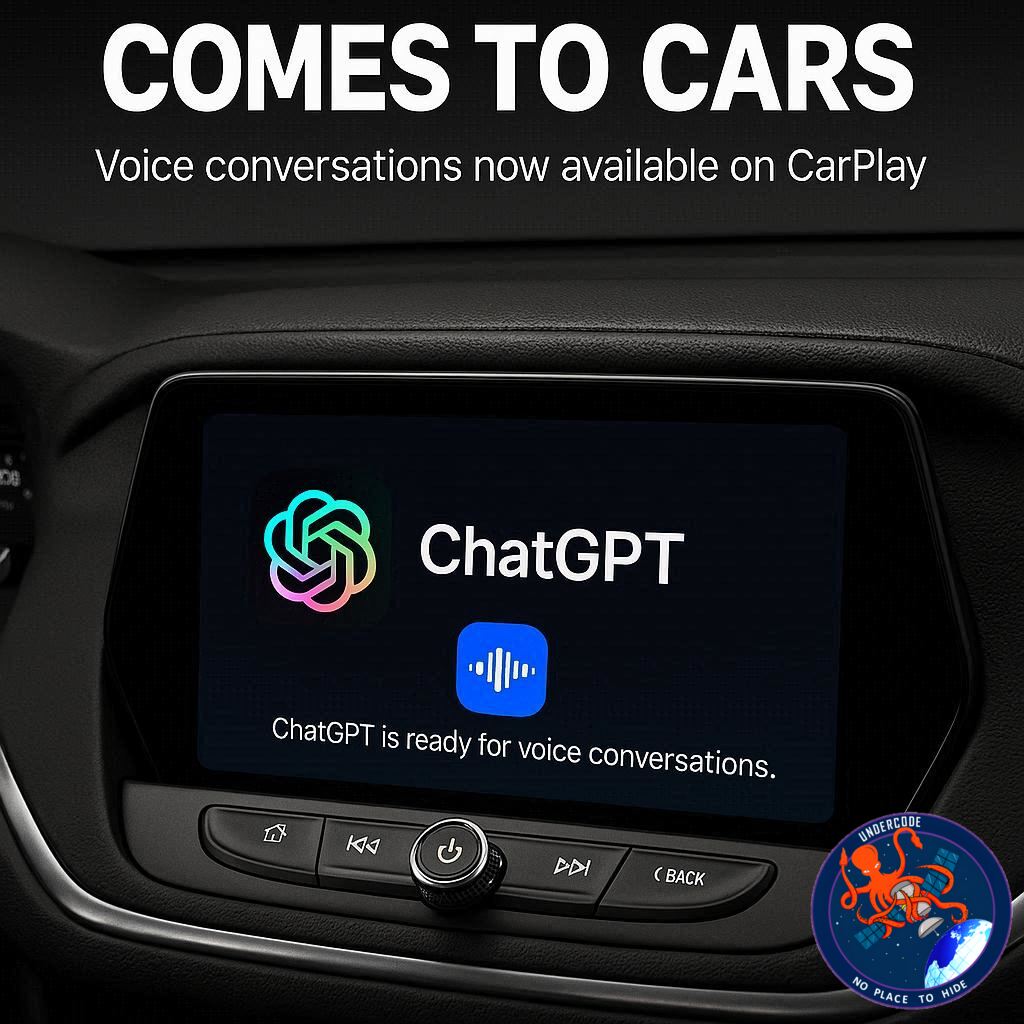
In a move that signals the growing integration of artificial intelligence into everyday life, OpenAI has officially brought ChatGPT to Apple CarPlay. This update allows users to interact with the chatbot directly from their car’s dashboard, transforming the driving experience into something far more connected, conversational, and intelligent.
The feature is rolling out globally for iPhone users running the latest iOS 26.4 or newer, and importantly, it is not limited to premium subscribers. Whether you are using a free or paid plan, the experience is designed to be accessible and seamless, bringing AI-powered conversations to the road like never before.
ChatGPT Goes Hands-Free on the Road
The core idea behind this integration is simple but powerful: hands-free communication. Once an iPhone is connected to CarPlay and the ChatGPT app is updated, users can launch it directly from the infotainment screen and begin speaking as soon as the system signals readiness.
The entire interaction is built around voice. There is no need to type, tap, or navigate through complex menus while driving. This makes it significantly safer and more intuitive, especially for drivers who need to stay focused on the road.
Users can start new conversations, continue existing ones, or even revisit past chats entirely through voice commands. This continuity gives the system a more natural feel, closer to speaking with a human assistant rather than operating a traditional app.
Seamless Experience with Smart Automation
One of the most convenient features is the optional setting that allows ChatGPT to automatically launch in voice mode when opened via CarPlay. This removes friction and ensures that users can start interacting immediately without additional steps.
Even more impressively, the system can remember its last state. If ChatGPT was the last app used before disconnecting the phone, it may automatically reopen when reconnected. This continuity enhances usability, especially for users who rely on ongoing conversations or frequent interactions.
This level of automation reflects a broader trend in technology: reducing user effort while increasing responsiveness and personalization.
A Useful Tool for Drivers and Passengers
For drivers, the benefits are clear. Hands-free interaction reduces the need to physically engage with a smartphone, which can significantly lower distraction levels. Instead of reaching for a device, drivers can ask questions, request explanations, or even engage in light conversation while keeping their attention on driving.
Passengers, on the other hand, gain a versatile tool for entertainment and productivity. Whether it is asking for information, continuing a discussion, or simply chatting casually, the experience is fluid and accessible for everyone in the car.
This dual-use design makes the feature appealing not just as a safety tool, but also as a shared in-car assistant for all occupants.
Limitations and Safety Considerations
Despite its advantages, the integration does come with limitations. ChatGPT within CarPlay does not have access to navigation data, real-time location, or vehicle-specific systems. It also cannot control other applications such as maps or messaging services.
These restrictions are intentional and tied closely to safety and privacy concerns. By limiting access to sensitive data and system controls, OpenAI reduces the risk of misuse or over-dependence on AI while driving.
Users are also reminded to complete setup before starting their journey and to use the feature only when it is safe and permitted under local laws. While voice interaction reduces distraction, it does not eliminate it entirely, and responsible usage remains essential.
What Undercode Say:
The Shift Toward Ambient AI in Everyday Life
This update is more than just a feature release. It represents a larger shift toward what can be described as “ambient AI,” where artificial intelligence becomes a constant, background presence in daily environments.
Cars are one of the most strategic places for this transformation. Drivers often spend long periods on the road, making vehicles an ideal space for voice-driven assistance. By integrating ChatGPT into CarPlay, OpenAI is positioning itself at the center of this evolving ecosystem.
Competing with Traditional Voice Assistants
This move also places ChatGPT in direct competition with established in-car assistants like Siri and other proprietary systems. Unlike traditional assistants that rely on predefined commands, ChatGPT offers more flexible, conversational interactions.
This difference could redefine user expectations. Instead of issuing commands, users can engage in natural dialogue, ask complex questions, or explore ideas in real time. That is a significant leap forward in how humans interact with technology.
Safety Versus Cognitive Load
While hands-free interaction reduces physical distraction, it introduces another factor: cognitive load. Engaging in deep or complex conversations while driving may still impact focus.
This raises an important question about the future of AI in vehicles. Should systems limit the complexity of interactions while the car is in motion? Or should users be trusted to self-regulate?
The balance between convenience and safety will likely shape future updates and regulations in this space.
A Step Toward Fully Integrated Smart Vehicles
Although current limitations prevent ChatGPT from accessing navigation or vehicle controls, this could change over time. As partnerships between AI companies and automotive manufacturers deepen, future versions may offer tighter integration.
Imagine a system that not only answers questions but also adjusts routes, manages in-car settings, or coordinates with other smart devices. The foundation laid by this release could lead to a fully integrated AI driving companion.
Privacy and Data Boundaries Matter
Another key aspect is privacy. By restricting access to sensitive data, OpenAI is signaling a cautious approach. In an era where data misuse is a major concern, this restraint could build user trust.
However, as features expand, maintaining this balance will become increasingly challenging. Users will demand more functionality, but also greater transparency and control over their data.
Fact Checker Results:
Availability and Compatibility ✅
ChatGPT integration with CarPlay is confirmed for iOS 26.4 and later, supporting a wide range of iPhone users.
Hands-Free Functionality Claims ✅
The system is primarily voice-driven, allowing interaction without physical input, aligning with safety-focused design.
Limitations Around Data Access ✅
ChatGPT does not access navigation, vehicle data, or control other apps, as clearly stated in official details.
Prediction:
AI Becomes a Standard In-Car Feature 🚗
AI assistants like ChatGPT will likely become standard in most vehicles within the next few years.
Deeper Integration with Car Systems 🔧
Future updates may allow limited control over navigation and vehicle settings as safety frameworks evolve.
Shift in User Behavior Toward Conversational Tech 💬
Drivers and passengers will increasingly rely on natural conversation rather than commands when interacting with in-car systems.
🕵️📝✔️Let’s dive deep and fact‑check.
References:
Reported By: zeenews.india.com
Extra Source Hub (Possible Sources for article):
https://www.instagram.com
Wikipedia
OpenAi & Undercode AI
Image Source:
Unsplash
Undercode AI DI v2
Bing
🔐JOIN OUR CYBER WORLD [ CVE News • HackMonitor • UndercodeNews ]
📢 Follow UndercodeNews & Stay Tuned:
𝕏 formerly Twitter 🐦 | @ Threads | 🔗 Linkedin | 🦋BlueSky | 🐘Mastodon


