
Listen to this Post
Introduction: When Education Meets Cyber Threats
In an increasingly digital world, education systems have become deeply reliant on interconnected IT infrastructure. From online revision platforms to internal communication networks, schools now operate in a highly digitized environment. However, this reliance comes with significant risks. A recent cyberattack targeting Northern Ireland’s C2K school IT system has exposed just how vulnerable educational institutions can be—especially at critical moments like exam preparation. The disruption not only caused immediate chaos but also raised broader concerns about cybersecurity readiness in the education sector.
the Incident
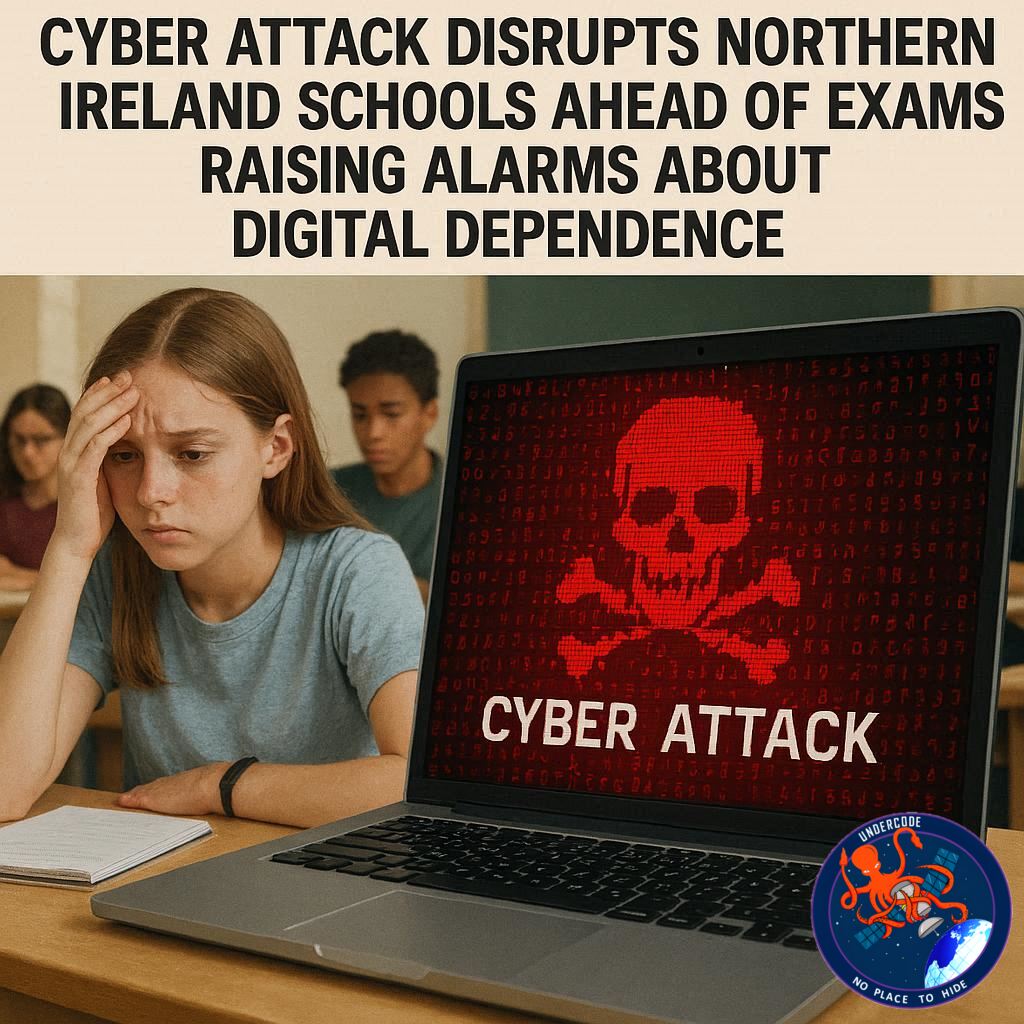
A significant cyberattack struck Northern Ireland’s C2K school IT system just days before crucial examinations, creating widespread disruption across schools. The Education Authority responded swiftly by enforcing a complete password reset for all users and temporarily disconnecting schools from essential digital resources. This drastic measure was necessary to contain the breach but came at a high cost—students lost access to vital revision materials during a critical academic period.
The C2K system serves as a backbone for digital learning across Northern Ireland, supporting thousands of students and educators. Its sudden shutdown left teachers scrambling to adapt and students struggling to prepare for exams without their usual tools. While authorities have not disclosed the exact nature of the attack, the scale of the response suggests a serious compromise or at least a high-risk threat scenario.
At the same time, another cybersecurity incident surfaced involving a North Korean-linked group known as UNC1069. This group reportedly used sophisticated social engineering tactics to infiltrate developer environments. By creating fake Slack and Microsoft Teams setups, attackers tricked an Axios open-source maintainer into revealing credentials. These credentials were then used to distribute malicious packages embedded with a remote access trojan known as WAVESHAPER.V2.
The implications of this second attack extend far beyond a single organization. Open-source ecosystems are foundational to modern software development, and compromising them can have cascading effects across industries. The use of social engineering highlights a growing trend where attackers bypass technical defenses by exploiting human trust.
Together, these incidents illustrate a dual threat landscape: direct attacks on institutional infrastructure and indirect attacks via supply chain vulnerabilities. Both methods demonstrate how cybercriminals are evolving, targeting not just systems but also the people who operate them.
The Northern Ireland incident, in particular, underscores the fragility of centralized education systems. A single breach can disrupt an entire region’s academic activities. Meanwhile, the UNC1069 attack reveals how even highly technical environments remain susceptible to deception.
As investigations continue, both cases serve as stark reminders of the importance of robust cybersecurity measures, user awareness, and contingency planning. Educational institutions and software communities alike must rethink their defenses in light of these emerging threats.
What Undercode Say:
A Wake-Up Call for Educational Infrastructure
The attack on Northern Ireland’s C2K system highlights a systemic weakness in how educational institutions approach cybersecurity. Schools often prioritize accessibility and ease of use over security, creating environments that are inherently vulnerable. This incident demonstrates that even centralized systems designed for efficiency can become single points of failure when not adequately protected.
Timing as a Strategic Weapon
The timing of the attack—just before exams—was likely not coincidental. Cybercriminals increasingly aim to maximize disruption and psychological impact. By targeting students during a high-stress period, attackers amplified the consequences beyond technical damage, affecting academic performance and mental well-being.
Human Factors Remain the Weakest Link
The UNC1069 incident reinforces a critical truth: the human element is often the most exploitable vulnerability. Despite advanced security tools, a well-crafted social engineering attack can bypass defenses entirely. Fake collaboration platforms like Slack and Teams mimic trusted environments, making them particularly effective in deceiving even experienced users.
Supply Chain Attacks Are the New Frontier
The compromise of an Axios maintainer shows how attackers are shifting focus to supply chains. By injecting malicious code into widely used packages, they can reach a vast number of targets indirectly. This method is efficient, scalable, and difficult to detect, making it increasingly popular among advanced threat actors.
Lack of Transparency Raises Concerns
The limited information released about the C2K attack raises questions about transparency. While withholding details may be necessary for security reasons, it also prevents other institutions from learning and preparing. A balance must be struck between operational secrecy and collective awareness.
Reactive vs. Proactive Security
The Education Authority’s response—resetting passwords and disconnecting systems—was reactive. While necessary, it underscores a broader issue: many organizations still operate in a reactive mode rather than adopting proactive threat detection and prevention strategies.
Digital Dependency Without Backup Plans
The disruption revealed a lack of effective contingency planning. Schools were heavily dependent on digital resources with no immediate offline alternatives. This level of dependency without redundancy is risky, especially in critical sectors like education.
Psychological Impact on Students
Beyond technical implications, the attack had a human cost. Students preparing for exams suddenly lost access to essential materials, increasing stress and potentially affecting performance. Cybersecurity incidents in education must be viewed not just as IT issues but as events with real human consequences.
Geopolitical Dimensions of Cyber Threats
The involvement of a North Korean-linked group in the second incident highlights the geopolitical nature of modern cyber threats. Nation-state actors are increasingly active in cyberspace, using sophisticated techniques to achieve strategic objectives.
The Need for Cybersecurity Education
Ironically, the education sector itself needs better education on cybersecurity. Teachers, administrators, and students must be trained to recognize threats, especially social engineering tactics. Awareness is a critical layer of defense that is often overlooked.
Trust as a Double-Edged Sword
Collaboration tools are built on trust, but that trust can be exploited. The fake Slack and Teams environments used in the UNC1069 attack demonstrate how attackers leverage familiarity to deceive victims. Organizations must rethink how trust is established and verified in digital environments.
Centralized Systems Increase Risk Exposure
The C2K system’s centralized nature made it an attractive target. While centralization offers efficiency, it also concentrates risk. Decentralized or segmented systems may offer better resilience against widespread disruption.
Incident Response Needs Modernization
Traditional incident response strategies may not be sufficient in today’s threat landscape. Organizations need faster detection, automated responses, and continuous monitoring to keep up with evolving attack methods.
Collaboration Between Institutions Is Essential
Cyber threats are not isolated incidents. Schools, governments, and organizations must collaborate, share intelligence, and adopt unified strategies to combat these risks effectively.
🔍 Fact Checker Results
Accuracy of Reported Cyberattack Impact
✅ The disruption of school IT systems and forced password resets aligns with standard cybersecurity containment practices.
Validity of UNC1069 Social Engineering Claims
✅ The use of fake collaboration tools and credential theft is a documented tactic in modern cyber espionage.
Scope of Supply Chain Threats
❌ While impactful, not all open-source ecosystems are equally vulnerable; risk varies depending on governance and security practices.
📊 Prediction
The education sector will face increasing cyberattacks as digital transformation accelerates, making schools prime targets for disruption and data exploitation. Future incidents are likely to involve more sophisticated social engineering and supply chain tactics, forcing institutions to adopt zero-trust architectures and invest heavily in cybersecurity training. Governments may also introduce stricter regulations to protect critical educational infrastructure, recognizing its importance to national stability.
🕵️📝✔️Let’s dive deep and fact‑check.
References:
Reported By: x.com
Extra Source Hub (Possible Sources for article):
https://www.twitter.com
Wikipedia
OpenAi & Undercode AI
Image Source:
Unsplash
Undercode AI DI v2
Bing
🔐JOIN OUR CYBER WORLD [ CVE News • HackMonitor • UndercodeNews ]
📢 Follow UndercodeNews & Stay Tuned:
𝕏 formerly Twitter 🐦 | @ Threads | 🔗 Linkedin | 🦋BlueSky | 🐘Mastodon


