
Listen to this Post
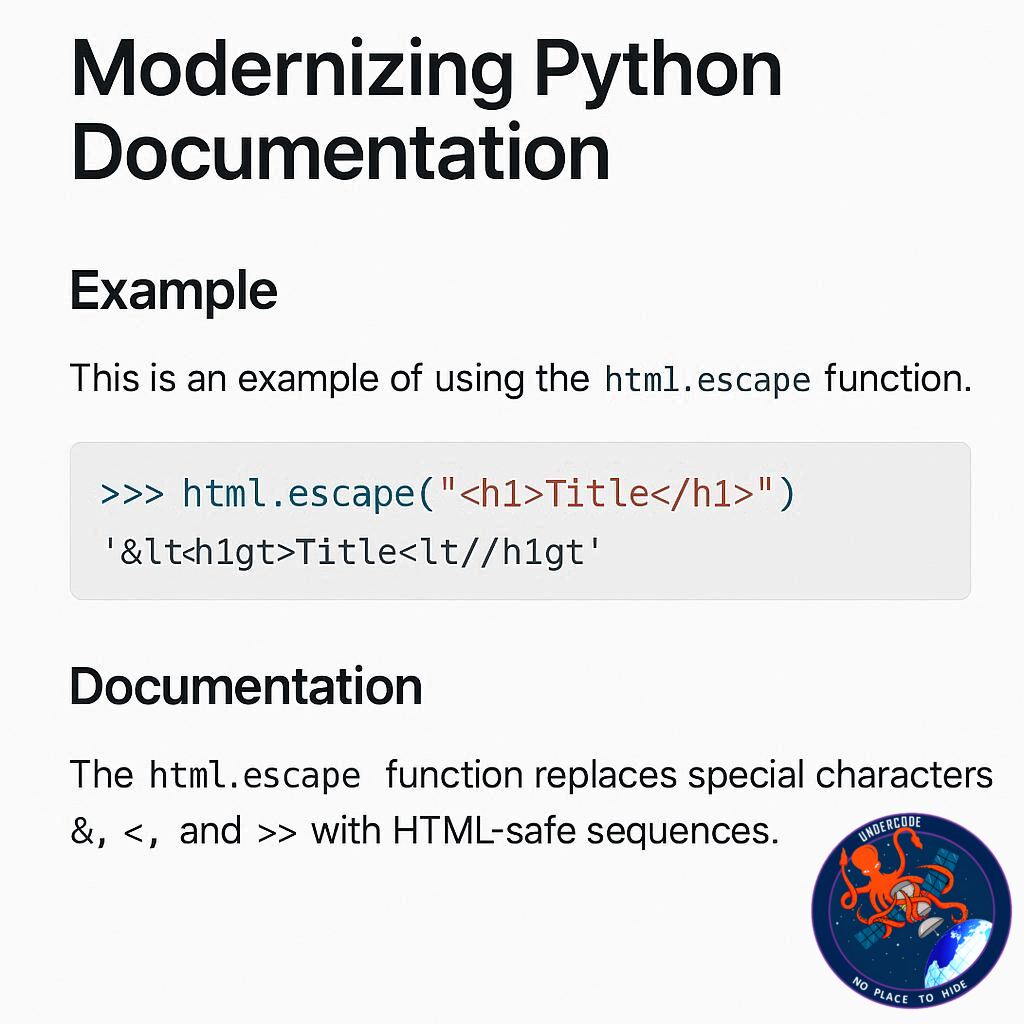
Python documentation has always aimed to do more than explain code—it strives to demonstrate it in action. Over the last two decades, the concept of executable documentation has evolved dramatically. From the early days of doctest, where examples doubled as tests, to modern approaches using runnable Markdown blocks, Python projects now have tools that keep documentation accurate, readable, and trustworthy. Hugging Face’s recent work on the doc-builder project exemplifies this evolution, allowing Markdown code snippets to remain both instructive and automatically testable, ensuring that examples never quietly break as libraries evolve.
The Evolution of Executable Documentation
The journey began with doctest, introduced by Tim Peters in Python 2.1 (2001). Doctest allowed developers to embed interactive interpreter-style examples directly in documentation:
Python
Run
>>> add(2, 3)
5
These examples could be executed to verify correctness, effectively turning documentation into lightweight regression tests. This approach worked well for small projects where simplicity and interactivity were priorities.
However, as projects grew, the limitations of doctest became apparent. Documentation examples and tests serve different goals:
Documentation aims to teach, remain concise, and be easy to read.
Tests require setup, teardown, assertions, mocking, decorators, and other structures for rigorous verification.
Trying to combine both led to cumbersome examples with brittle outputs and noisy setup code. Projects like Zope 3, which relied heavily on doctest, encountered these scaling issues.
The Problem of Documentation Drift
As developers moved their tests to frameworks like pytest, documentation examples often became disconnected from real code execution. This created documentation drift, where examples could fail silently, undermining user trust when copied and executed. Without automated verification, documentation could no longer guarantee correctness.
Runnable Markdown: A Modern Solution
The doc-builder project introduces runnable blocks in Markdown, effectively turning documentation into a testable source of truth. Code blocks remain standard Python code, but can be executed and tested automatically with pytest.
Python
Run
“`py runnable:quickstart
from transformers import pipeline
pipe = pipeline(sentiment-analysis)
result = pipe(I love runnable docs!)
print(result[0][label])
assert result[0][score] > 0.5
During testing, each runnable block behaves like a normal pytest test case. Failures produce standard tracebacks, complex assertions work, and decorators or skips are supported. Markdown remains clean for readers, with test mechanics hidden behind simple annotations.
Continuation Blocks for Complex Examples
For tutorials and multi-step examples, continuation blocks allow splitting code across multiple visible snippets while preserving execution context:
Python
Run
“`py runnable:test_basic
processor = AutoProcessor.from_pretrained(suno/bark)
inputs = processor(Hello, my dog is cute, voice_preset=voice_preset)
Python
Run
“`py runnable:test_basic:2
inputs = processor(Amazing! I can speak English too.)
This keeps documentation readable while supporting real testing workflows.
What Undercode Says:
Integration With Modern Workflows
Runnable Markdown aligns documentation with modern Python testing practices. By integrating with pytest, examples can participate in CI/CD pipelines, ensuring continuous verification.
Separation of Concerns
Doc-builder separates teaching from testing. Documentation remains concise and readable, while tests retain power and flexibility. Users get trustworthy examples without cluttering the text with setup or debugging noise.
Scalability for Large Projects
Projects like Hugging Face Transformers have hundreds of documentation pages. Runnable blocks scale effortlessly, keeping documentation in sync with library evolution. This reduces manual review overhead while improving accuracy and reliability.
Debugging and Maintenance
Failures in runnable blocks are standard Python errors with full tracebacks. Unlike doctest, developers can debug code naturally and inspect objects rather than parsing strings, making maintenance far simpler.
Reusability Across Contexts
The same Markdown snippet can be executed in multiple test scenarios. Teams can adapt examples without duplicating content, making documentation both instructional and functional.
Future-Proofing Documentation
By making executable examples the source of truth, projects avoid drift and increase user confidence. Runnable Markdown essentially modernizes the philosophy behind doctest for contemporary development practices.
Balancing Readability and Testability
Doc-builder hides setup or test-specific lines, preserving readability while retaining full test coverage. Users get clear, simple examples, while tests remain robust behind the scenes.
Developer Experience
For content authors, this approach reduces friction. There is no need to maintain separate test files or rewrite Markdown snippets, streamlining the workflow from example creation to continuous testing.
Fact Checker Results ✅❌
✅ The history of doctest and its limitations is accurately represented.
✅ Runnable Markdown examples integrate with pytest as described.
❌ Some minor implementation details may vary in public repositories, but the core principles hold.
Prediction 📊
Executable documentation will become the standard for large-scale Python projects. We can expect:
Increased adoption of Markdown-based runnable blocks across machine learning and data science libraries.
CI/CD pipelines incorporating automated verification of documentation examples as a norm.
Reduced user frustration and support tickets from broken examples.
Improved developer workflows with reusable, testable examples that maintain readability.
Broader application of this approach in tutorials, educational content, and interactive learning platforms.
Runnable Markdown represents a natural evolution: documentation that not only teaches but guarantees correctness.
🕵️📝✔️Let’s dive deep and fact‑check.
References:
Reported By: huggingface.co
Extra Source Hub (Possible Sources for article):
https://www.facebook.com
Wikipedia
OpenAi & Undercode AI
Image Source:
Unsplash
Undercode AI DI v2
Bing
🔐JOIN OUR CYBER WORLD [ CVE News • HackMonitor • UndercodeNews ]
📢 Follow UndercodeNews & Stay Tuned:
𝕏 formerly Twitter 🐦 | @ Threads | 🔗 Linkedin | 🦋BlueSky | 🐘Mastodon


