
Listen to this Post
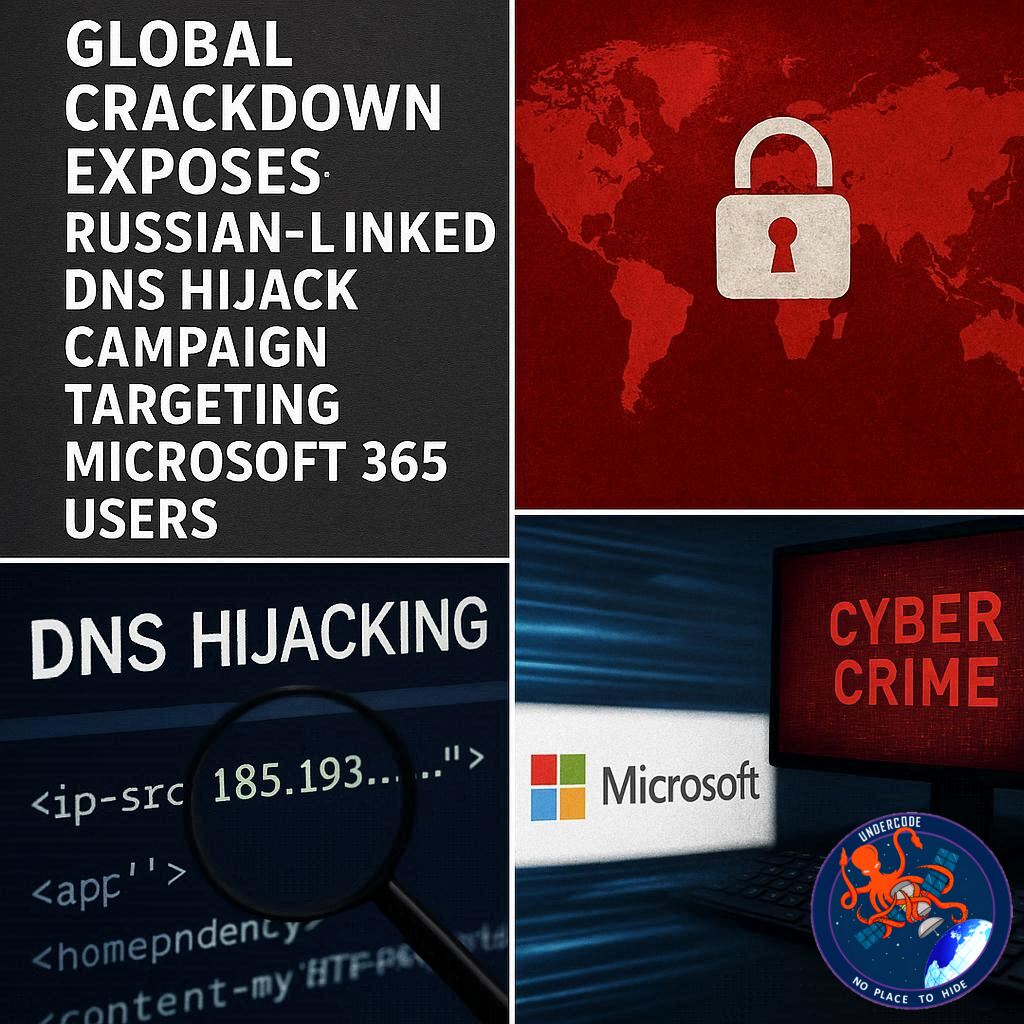
Introduction: A Silent Cyber War Beneath Everyday Internet Use
In a world where digital infrastructure quietly powers everything from business communications to personal data storage, cyber threats continue to evolve in both sophistication and scale. A recent international operation has uncovered a dangerous campaign targeting everyday internet devices—routers commonly found in homes and small offices. This coordinated effort, involving law enforcement agencies and major private-sector players, reveals how cybercriminals exploit overlooked vulnerabilities to gain access to highly sensitive information, including Microsoft 365 credentials. The operation sheds light on a broader pattern of state-linked cyber espionage, reinforcing the urgency for stronger global cybersecurity defenses.
the Original Report
An international coalition of law enforcement agencies, alongside technology companies like Microsoft and Lumen, successfully disrupted a large-scale cyber espionage campaign known as FrostArmada. This operation specifically targeted MikroTik and TP-Link routers, which are widely used in homes and small office environments. By exploiting vulnerabilities in these devices, attackers were able to manipulate DNS settings, redirecting internet traffic to malicious servers without users’ knowledge.
The primary goal of this DNS hijacking campaign was to harvest Microsoft 365 login credentials. Victims attempting to access legitimate Microsoft services were unknowingly redirected to fake login pages designed to capture their usernames and passwords. Once obtained, these credentials could be used for further intrusion, data theft, or surveillance.
Investigators linked this campaign to APT28, a well-known advanced persistent threat group associated with Russia’s GRU military intelligence unit. APT28 has a long history of conducting cyber espionage operations targeting governments, organizations, and critical infrastructure across the globe.
The disruption operation involved identifying compromised routers, neutralizing malicious DNS configurations, and preventing further exploitation. Authorities also worked to notify affected users and mitigate ongoing risks. This effort highlights the growing collaboration between public and private sectors in tackling global cyber threats.
In parallel, another cybersecurity incident emerged involving a ransomware attack on Smith Dollar, a law firm based in Northern California. The attack, attributed to a threat actor known as Lynx, resulted in the exposure of sensitive client data. This breach underscores the vulnerability of legal institutions, where confidentiality is paramount.
Together, these incidents illustrate the expanding threat landscape, where attackers leverage both technical vulnerabilities and organizational weaknesses. From hijacked routers to ransomware attacks on professional services, the risks are increasingly interconnected and far-reaching.
What Undercode Says:
The Overlooked Weak Point: Consumer-Grade Routers
One of the most striking aspects of this campaign is the attackers’ focus on SOHO (Small Office/Home Office) routers. These devices are rarely monitored with the same rigor as enterprise infrastructure, making them ideal entry points. Many users never update firmware or change default settings, leaving a wide attack surface exposed.
DNS Hijacking as a Strategic Weapon
DNS hijacking is particularly dangerous because it operates invisibly. Users can continue browsing as usual, unaware that their traffic is being redirected. This method bypasses traditional endpoint security tools, shifting the battleground to network-level manipulation.
Credential Theft: The Gateway to Broader Intrusions
Stealing Microsoft 365 credentials is not an end goal—it’s a gateway. With access to email accounts, attackers can launch phishing campaigns, access sensitive documents, and even pivot into corporate networks. This makes credential harvesting one of the most valuable tactics in cyber espionage.
APT28’s Persistent Evolution
APT28’s involvement highlights the persistent and adaptive nature of state-sponsored cyber groups. Their ability to exploit consumer hardware demonstrates a shift toward unconventional attack vectors, moving beyond traditional targets like government networks.
Public-Private Collaboration: A Necessary Alliance
The success of this disruption operation underscores the importance of collaboration between governments and private companies. No single entity has the visibility or resources to tackle such threats alone. This joint effort represents a model for future cybersecurity responses.
Legal Sector Vulnerabilities
The ransomware attack on the law firm reveals a different but equally concerning trend. Legal institutions often store highly sensitive data but may lack advanced cybersecurity defenses. This makes them attractive targets for ransomware groups seeking both financial gain and leverage.
The Human Factor in Cybersecurity
Even the most sophisticated attacks rely on human oversight—whether it’s failing to update a router or falling for a phishing page. Cybersecurity is not just a technical challenge but a behavioral one, requiring awareness and proactive measures from users.
Infrastructure-Level Threats Are Rising
Attacks are increasingly targeting infrastructure rather than individual systems. By compromising routers, attackers gain control over entire networks, amplifying the impact of their operations.
The Role of Internet Service Providers
ISPs could play a more active role in detecting and mitigating such threats. Monitoring unusual DNS behavior at scale could help identify compromised devices before they are used in large-scale campaigns.
Ransomware and Espionage: Two Sides of the Same Coin
While ransomware attacks are financially motivated and espionage campaigns are politically driven, both rely on similar vulnerabilities. This convergence suggests that strengthening defenses against one type of threat can also mitigate the other.
Global Implications of State-Linked Attacks
When cyber operations are linked to state actors, the stakes become geopolitical. These incidents are not isolated—they are part of a broader landscape of digital conflict between nations.
The Need for Router Security Standards
Manufacturers must take greater responsibility for securing their devices. Automatic updates, stronger default configurations, and better user guidance could significantly reduce the risk of exploitation.
Awareness Is Still the First Line of Defense
Despite technological advancements, user awareness remains critical. Understanding basic cybersecurity practices can prevent many of these attacks from succeeding.
🔍 Fact Checker Results
Verified Attribution
✅ The campaign has been linked to APT28, a group widely associated with Russian military intelligence.
Confirmed Technique
✅ DNS hijacking is a documented method used in credential theft campaigns targeting cloud services.
Broader Trend Accuracy
❌ Not all router vulnerabilities are actively exploited at scale, but the risk remains significant and growing.
📊 Prediction
The disruption of this campaign is unlikely to deter future operations of a similar nature. Instead, attackers are expected to refine their techniques, possibly targeting newer devices or leveraging encrypted DNS protocols to evade detection. As remote work and cloud reliance continue to grow, credential-based attacks will become even more valuable. Meanwhile, increased regulatory pressure may push router manufacturers and service providers to adopt stricter security standards, reshaping the baseline of consumer cybersecurity in the coming years.
🕵️📝✔️Let’s dive deep and fact‑check.
References:
Reported By: x.com
Extra Source Hub (Possible Sources for article):
https://www.discord.com
Wikipedia
OpenAi & Undercode AI
Image Source:
Unsplash
Undercode AI DI v2
Bing
🔐JOIN OUR CYBER WORLD [ CVE News • HackMonitor • UndercodeNews ]
📢 Follow UndercodeNews & Stay Tuned:
𝕏 formerly Twitter 🐦 | @ Threads | 🔗 Linkedin | 🦋BlueSky | 🐘Mastodon


