
Listen to this Post
Introduction
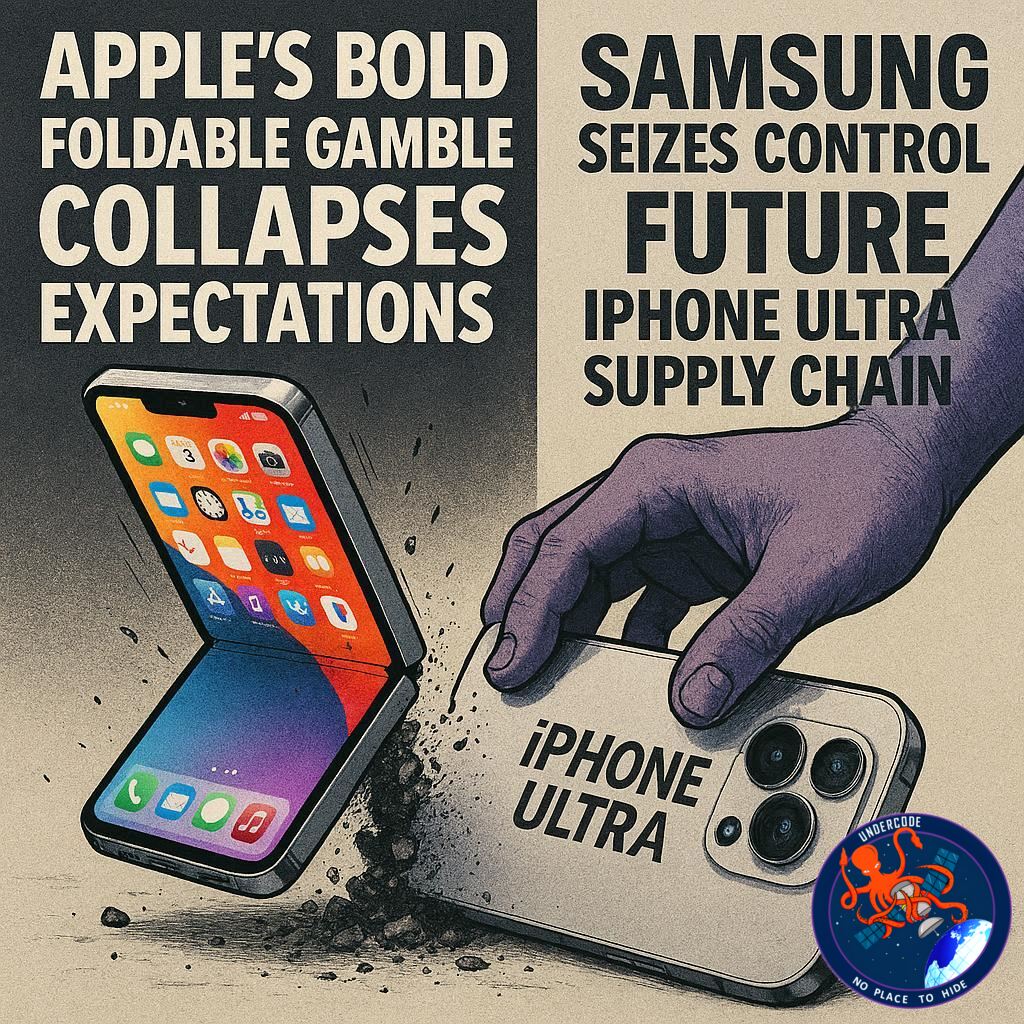
The upcoming foldable smartphone market is shaping up to be one of the most competitive and uncertain segments in the tech industry, and Apple appears to be approaching it with extreme caution. Reports indicate that Apple is significantly lowering its production expectations for its first foldable device, the iPhone Ultra, signaling uncertainty about consumer demand for ultra-premium devices. At the same time, Samsung is leveraging its technological dominance in foldable display manufacturing to secure a strategic advantage, including exclusive supply agreements. These developments highlight not only shifting expectations within Apple but also the growing influence of Samsung in defining the hardware standards of next-generation smartphones.
the Original Report
Apple’s initial projections for its foldable iPhone, often referred to as the iPhone Fold or iPhone Ultra, estimated strong early demand, with production targets reportedly around 10 million units during the launch phase. However, revised expectations shared with manufacturing partners have drastically reduced that figure to approximately 3 million units, reflecting a more conservative outlook. This adjustment suggests Apple is tempering its ambitions due to concerns over market reception, particularly given the device’s expected premium price range of $2,000 to $2,400.
The company appears to be applying lessons learned from previous high-end product launches, such as the Vision Pro, where demand was limited to early adopters rather than mainstream consumers. Apple seems to anticipate a similar pattern for its first foldable phone, expecting gradual adoption rather than mass-market appeal at launch. Another key factor influencing production planning is Apple’s stringent quality standards for foldable displays, which have historically been a challenge in terms of durability and visible creasing.
Apple’s reluctance to compromise on display quality reportedly led to a situation where only Samsung Display was able to meet its requirements. Traditionally, Apple diversifies its supply chain by working with multiple vendors such as LG and BOE for displays, but in this case, Samsung’s advanced foldable OLED technology positioned it as the sole supplier capable of delivering the required specifications.
As a result, Samsung has reportedly secured a three-year exclusive agreement to supply foldable OLED panels for Apple’s upcoming device. This exclusivity not only reinforces Samsung’s leadership in foldable display technology but also allows it to maximize returns on its investments in specialized production lines tailored for Apple’s requirements. The deal highlights a rare scenario where Apple is dependent on a single supplier for a critical component, underscoring the strategic importance of display innovation in the foldable smartphone era.
What Undercode Says:
Strategic Caution Reflects Market Reality
Apple’s reduced production forecast indicates a deliberate shift toward risk mitigation rather than aggressive expansion. The company is likely anticipating that the foldable market, while promising, is still niche and price-sensitive. By scaling back expectations, Apple avoids overproduction and potential inventory issues if consumer adoption underperforms.
Premium Pricing Limits Mass Adoption
With a projected price range exceeding $2,000, the iPhone Ultra positions itself firmly in the ultra-premium category. This pricing strategy inherently restricts the addressable market, making it less likely to achieve mass adoption in its first generation. Apple appears to be targeting early adopters, enthusiasts, and high-income consumers rather than the broader smartphone user base.
Lessons Learned from Previous Product Launches
Apple’s approach suggests internal learning from past experiences such as the Vision Pro headset, which also faced limited demand due to its high cost and niche appeal. Rather than repeating overly optimistic projections, Apple seems to be aligning production with realistic demand curves, prioritizing sustainability over rapid scaling.
Supply Chain Dependency on Samsung
The reliance on Samsung Display introduces an unusual dependency for Apple, a company known for diversifying suppliers. Samsung’s dominance in foldable OLED technology gives it a unique leverage position, allowing it to negotiate exclusivity. This shift highlights how technological leadership can temporarily override Apple’s typical supply chain strategies.
Competitive Dynamics Between Apple and Samsung
The relationship between Apple and Samsung continues to be both cooperative and competitive. While Samsung supplies critical components, it also competes directly in the smartphone market. This dual role creates a complex dynamic where Samsung benefits financially from Apple’s success while maintaining its own competitive edge in foldable devices.
Long-Term Implications for Foldable Market Growth
Apple’s entry into the foldable segment is widely expected to validate the category and accelerate mainstream adoption over time. However, the cautious initial rollout suggests that Apple views foldables as a long-term evolution rather than an immediate revolution. Market growth will likely depend on improvements in durability, pricing, and consumer perception.
Technological Barriers Still Influence Adoption
Foldable devices still face technical challenges such as screen creasing, hinge durability, and long-term reliability. Apple’s hesitation in entering the market earlier reflects its desire to avoid launching a product that does not meet its high standards. The reliance on Samsung’s matured technology indicates that these barriers are gradually being overcome, but not fully eliminated.
Exclusivity Strengthens Samsung’s Market Position
The three-year exclusivity agreement gives Samsung a significant advantage in the foldable display market. It ensures consistent demand from one of the world’s largest tech companies while reinforcing Samsung’s leadership in OLED innovation. This could also discourage competitors from investing heavily unless they can match Samsung’s capabilities.
Financial and Strategic Balance for Apple
By limiting initial production, Apple reduces financial risk associated with unsold inventory while maintaining flexibility to scale up if demand exceeds expectations. This conservative stance aligns with Apple’s broader strategy of entering new markets cautiously and expanding once product-market fit is confirmed.
🔍 Fact Checker Results
Production Estimates Shift
✅ Reports consistently indicate Apple reduced iPhone Ultra production targets from around 10 million to approximately 3 million units.
Pricing Expectations
✅ Multiple industry estimates place the iPhone Ultra in the $2,000–$2,400 range, aligning with ultra-premium positioning.
Samsung Exclusivity Agreement
❌ While reports strongly suggest exclusivity, the exact terms and duration may vary across sources and are not publicly confirmed by Apple or Samsung.
📊 Prediction
Gradual Adoption Curve Ahead
The iPhone Ultra is likely to follow a slow adoption trajectory, with initial sales driven by enthusiasts and early adopters rather than mainstream consumers. High pricing will remain a major barrier until future generations reduce costs.
Samsung’s Continued Dominance in Foldables
Samsung is expected to maintain its leadership in foldable display technology in the near term, especially given its exclusive partnership with Apple. This could solidify its influence over the direction of foldable innovation.
Apple’s Iterative Expansion Strategy
Apple will likely expand production and supplier diversity in later generations of foldable devices once technology matures and demand stabilizes. The first model will serve as both a product launch and a market test for future iterations.
🕵️📝✔️Let’s dive deep and fact‑check.
References:
Reported By: 9to5mac.com
Extra Source Hub (Possible Sources for article):
https://www.reddit.com
Wikipedia
OpenAi & Undercode AI
Image Source:
Unsplash
Undercode AI DI v2
Bing
🔐JOIN OUR CYBER WORLD [ CVE News • HackMonitor • UndercodeNews ]
📢 Follow UndercodeNews & Stay Tuned:
𝕏 formerly Twitter 🐦 | @ Threads | 🔗 Linkedin | 🦋BlueSky | 🐘Mastodon


