
Listen to this Post
Introduction: The Silent Risk Behind AI Acceleration
Artificial intelligence is no longer experimental. It is operational, embedded, and increasingly autonomous. Across industries, organizations are deploying AI agents to automate decisions, streamline workflows, and drive efficiency at scale. But beneath this rapid transformation lies a growing and dangerous imbalance. Security frameworks are struggling to keep up with the complexity and speed of AI systems. What appears to be progress on the surface may, in reality, be exposing enterprises to a new class of risks that traditional defenses were never designed to handle.
A recent report from Salt Security highlights this concern, revealing that most organizations are advancing into the AI-driven future without the necessary security maturity to protect it.
Summary: AI Growth Outpaces Security Readiness
The 1H 2026 State of AI and API Security report paints a clear and concerning picture of the modern enterprise landscape. AI agents are being deployed at scale, yet 92 percent of organizations lack the advanced security capabilities needed to defend these environments effectively. This gap is largely driven by the increasing reliance of AI systems on APIs, which serve as the operational backbone for agent-based activities, large language models, and Model Context Protocol servers.
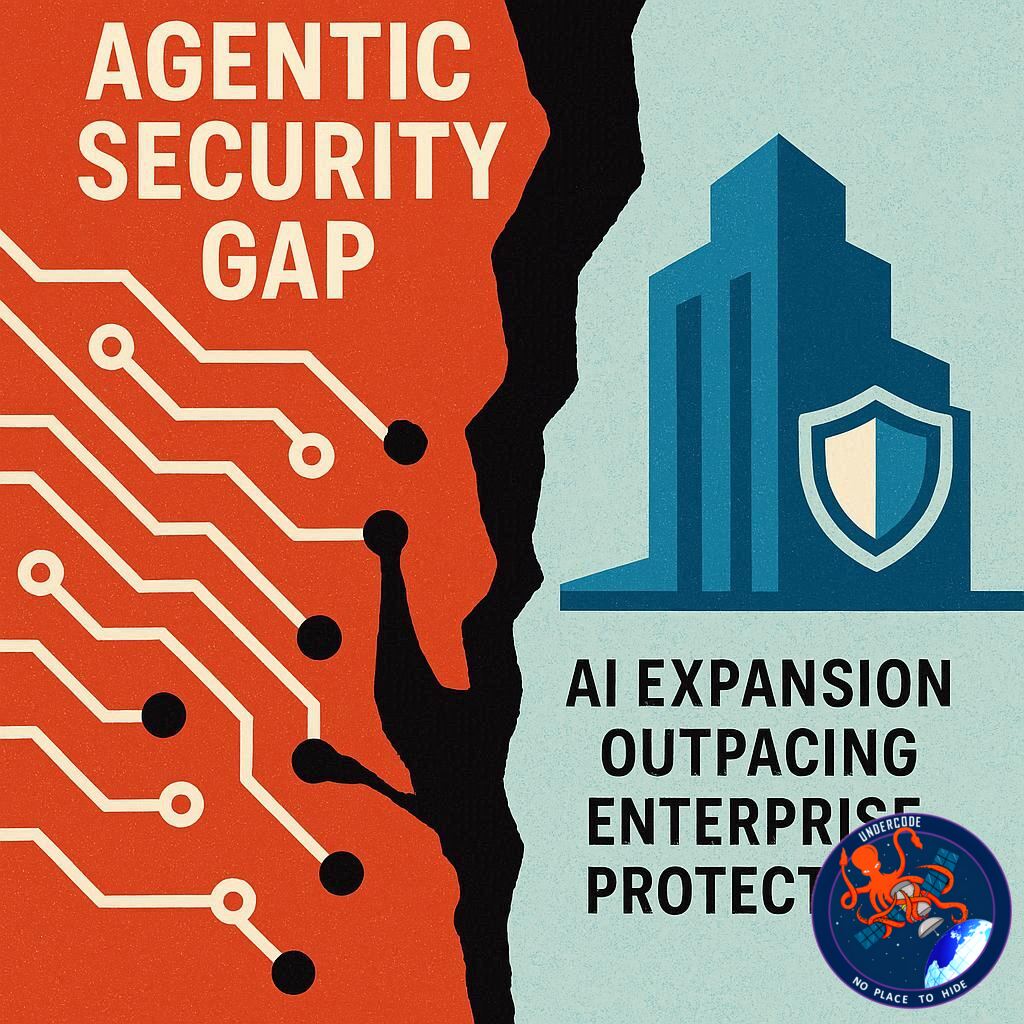
As AI adoption accelerates, the number of APIs within organizations has surged dramatically. Two-thirds of companies report API growth exceeding 50 percent in just one year. This expansion reflects the growing dependence on automation and interconnected systems. However, security has not evolved at the same pace, leading to what the report defines as the “Agentic Security Gap.”
According to Roey Eliyahu, securing AI agents requires more than protecting individual components. It demands visibility across the entire ecosystem, including APIs, routing servers, and the data being accessed. Risk no longer resides in a single layer but emerges from the interactions between multiple interconnected elements operating in real time.
The report is based on insights from 327 security leaders and reveals widespread concern about API vulnerabilities. Nearly half of organizations have delayed product releases due to API security issues, while 32 percent experienced at least one API-related security incident in the past year. Despite these challenges, only 8 percent of organizations consider their API security maturity to be advanced.
At the executive level, awareness of AI-related risks is increasing. Around 79 percent of boards and leadership teams are paying closer attention to AI security. However, confidence remains low. Only 18 percent of organizations feel highly confident in their ability to detect attacks powered by generative AI. This gap highlights the limitations of traditional security tools in handling modern, AI-driven threats.
The threat landscape itself is also evolving. Attackers are no longer relying on brute force or external breaches. Instead, they operate within trusted systems using legitimate credentials. Salt Labs found that 99 percent of analyzed attack attempts originated from authenticated sources. Many of these attacks involve rogue AI agents that function without proper oversight, bypassing controls such as rate limits and behavioral monitoring.
Additionally, 65 percent of attacks exploit security misconfigurations, particularly those involving excessive permissions in APIs. When these over-permissioned APIs are connected to AI agents capable of chaining requests and extracting data at high speed, the potential damage increases significantly.
The report concludes that API security must now be treated as a foundational discipline rather than a subset of application or cloud security. APIs have become the dominant channel for web traffic and the primary execution layer for AI systems, making them a critical attack surface.
To address these challenges, Salt Security proposes a new framework called the Agentic Security Graph. This model maps the relationships between AI components, including large language models, APIs, and routing servers, providing a more comprehensive view of how AI systems behave and interact within enterprise environments.
What Undercode Say: The Real Battle Is Not AI, It Is Control
The findings reveal a deeper issue than just security gaps. They expose a structural mismatch between how organizations build AI systems and how they attempt to secure them. Most enterprises still rely on fragmented security approaches that treat components in isolation. This strategy fails completely in agentic environments where everything is interconnected.
The concept of the Agentic Security Gap is not just a technical flaw. It is a strategic blind spot. Companies are investing heavily in AI capabilities but are underinvesting in the mechanisms required to govern those capabilities. This imbalance creates an environment where innovation moves faster than control.
APIs have quietly become the nervous system of modern enterprises. Every AI action depends on them, yet they remain one of the least understood and least protected layers. When APIs are misconfigured or over-permissioned, they effectively act as open doors within highly sensitive systems. Adding AI agents into this equation amplifies the risk because these agents can operate continuously, make autonomous decisions, and interact with multiple systems simultaneously.
Another critical insight is the shift in attacker behavior. The move from external attacks to internal exploitation marks a turning point in cybersecurity. When attackers use legitimate credentials or hijack trusted processes, traditional defenses such as firewalls and intrusion detection systems become less effective. The battle is no longer about keeping attackers out. It is about monitoring what happens inside.
The rise of rogue AI agents introduces a new dimension of risk. These are not necessarily malicious by design but can become dangerous when operating without proper constraints. Without behavioral guardrails, rate limiting, and oversight, AI agents can unintentionally expose data, execute harmful actions, or be manipulated by attackers.
The low confidence in detecting generative AI-driven attacks is also telling. It reflects a broader issue where security teams are outpaced not only by attackers but also by the technologies they are meant to protect. Legacy tools were built for static environments, not dynamic, learning systems that evolve in real time.
The proposed Agentic Security Graph is an important step forward because it acknowledges that context matters. Understanding how components interact is more valuable than simply monitoring individual elements. However, implementing such a model requires a cultural shift within organizations. Security must be integrated into the design of AI systems from the beginning, not added as an afterthought.
Ultimately, the report highlights a fundamental truth. AI is not just another layer of technology. It is a force multiplier. It amplifies both capabilities and vulnerabilities. Organizations that fail to adapt their security strategies accordingly will find themselves exposed in ways they may not fully understand until it is too late.
Fact Checker Results
✅ Most organizations lack advanced API security maturity according to the report
✅ API growth and AI adoption are strongly correlated across enterprises
❌ High confidence in detecting AI-driven attacks is not supported by current data
Prediction
🔮 Agentic security platforms will become a standard enterprise requirement within the next 2 years
🔮 API security will evolve into a standalone industry segment with specialized tooling
🔮 Organizations that ignore internal AI-driven threats will face more frequent and severe breaches
🕵️📝✔️Let’s dive deep and fact‑check.
References:
Reported By: www.itsecurityguru.org
Extra Source Hub (Possible Sources for article):
https://www.instagram.com
Wikipedia
OpenAi & Undercode AI
Image Source:
Unsplash
Undercode AI DI v2
Bing
🔐JOIN OUR CYBER WORLD [ CVE News • HackMonitor • UndercodeNews ]
📢 Follow UndercodeNews & Stay Tuned:
𝕏 formerly Twitter 🐦 | @ Threads | 🔗 Linkedin | 🦋BlueSky | 🐘Mastodon


