
Listen to this Post
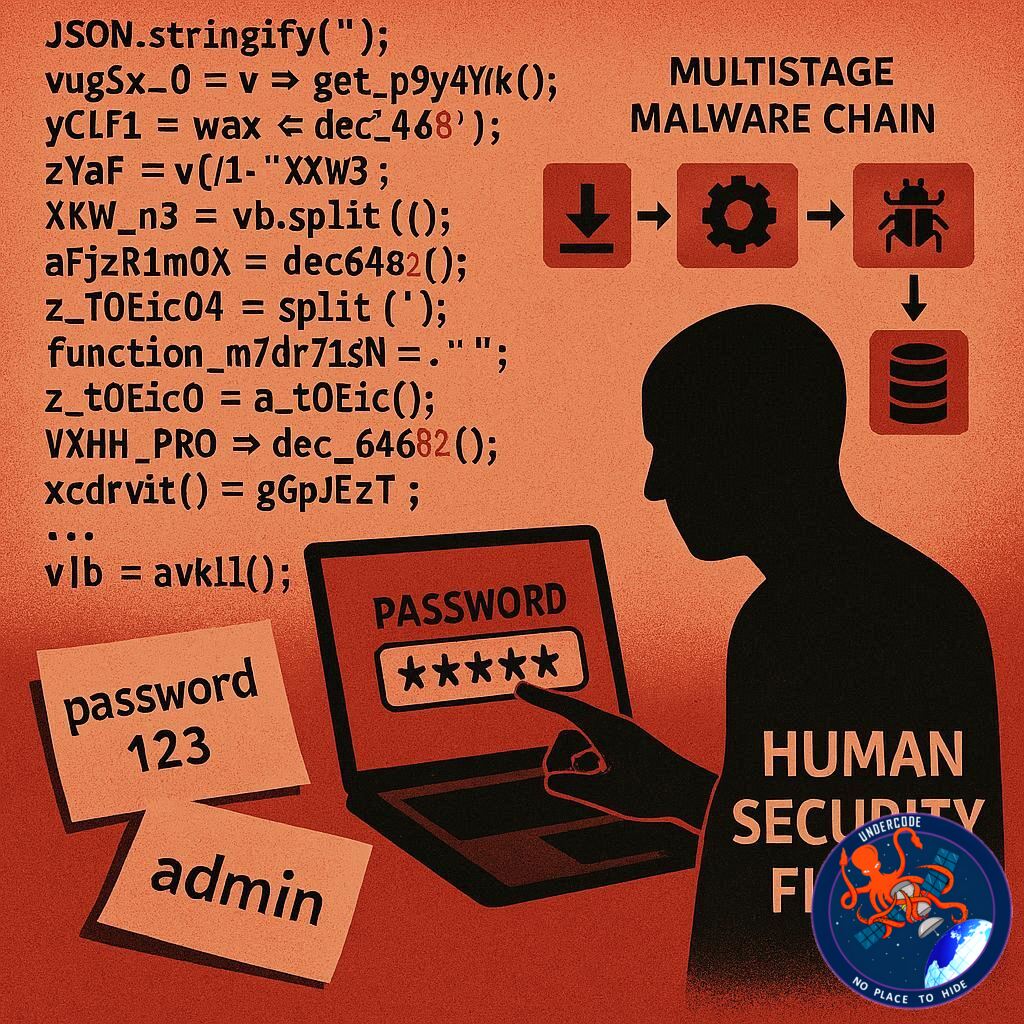
Introduction: Two Threats, One Lesson
Cybersecurity rarely fails because of a single weakness. More often, it is the combination of technical sophistication and human predictability that creates the perfect attack surface. This case highlights both sides of that reality. On one hand, a deeply obfuscated JavaScript malware delivered via phishing demonstrates how attackers chain multiple technologies to stay hidden and persistent. On the other, large-scale honeypot data reveals how people continue to rely on predictable password patterns, especially dates and years, making brute-force attacks far more effective than they should be.
A Suspicious JavaScript Hidden in Plain Sight
The investigation begins with a seemingly harmless JavaScript file delivered through a phishing email inside a RAR archive. The file, named “cbmjlzan.JS,” is unusually large at around 10MB and is only flagged by a small portion of antivirus engines. This alone raises suspicion, as attackers often rely on low detection rates to maximize infection success.
Obfuscation as a First Line of Defense
Like many malicious scripts, this JavaScript is heavily obfuscated. It uses unusual Unicode characters and layered encoding to make analysis difficult. However, once partially deobfuscated, the script reveals its true purpose: persistence, execution, and payload delivery on Windows systems.
Windows-Specific Execution and Persistence
The script leverages Windows-specific technologies such as ActiveXObject, Microsoft.XMLDOM, and ADODB.Stream. It copies itself into a public directory and establishes persistence by creating a scheduled task that runs every 15 minutes. This ensures the malware survives reboots and remains active even if partially removed.
Dropped Files Disguised as Images
Three files are dropped into the public user directory: Brio.png, Orio.png, and Xrio.png. Despite their extensions, these are not image files. Instead, they act as containers for encrypted or encoded payloads used in later stages of the attack.
PowerShell as the Execution Engine
Once persistence is established, the malware executes a PowerShell command. The command decodes a Base64 string and runs it directly in memory. This technique avoids writing additional files to disk, reducing the chances of detection by traditional security tools.
AES Encryption Adds Another Layer
The PowerShell script processes the file Xrio.png, which contains AES-encrypted data. Using predefined keys and initialization vectors, the script decrypts the content into executable commands. This step highlights how attackers protect their payloads even if the files are discovered.
Evasion Through System Patching
After decryption, the script applies evasion techniques by patching system functions like EtwEventWrite() and AmsiScanBuffer(). These are commonly used by security tools to monitor suspicious activity. By disabling or bypassing them, the malware effectively blinds detection mechanisms.
Extracting and Injecting the Payload
The script then decrypts another file, Orio.png, which contains a .NET DLL. This DLL is injected into an MSBuild.exe process, a legitimate Windows utility. This technique, known as process injection, allows malicious code to run under the guise of trusted software.
Final Payload: Formbook Malware
The DLL ultimately extracts the real payload from Brio.png. This payload is identified as Formbook, a well-known information-stealing malware. It is capable of capturing keystrokes, stealing credentials, and exfiltrating sensitive data from infected systems.
A Multi-Layered Attack Strategy
This entire chain demonstrates a highly structured attack. Each stage is designed to obscure the next, using encryption, obfuscation, and legitimate system tools to avoid detection. It is not a simple script but a coordinated sequence of actions.
Password Patterns Exposed Through Honeypots
Shifting from malware to human behavior, honeypot data reveals another critical weakness. Over 496,000 unique passwords were analyzed, showing consistent patterns in how users create passwords, especially when numbers are involved.
Predictable Numbers Dominate
The most common numeric sequences found in passwords remain simple and predictable. Combinations like “123,” “1,” and “1234” dominate the dataset. These patterns are easy targets for automated attacks.
Years as Password Components
A significant number of passwords include years such as 2024, 2025, and 2026. These are often appended to common words or phrases, making them highly guessable. Attackers can easily incorporate current and upcoming years into their brute-force strategies.
Seasonal and Contextual Password Trends
Passwords often reflect current seasons or events. Examples like “Spring2026” or “April2026” show how users tie passwords to time-based contexts. While memorable, these patterns are also predictable.
Early Appearance of Future Years
Interestingly, future years such as 2027 appear in passwords well before they become relevant. This suggests that automated tools or forward-thinking users introduce these patterns early, expanding the attack surface.
Dates as Passwords
Many passwords consist entirely of dates, often in formats like YYYYMMDD or DDMMYYYY. These are commonly linked to birthdays or significant events, making them both predictable and personally sensitive.
Distribution of Date-Based Passwords
Analysis shows a heavy concentration of dates from the 1980s, likely reflecting user birth years. Additionally, many passwords include dates close to the time of submission, suggesting users often use the current date when forced to change passwords.
Automation and Bot Activity
Some password submissions appear to be automated commands rather than actual credentials. These include numeric sequences tied to network operations, indicating that bots are actively probing systems using structured inputs.
Repeated Attack Attempts
Certain IP addresses repeatedly attempted to download scripts and install services across multiple cloud platforms. This behavior indicates coordinated scanning and exploitation efforts rather than random activity.
Weak Passwords Remain Common
Despite increased awareness, passwords like “admin2026” or “P@ssw0rd2026” remain prevalent. These combinations offer little resistance to modern cracking techniques.
Placement of Numbers Matters
Most year-based numbers appear at the end of passwords. However, some newer patterns show numbers appearing in different positions, slightly increasing complexity but still remaining predictable.
Human Behavior as a Security Risk
The data reinforces a key point: users prioritize memorability over security. This leads to predictable patterns that attackers can exploit with minimal effort.
What Undercode Say:
Malware Complexity Reflects Professionalization
The multi-stage malware described here is not the work of amateurs. It shows a clear understanding of Windows internals, encryption, and detection evasion. Attackers are investing time and resources into making their tools harder to analyze and detect.
Living Off the Land Techniques Are Expanding
Using legitimate tools like PowerShell and MSBuild is becoming standard practice. This approach reduces the need for custom binaries and makes malicious activity blend in with normal system operations.
Encryption Is Now a Default Layer
The use of AES encryption for payload delivery indicates that attackers expect their files to be discovered. Encryption ensures that even if files are analyzed, their contents remain hidden without the proper keys.
Defense Evasion Is No Longer Optional
Patching security-related functions shows that bypassing detection is a core part of the attack, not an afterthought. Modern malware assumes it will be inspected and prepares accordingly.
Fileless Execution Is Increasing
Executing code directly in memory reduces the footprint on disk. This makes traditional antivirus solutions less effective and shifts the focus toward behavioral detection.
Human Weakness Complements Technical Attacks
Even the most advanced malware benefits from weak passwords. Attackers do not need zero-day exploits if they can simply log in using predictable credentials.
Password Patterns Enable Automation
Because users follow predictable patterns, attackers can automate password guessing with high success rates. This reduces the need for targeted attacks.
Time-Based Passwords Are a Major Flaw
Using current years or dates creates a moving but predictable target. Attackers can easily update their dictionaries to include new years as they approach.
Honeypot Data Reveals Real-World Behavior
Unlike theoretical models, honeypot data shows what actually happens in the wild. It confirms that weak password habits persist despite ongoing education efforts.
Security Awareness Is Not Enough
The continued use of weak passwords suggests that awareness alone is insufficient. Stronger enforcement mechanisms, such as password policies and multi-factor authentication, are necessary.
Attackers Exploit Both Ends
This case demonstrates how attackers combine technical sophistication with human predictability. One enables stealth, the other ensures access.
The Gap Between Knowledge and Action
Many users know that passwords should be complex, yet still choose convenience. This gap is one of the biggest challenges in cybersecurity.
Automation Is the Attacker’s Advantage
From malware deployment to password guessing, automation allows attackers to scale their operations. This makes even simple vulnerabilities highly dangerous.
Future Attacks Will Be More Layered
As defenses improve, attackers will continue adding layers of obfuscation, encryption, and evasion. This trend is already visible in this case.
Organizations Must Adapt Quickly
Static defenses are no longer sufficient. Continuous monitoring, behavioral analysis, and rapid response capabilities are essential.
Fact Checker Results:
✅ The malware uses multi-stage execution with PowerShell, encryption, and DLL injection, which aligns with modern attack techniques.
✅ Honeypot data confirms that predictable numeric patterns and year-based passwords are widely used.
❌ There is no direct evidence linking the malware campaign to the password trends, though both highlight common security weaknesses.
Prediction:
🔮 Multi-layered malware using legitimate Windows tools will become the dominant attack method in the near future.
🔮 Password-based attacks will remain highly effective unless widespread adoption of passwordless or multi-factor systems occurs.
🔮 Future threat campaigns will increasingly combine social engineering, weak credentials, and advanced payload delivery into unified attack chains.
🕵️📝✔️Let’s dive deep and fact‑check.
References:
Reported By: isc.sans.edu
Extra Source Hub (Possible Sources for article):
https://www.medium.com
Wikipedia
OpenAi & Undercode AI
Image Source:
Unsplash
Undercode AI DI v2
Bing
🔐JOIN OUR CYBER WORLD [ CVE News • HackMonitor • UndercodeNews ]
📢 Follow UndercodeNews & Stay Tuned:
𝕏 formerly Twitter 🐦 | @ Threads | 🔗 Linkedin | 🦋BlueSky | 🐘Mastodon


