
Listen to this Post
🎯 Introduction: A Sudden Disappearance That Raises Bigger Questions
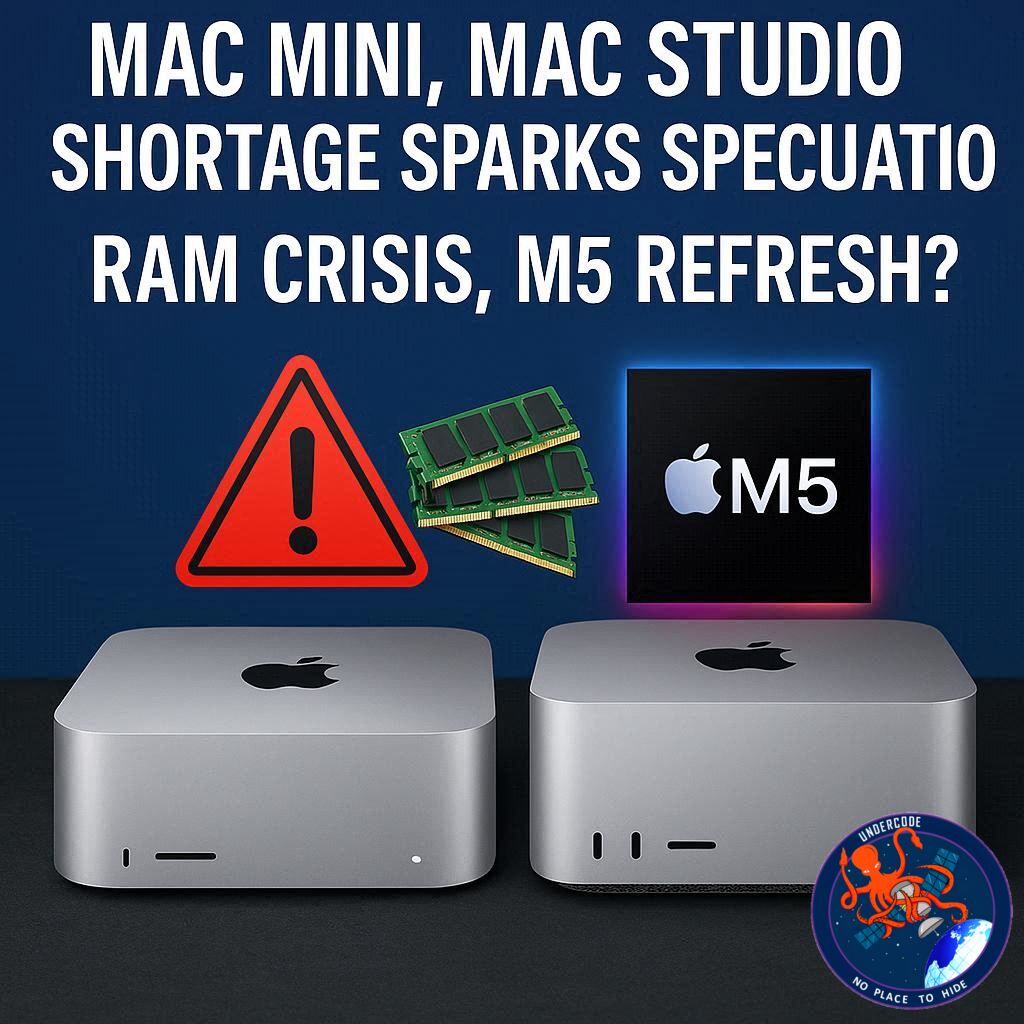
Something unusual is happening inside Apple’s hardware ecosystem. High-end configurations of the Mac mini and Mac Studio are quietly vanishing from shelves across multiple regions, leaving buyers confused and industry watchers intrigued. What initially looked like minor shipping delays has escalated into full-blown stock shortages. But this isn’t just about supply issues, it may signal a deeper shift in Apple’s strategy, or even the arrival of a new generation of Macs.
🔍 Summary: High-End Macs Disappear Amid Supply Strain and Upgrade Rumors
Recent reports reveal that several premium configurations of the Mac mini and Mac Studio are no longer available for purchase directly from Apple’s official store. Models such as the M4-powered Mac mini with 32GB RAM and the high-performance M3 Ultra Mac Studio with 256GB RAM have completely disappeared from listings in regions like the United States, United Kingdom, and Australia. Even the remaining models are facing unusually long delivery delays, sometimes stretching into months.
This sudden shortage appears to go beyond a routine inventory hiccup. Historically, when Apple pulls specific configurations from availability, it often signals discontinuation rather than temporary stock issues. A similar pattern was observed recently when the Mac Pro was phased out.
One possible explanation lies in the global strain on memory and storage components. The surge in demand driven by AI data centers has placed immense pressure on supply chains, particularly for high-capacity RAM modules and advanced storage solutions. Apple, despite its strong supply chain management, may not be immune to these industry-wide challenges.
Another compelling theory revolves around upcoming hardware updates. Rumors strongly suggest that Apple is preparing to introduce new Mac mini and Mac Studio models powered by next-generation M5 chips. Clearing out existing inventory ahead of a refresh is a common practice, allowing the company to avoid overlap between old and new product lines.
User discussions across platforms like Reddit add another layer to the story. Many point to “insane demand” for current Mac models, especially among developers and AI enthusiasts running local machine learning workloads. Interestingly, these conversations focus more on demand and upcoming upgrades rather than supply shortages, indicating that both factors may be converging simultaneously.
A critical detail for buyers is Apple’s unified memory architecture. Unlike traditional systems, RAM in these Macs is integrated directly into the chip, making post-purchase upgrades impossible. This means customers must carefully choose configurations upfront, further intensifying demand for higher-spec models that are now hardest to find.
With no official statement from Apple, the situation remains speculative. However, the combination of supply chain pressure, rising demand, and anticipated product refreshes paints a complex picture that goes far beyond a simple stock shortage.
🧠 What Undercode Say: A Strategic Bottleneck or a Calculated Transition?
The disappearance of high-end Mac configurations is unlikely to be accidental. Apple operates with one of the most refined supply chain systems in the world, meaning such shortages often reflect deliberate strategy rather than operational failure. When premium variants vanish first, it suggests prioritization decisions are being made behind the scenes.
One angle worth examining is Apple’s increasing alignment with the AI revolution. As local AI processing becomes more popular, especially among developers who prefer privacy and offline capabilities, machines like the Mac Studio are no longer niche products. They are becoming essential tools. This shift is quietly transforming demand patterns, pushing high-memory configurations into the spotlight.
At the same time, the global semiconductor landscape is undergoing a structural shift. Memory manufacturers are reallocating production capacity toward enterprise-grade solutions for AI data centers. This creates a squeeze on consumer-grade high-capacity RAM, which directly impacts products like Apple’s premium desktops. Even a company with Apple’s leverage cannot fully escape these macroeconomic forces.
However, the timing of this shortage aligns too neatly with the expected arrival of M5 chips. Apple has historically demonstrated a pattern of tightening supply before launching new hardware. This not only builds anticipation but also prevents price erosion of upcoming models. It is less about scarcity and more about controlled transition.
Another overlooked factor is pricing psychology. When high-end models become unavailable, consumers are subtly pushed toward either lower configurations or encouraged to wait for newer, potentially more expensive releases. This creates a natural upgrade cycle without explicit marketing.
The unified memory architecture also plays a critical role in this dynamic. By eliminating user upgrade paths, Apple effectively shifts all decision-making to the point of purchase. This amplifies the importance of high-RAM configurations, making their absence even more impactful. It also increases average selling prices, a metric Apple consistently optimizes.
Reddit discussions about “insane demand” should not be dismissed. Community sentiment often reflects early-stage market trends. The rise of local AI workloads, combined with Apple Silicon efficiency, is creating a new class of power users. These users are not just buying Macs for general productivity but for computational tasks that previously required dedicated workstations.
In this context, the shortage may actually represent a tipping point. Apple’s desktop lineup is evolving from a general-purpose computing platform into a specialized tool for high-performance, AI-driven workflows. This transformation requires not just new chips, but a recalibration of supply chains, pricing strategies, and product positioning.
If the M5 refresh is indeed imminent, it will likely focus heavily on AI acceleration, memory bandwidth, and efficiency gains. The current shortage could be Apple’s way of clearing the stage for a more ambitious narrative, one where Macs are positioned as serious contenders in the AI hardware space.
Ultimately, this situation reflects a convergence of forces: technological evolution, supply chain constraints, and strategic product planning. It is not a simple shortage, it is a signal.
🔍 Fact Checker Results
✅ High-end Mac mini and Mac Studio models are currently unavailable in multiple regions
✅ AI-driven demand is impacting global RAM and storage supply chains
❌ No official confirmation yet from Apple regarding discontinuation or M5 release timing
📊 Prediction
🔮 Apple is likely to announce M5-powered Mac mini and Mac Studio within the next product cycle
📈 Demand for high-RAM Macs will continue rising due to local AI workloads
⚠️ Supply constraints may persist, keeping premium configurations limited even after refresh
🕵️📝✔️Let’s dive deep and fact‑check.
References:
Reported By: www.techradar.com
Extra Source Hub (Possible Sources for article):
https://www.linkedin.com
Wikipedia
OpenAi & Undercode AI
Image Source:
Unsplash
Undercode AI DI v2
Bing
🔐JOIN OUR CYBER WORLD [ CVE News • HackMonitor • UndercodeNews ]
📢 Follow UndercodeNews & Stay Tuned:
𝕏 formerly Twitter 🐦 | @ Threads | 🔗 Linkedin | 🦋BlueSky | 🐘Mastodon


