
Listen to this Post
Introduction: A New Battle Over Digital Privacy
The secure messaging space has once again been shaken by a high-profile clash, this time led by Telegram founder Pavel Durov. His recent accusations against WhatsApp have reignited a long-standing debate about what “secure messaging” truly means. At the heart of the controversy lies a critical question: is end-to-end encryption enough if user data is still exposed elsewhere? As millions rely on these platforms for private communication, the implications are far-reaching and deeply relevant.
Summary: The Core of Durov’s Accusations
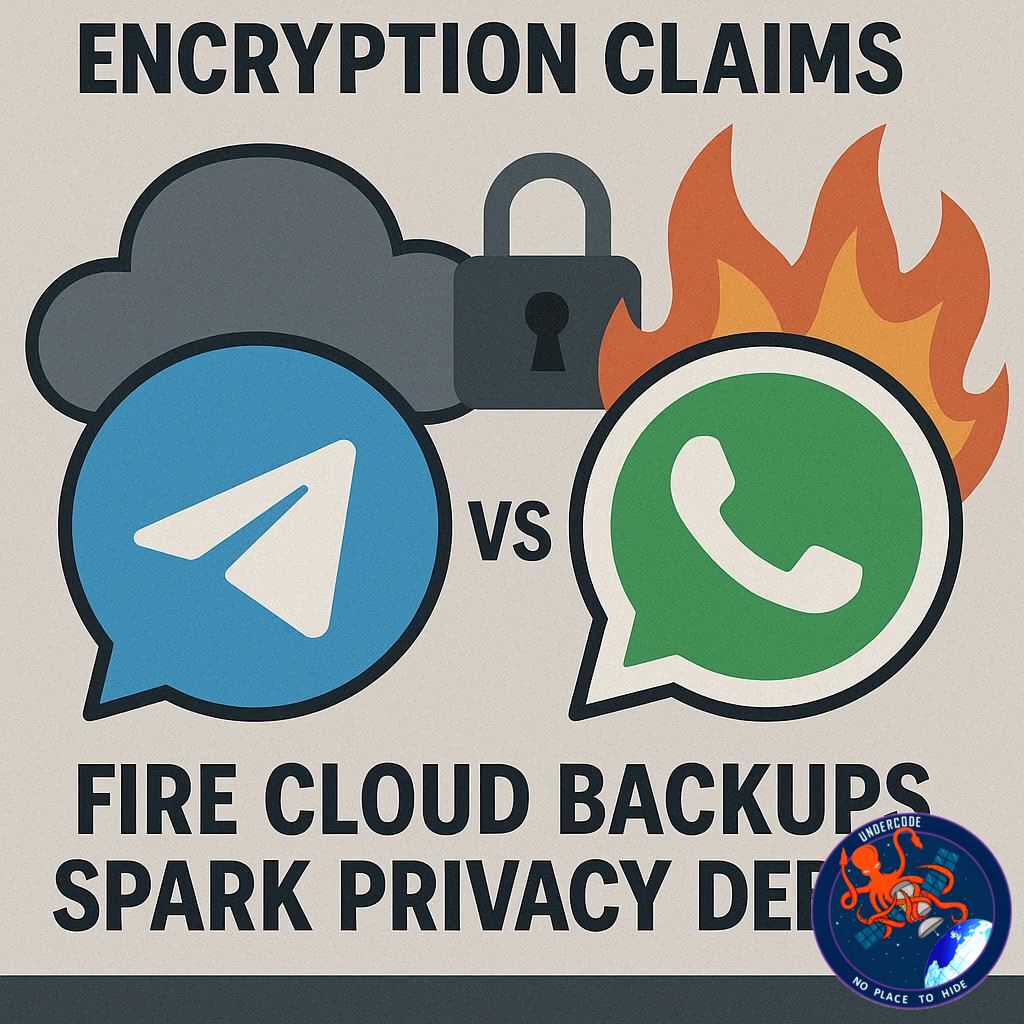
Pavel Durov publicly challenged WhatsApp’s claim of providing end-to-end encryption by default, calling it misleading and even labeling it as a form of consumer fraud. His argument centers on a key technical detail that many users overlook. While WhatsApp encrypts messages during transmission, it also enables automatic backups to cloud services such as Apple iCloud and Google Drive.
These backups, according to Durov, are often stored without proper encryption or with weak protection. This creates a significant vulnerability, as chat histories can be accessed by anyone who gains entry to those cloud accounts. He estimated that as much as 95 percent of WhatsApp messages eventually exist in plain text form on third-party servers.
Although WhatsApp introduced an optional feature in 2021 that allows users to encrypt their backups, this feature is not enabled by default. As a result, most users remain exposed without realizing it. Cybercriminals are increasingly targeting these cloud storage systems, exploiting weak passwords, phishing attacks, and misconfigured accounts to extract sensitive conversations.
Durov emphasized that this situation undermines the fundamental promise of end-to-end encryption, which is meant to ensure that only the sender and receiver can access message content. He contrasted this with Telegram’s record, stating that his platform has never disclosed user message content in its history.
However, critics quickly pointed out that Telegram itself does not apply end-to-end encryption by default. Instead, it uses a client-server model where messages can technically be accessed by Telegram’s infrastructure. Only its “Secret Chats” feature provides true end-to-end encryption.
This has led experts to describe Durov’s criticism as selective. Neither WhatsApp nor Telegram offers a perfect solution when it comes to default privacy. Meanwhile, privacy-focused apps like Signal continue to stand out by enforcing strong encryption without relying on optional settings or cloud-based compromises.
The broader issue highlighted by this debate is the trade-off between convenience and security. Features like multi-device synchronization depend on cloud storage, which inevitably introduces new risks. Security professionals continue to advise users to disable automatic backups and review privacy settings carefully.
Amid this growing skepticism, new competitors are entering the market. A platform called XChat is expected to launch soon, promising full encryption, self-destructing messages, and enhanced privacy features without requiring a phone number.
What Undercode Say: The Illusion of Default Security
The controversy reveals a deeper problem in the messaging ecosystem: the gap between technical security and user perception. Most users hear “end-to-end encryption” and assume complete protection. In reality, security is often fragmented across multiple layers, and a single weak link can compromise the entire system.
Cloud backups are that weak link. They exist because users demand convenience. People want seamless device switching, easy data recovery, and persistent chat history. Companies respond by integrating cloud services, but this convenience comes at a cost. Encryption in transit becomes meaningless if the same data is later stored in a less secure environment.
Durov’s claim, while aggressive, highlights a real issue. However, his argument also overlooks Telegram’s own compromises. By not enabling end-to-end encryption by default, Telegram prioritizes usability and speed over maximum privacy. This is not necessarily wrong, but it contradicts the narrative of absolute security.
The reality is that both platforms are making calculated trade-offs. WhatsApp leans toward user-friendly defaults with hidden risks, while Telegram offers more control but requires users to actively choose stronger protection. In both cases, the burden of true security falls on the user.
Signal’s approach stands out because it removes this ambiguity. By enforcing strong encryption across all communications without optional settings, it eliminates the need for user intervention. This design philosophy represents what secure messaging should ideally look like.
The emergence of platforms like XChat suggests that the market is shifting. Users are becoming more aware of privacy risks, and demand is growing for solutions that combine usability with uncompromising security. Features like self-destructing messages and screenshot blocking indicate a move toward proactive data protection rather than reactive measures.
Another critical angle is legal access. Even if companies claim they cannot read messages, unencrypted backups can still be accessed through legal requests or breaches. This creates a loophole that governments and attackers alike can exploit. True privacy requires closing these loopholes, not just securing one part of the system.
Ultimately, this debate is less about which app is better and more about redefining what “secure by default” should mean. Transparency is becoming a key differentiator. Users are no longer satisfied with marketing claims. They want verifiable, enforced security that does not rely on hidden settings.
Fact Checker Results
✅ WhatsApp does encrypt messages in transit but does not enable encrypted backups by default
✅ Telegram does not provide end-to-end encryption for standard chats by default
❌ The claim that exactly 95 percent of messages are exposed cannot be independently verified
Prediction
The messaging industry will move toward mandatory encryption across all layers, including backups 🔒
Users will increasingly abandon platforms that rely on optional security settings ⚠️
New entrants like XChat could disrupt the market if they deliver true privacy by design 🚀
🕵️📝✔️Let’s dive deep and fact‑check.
References:
Reported By: cyberpress.org
Extra Source Hub (Possible Sources for article):
https://www.reddit.com/r/AskReddit
Wikipedia
OpenAi & Undercode AI
Image Source:
Unsplash
Undercode AI DI v2
Bing
🔐JOIN OUR CYBER WORLD [ CVE News • HackMonitor • UndercodeNews ]
📢 Follow UndercodeNews & Stay Tuned:
𝕏 formerly Twitter 🐦 | @ Threads | 🔗 Linkedin | 🦋BlueSky | 🐘Mastodon


