
Listen to this Post
Introduction: A New Wave of Exploits Raises Global Alarm
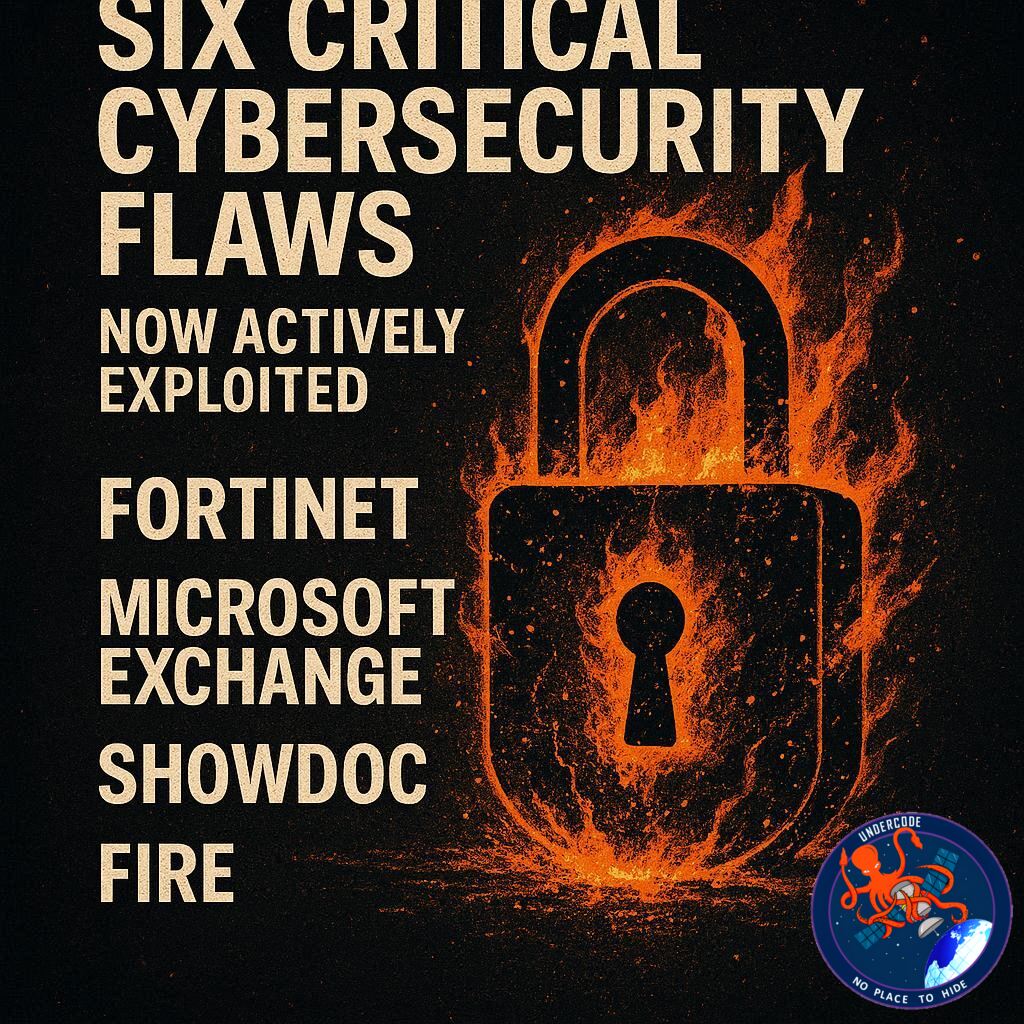
Cybersecurity threats are escalating at a relentless pace, and the latest update from the Cybersecurity and Infrastructure Security Agency (CISA) underscores just how urgent the situation has become. In a recent announcement, CISA added six newly identified vulnerabilities to its Known Exploited Vulnerabilities (KEV) catalog—meaning these flaws are not theoretical risks but are already being actively weaponized by attackers. Among the most concerning are vulnerabilities affecting Fortinet’s FortiClient EMS and Microsoft Exchange, both widely used across enterprises worldwide. These developments signal a dangerous expansion in ransomware and remote exploitation campaigns that organizations cannot afford to ignore.
the Original Report: Active Exploits Spreading Across Key Platforms
The original report highlights a critical update from CISA, which has officially added six vulnerabilities to its KEV catalog. This catalog is reserved for flaws that are confirmed to be actively exploited in real-world cyberattacks, making their inclusion a serious warning to organizations globally. Among the six vulnerabilities, one involves a SQL injection flaw in Fortinet’s FortiClient Enterprise Management Server (EMS), a system designed to manage endpoint security across corporate networks. This flaw allows attackers to manipulate database queries, potentially granting unauthorized access to sensitive data or administrative controls.
Another major vulnerability affects Microsoft Exchange, involving a deserialization flaw. This type of vulnerability can allow attackers to execute arbitrary code by exploiting how the system processes serialized data. Notably, this flaw has been linked to ransomware campaigns attributed to Storm-1175 ransomware group, indicating a direct connection between these vulnerabilities and ongoing cybercrime operations.
In addition to these, a separate report draws attention to a critical remote code execution (RCE) vulnerability identified as CVE-2025-0520 in ShowDoc, a documentation management platform. This flaw allows attackers to upload malicious PHP files, which can then be executed on vulnerable servers. The issue impacts versions prior to 2.8.7 and was reportedly patched in an October 2020 update. However, unpatched systems remain exposed and are actively being targeted by attackers.
The key takeaway from the report is clear: these vulnerabilities are not just technical weaknesses but active entry points for cybercriminals. Organizations that have not yet applied patches or mitigations are at immediate risk of compromise, particularly from ransomware groups that continue to exploit such flaws for financial gain.
What Undercode Say:
The Real Risk: Why “Actively Exploited” Changes Everything
When a vulnerability lands in CISA’s KEV catalog, it crosses a critical threshold—from potential danger to confirmed threat. This distinction matters. Many organizations treat vulnerabilities as theoretical until proven otherwise, but KEV-listed flaws are already being used in attacks. That means there is no grace period. Systems are either patched, or they are vulnerable—no middle ground.
Fortinet and Microsoft Exchange: High-Value Targets
Both Fortinet and Microsoft Exchange represent high-value targets due to their widespread adoption in enterprise environments. Fortinet’s solutions are deeply embedded in network security infrastructure, while Microsoft Exchange remains a backbone for corporate communication. Exploiting either system provides attackers with powerful access—either to internal networks or sensitive communications.
SQL Injection Still Alive — and Dangerous
It is striking that SQL injection, a decades-old vulnerability type, continues to appear in modern enterprise software. This suggests that secure coding practices are still inconsistently applied, even in major cybersecurity products. The FortiClient EMS flaw demonstrates that legacy attack techniques remain highly effective when basic protections are overlooked.
Deserialization Flaws: A Quiet but Deadly Vector
The Microsoft Exchange vulnerability highlights the dangers of insecure deserialization, a less understood but highly dangerous flaw. These vulnerabilities are particularly attractive to attackers because they often allow remote code execution without requiring authentication. In ransomware campaigns, this translates into rapid system compromise with minimal effort.
The Ransomware Connection: Storm-1175’s Playbook
The involvement of Storm-1175 ransomware group signals a broader trend: ransomware groups are increasingly relying on known vulnerabilities rather than zero-day exploits. This shift reduces their operational costs while increasing attack speed. Instead of discovering new flaws, attackers simply scan for unpatched systems and strike.
The Patch Gap Problem
One of the most concerning aspects of the ShowDoc vulnerability is that it was patched years ago—yet it is still being exploited. This highlights a persistent issue in cybersecurity: patch management failure. Organizations often delay updates due to operational concerns, compatibility issues, or simple oversight. Attackers exploit this hesitation ruthlessly.
Legacy Systems: The Weakest Link
Many enterprises continue to run outdated or unsupported systems, creating a fertile ground for exploitation. Even when patches are available, legacy infrastructure may not support them, leaving organizations permanently exposed. This is especially problematic in sectors with slow IT modernization cycles.
Automation of Attacks: Scaling the Threat
Modern cyberattacks are increasingly automated. Tools can scan thousands of systems for known vulnerabilities in minutes, identifying targets that have not applied patches. Once found, exploitation can also be automated, enabling attackers to compromise systems at scale with minimal human intervention.
The Illusion of Security Tools
Ironically, some of the vulnerabilities identified affect security-related products themselves. This challenges the assumption that deploying security tools automatically guarantees protection. If these tools are not properly maintained and updated, they can become entry points rather than defenses.
Urgency vs. Reality: Why Organizations Fall Behind
Despite constant warnings, many organizations struggle to respond quickly to emerging threats. Resource limitations, lack of skilled personnel, and complex IT environments all contribute to delayed patching. Unfortunately, attackers operate on much shorter timelines, often exploiting vulnerabilities within days of disclosure.
Fact Checker Results
Verified Threat Activity ✅
CISA has officially confirmed that all six vulnerabilities are actively exploited, making the threat immediate and credible.
Patch Availability ✅
Fixes exist for the mentioned vulnerabilities, including ShowDoc and Fortinet EMS, meaning risk largely depends on patch adoption.
Ransomware Link Validated ✅
The connection between Microsoft Exchange vulnerabilities and Storm-1175 ransomware group campaigns is supported by threat intelligence reports.
Prediction
Escalation of Automated Ransomware Campaigns Ahead
The inclusion of these vulnerabilities in the KEV catalog strongly suggests an imminent surge in automated ransomware attacks targeting unpatched systems. As threat actors continue refining their scanning and exploitation tools, the window between vulnerability disclosure and mass exploitation will shrink even further. Organizations that fail to adopt rapid patching strategies and proactive monitoring will likely face increased breach incidents, financial losses, and operational disruptions in the coming months.
🕵️📝✔️Let’s dive deep and fact‑check.
References:
Reported By: x.com
Extra Source Hub (Possible Sources for article):
https://www.stackexchange.com
Wikipedia
OpenAi & Undercode AI
Image Source:
Unsplash
Undercode AI DI v2
Bing
🔐JOIN OUR CYBER WORLD [ CVE News • HackMonitor • UndercodeNews ]
📢 Follow UndercodeNews & Stay Tuned:
𝕏 formerly Twitter 🐦 | @ Threads | 🔗 Linkedin | 🦋BlueSky | 🐘Mastodon


