
Listen to this Post
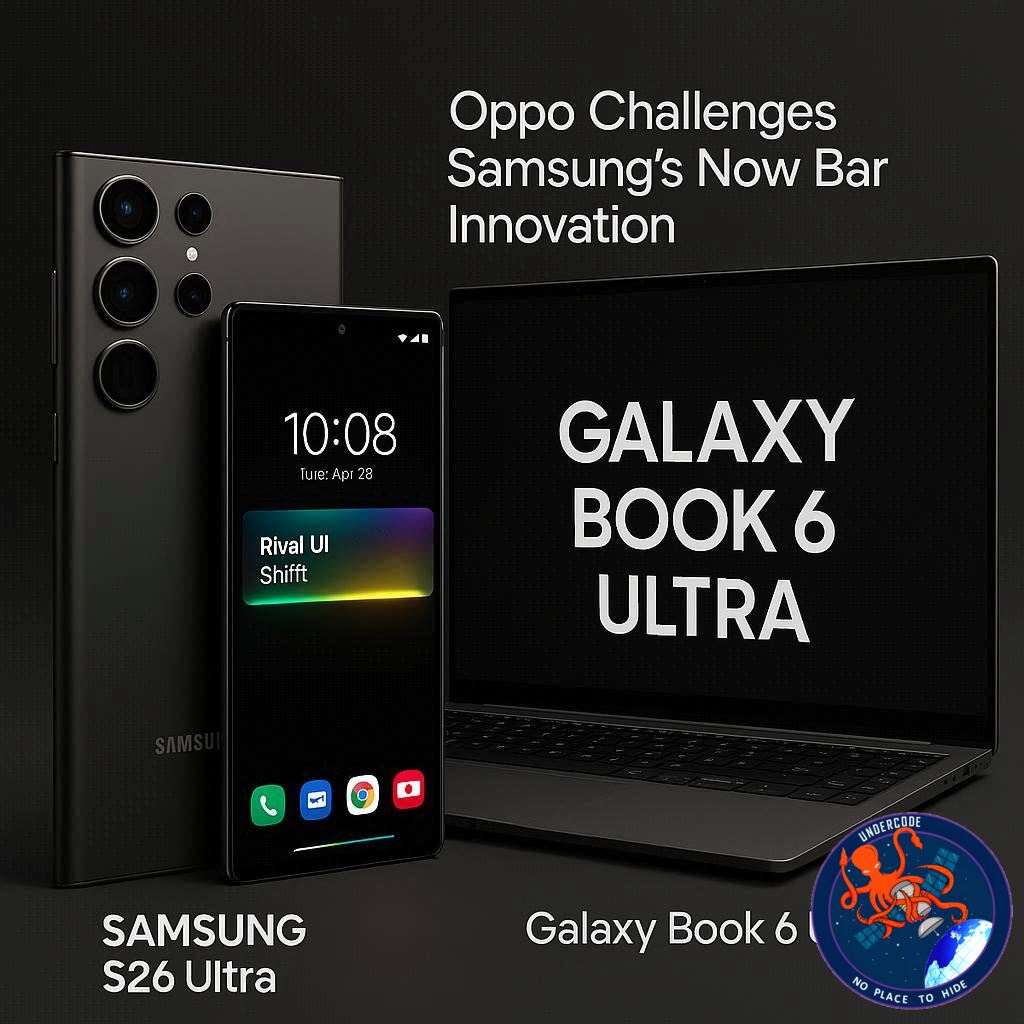 Introduction: The UI Battle Shaping the Next Generation of Smartphones
The smartphone industry is entering a new phase where software experience matters as much as hardware power. Samsung has been pushing its One UI ecosystem forward with features like Now Bar and Now Brief, designed to make information more contextual and instantly accessible. Now, competitors in China are responding quickly. OPPO is preparing to launch ColorOS 16.1 with a strikingly similar concept, signaling a growing trend of interface convergence across Android manufacturers. What once felt like unique innovation is now becoming a competitive standard, where every major brand is racing to define the future of lock screen intelligence and user interaction.
the Original Samsung Inspiration Sparks OPPO’s “Lockscreen Island” Feature
Samsung has recently introduced major design improvements with One UI 7.
These updates include new features like Now Bar and Now Brief.
Both tools are designed to show contextual, real time information.
The goal is to make the interface more intelligent and responsive.
Now Bar displays ongoing activity directly on the screen.
Now Brief provides summarized information based on user behavior and time.
These features are part of Samsung’s broader AI driven UI strategy.
However, other smartphone brands appear to be taking inspiration.
OPPO is preparing to launch ColorOS 16.1 in China.
A teaser video has revealed a new feature called “Lockscreen Island.”
This feature strongly resembles Samsung’s Now Bar design concept.
It appears as a pill shaped UI element at the bottom of the lock screen.
It sits between the lock screen shortcuts for quick access.
Users can tap it to expand and view more detailed information.
The feature supports multiple stock applications within OPPO’s ecosystem.
These include Calendar, Clock, Timer, Maps, Music, Weather, and Health apps.
It can also display alerts from e book readers and system utilities.
Users are able to swipe left or right to switch between activities.
This creates a dynamic and interactive lock screen experience.
OPPO aims to make lock screen interaction more useful and engaging.
OnePlus devices, which use OxygenOS, are also expected to adopt it.
This is because OxygenOS is based on OPPO’s ColorOS architecture.
Samsung’s Now Bar already offers similar real time activity tracking.
It integrates information from multiple apps and services.
Samsung continues to expand its functionality in One UI 8.5.
Future updates such as One UI 9 are expected to improve it further.
The competition shows a growing trend of UI feature imitation and evolution.
Manufacturers are focusing more on real time user interaction systems.
The lock screen is becoming a central hub for smart information delivery.
This shift reflects the increasing importance of AI driven UI design.
What Undercode Say:
The introduction of OPPO’s Lockscreen Island is not just a design update, it reflects a deeper industry shift toward predictive interface systems. Samsung has been pushing the idea that users should not have to open apps to receive meaningful updates, and Now Bar is a direct embodiment of that philosophy. OPPO’s move suggests that this philosophy is no longer exclusive.
The competition between Samsung and Chinese OEMs like OPPO is no longer limited to hardware specifications such as camera sensors or charging speeds. It has expanded into interface intelligence, where micro interactions define user satisfaction. A pill shaped UI element may seem simple, but its implications are significant. It reduces friction, shortens interaction paths, and increases engagement frequency.
The similarity between Now Bar and Lockscreen Island raises questions about originality in modern UI design. In reality, smartphone UI development has entered a phase of rapid convergence. Once a feature proves successful in improving user retention or usability, it is quickly adopted and modified by competitors. This is not necessarily copying in a traditional sense, but rather iterative evolution driven by market pressure.
Samsung’s advantage lies in ecosystem depth. One UI is tightly integrated with Galaxy devices, wearables, tablets, and now laptops like the Galaxy Book series. This creates a cross device intelligence layer that OPPO and OnePlus still struggle to match. Even if OPPO replicates the lock screen experience, ecosystem consistency remains a key differentiator.
Another important aspect is how AI is shaping these interfaces. Now Bar and similar systems are not static widgets. They rely on behavioral prediction, app usage patterns, and time sensitive triggers. The success of such systems depends on how well they can anticipate user needs without becoming intrusive.
OPPO’s implementation may initially focus on basic app integration such as music, alarms, and weather updates. However, the real challenge will be scaling it into a predictive system that feels truly intelligent rather than reactive. Many competitors have attempted similar features in the past, but few have achieved long term user engagement.
OnePlus adopting the same feature through OxygenOS is almost inevitable due to shared codebase architecture. This means the feature will spread quickly across mid range and flagship Android devices, increasing its visibility in global markets.
Samsung’s continued expansion of Now Bar in One UI 8.5 and beyond indicates that it sees this as a core UI pillar, not just a minor feature. The expected One UI 9 evolution may push it further into a centralized notification and task management hub.
Ultimately, the lock screen is becoming a battlefield for attention economics. Every millisecond of user interaction is being optimized. The brand that successfully balances utility, speed, and minimalism will define the next era of Android user experience.
Fact Checker Results:
Samsung has officially introduced Now Bar and Now Brief in One UI 7 as part of its UI redesign strategy.
OPPO has teased a similar lock screen feature called Lockscreen Island in ColorOS 16.1.
OnePlus is expected to inherit the feature due to its reliance on OPPO’s ColorOS base system.
Prediction:
Lock screen interfaces will evolve into full AI powered control hubs within the next two major Android cycles.
Samsung will likely deepen Now Bar integration across Galaxy phones, tablets, and laptops to strengthen ecosystem lock-in.
OPPO and OnePlus will rapidly iterate on Lockscreen Island, but differentiation will depend on how advanced their predictive AI becomes.
🕵️📝✔️Let’s dive deep and fact‑check.
References:
Reported By: www.sammobile.com
Extra Source Hub (Possible Sources for article):
https://www.instagram.com
Wikipedia
OpenAi & Undercode AI
Image Source:
Unsplash
Undercode AI DI v2
Bing
🔐JOIN OUR CYBER WORLD [ CVE News • HackMonitor • UndercodeNews ]
📢 Follow UndercodeNews & Stay Tuned:
𝕏 formerly Twitter 🐦 | @ Threads | 🔗 Linkedin | 🦋BlueSky | 🐘Mastodon


