
Listen to this Post
Introduction: A Digital Crisis in Moroccan Sports
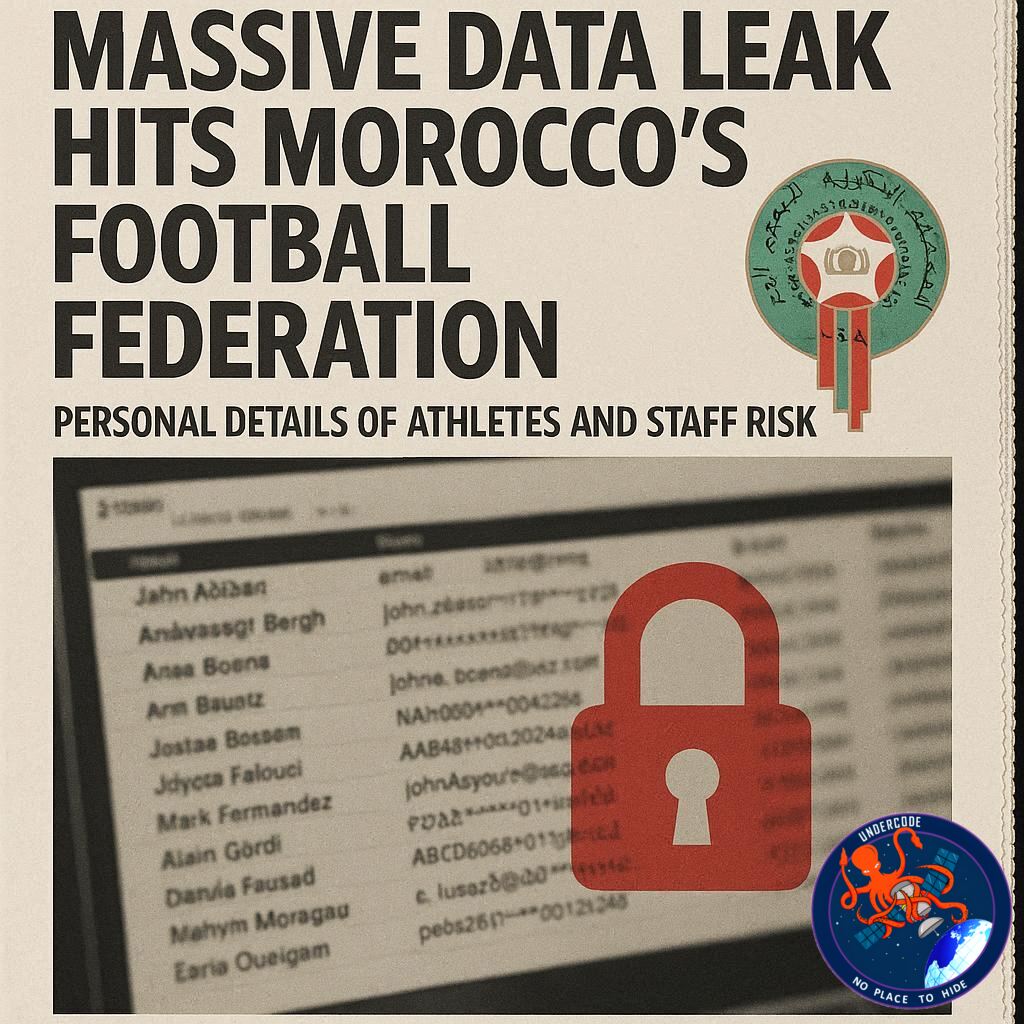
Morocco’s Royal Football Federation (FRMF) has reportedly become the target of a major cyber incident, sending shockwaves through the nation’s sporting and administrative communities. A threat actor claims to have leaked a comprehensive database containing highly sensitive personal and identification data. If confirmed, this breach could compromise athletes, staff, and officials, exposing them to identity theft, fraud, and reputational harm. The leak highlights the growing cybersecurity vulnerabilities in sports organizations, where personal information and professional credentials intersect.
the Alleged Data Leak
Targeted Organization
The Fédération Royale Marocaine de Football (FRMF) is reportedly at the center of this breach, with the leaked data including both personal and professional information of registered individuals.
Nature of the Data
The dataset allegedly contains detailed personal information in TXT format, with a sample publicly shared online. The threat actor claims the full dataset is also available, though it has not been independently verified.
Types of Information Exposed
The leaked information reportedly includes:
National ID numbers and FIFA IDs
Full names in local and international formats
Dates and places of birth
Primary and secondary nationalities
Gender
Address details including city, region, and postal codes
Phone numbers and email addresses
Passport and national ID numbers
Organizational identifiers and professional certification or license details
Status and validation fields
Threat Intelligence Analysis
The alleged dataset combines personally identifiable information (PII) with official identifiers, creating a high-risk scenario for identity theft and fraud. Specific elements, such as passport numbers and location data, amplify the threat to individuals involved.
Potential Impacts
Athletes and staff may face targeted phishing attacks.
Fraudsters could misuse official credentials for financial or social gain.
The Federation may suffer reputational damage and potential regulatory scrutiny.
Cross-border identity fraud risks could emerge, affecting international football networks.
Credibility Assessment
While the sample appears detailed and realistic, the full dataset remains unverified. Experts rate the leak’s credibility as medium to high, based on the provided schema and field structure.
What Undercode Say: Deep Dive Analysis
Understanding the Stakes
The alleged leak is a stark reminder that sports organizations are not immune to cyber threats. The combination of sensitive PII and official certification records in a single dataset elevates the risk profile exponentially. Unlike typical corporate data leaks, this type of breach could directly impact the public-facing image of athletes and officials, as well as their professional integrity.
Operational Vulnerabilities in Sports Federations
Many sports federations rely on outdated IT infrastructures and lack robust cybersecurity protocols. This vulnerability creates opportunities for threat actors to access centralized databases containing detailed personal and professional information. In this context, even a moderate leak can snowball into large-scale identity and credential exploitation.
Targeted Phishing and Social Engineering Risks
Given the exposure of email addresses, phone numbers, and professional affiliations, targeted phishing attacks are almost inevitable. Athletes and staff may receive seemingly legitimate communications that exploit their professional trust or urgent scenarios, making them vulnerable to scams.
Implications for National and International Football
If verified, the leak may force the FRMF to implement immediate damage control measures. Internationally, FIFA and other affiliated organizations may need to reassess data-sharing protocols to prevent similar breaches. The incident could trigger broader discussions on data privacy compliance and enforcement within sports federations globally.
Regulatory and Legal Ramifications
The exposure of national ID and passport numbers raises compliance questions under data protection laws, both within Morocco and internationally. Potential fines and legal action could ensue if negligence is found in safeguarding this sensitive information.
Long-Term Repercussions for Stakeholders
Athletes’ personal reputations, sponsorship contracts, and professional mobility could be impacted. Staff members might face identity-related scams or financial losses, while the federation may endure scrutiny from regulatory authorities and media outlets, affecting its credibility and trustworthiness.
Preventive and Remedial Measures
To mitigate the fallout, the FRMF should implement multi-layered cybersecurity strategies, including data encryption, access audits, and immediate communication to affected parties. Cross-border collaboration with cybersecurity experts and law enforcement may be required to contain misuse of leaked information.
Strategic Importance of Cybersecurity Awareness
This incident emphasizes the need for continuous cybersecurity education within sports organizations. Administrators, coaches, and athletes should be trained to recognize phishing attempts, secure personal devices, and adopt secure communication channels.
Global Sports Sector Lessons
The breach, if verified, signals a warning to sports organizations worldwide. Data handling practices must evolve to match the sophistication of cybercriminals. Ignoring these risks could result in more severe breaches, affecting both individuals and the integrity of competitive sports.
Technology and Identity Risk Convergence
The leak underscores the intersection of digital identity and professional affiliation. In sports, this convergence creates unique vulnerabilities, as personal identifiers are often linked to globally recognized certification systems. Malicious actors can exploit this linkage for targeted attacks across borders.
The Psychological Impact on Athletes and Officials
Beyond financial and operational risks, the breach may cause significant stress and anxiety among those affected. Knowing personal information is publicly accessible can undermine trust in organizational leadership and deter potential talent from joining the federation.
The Dark Web Marketplace Factor
The appearance of this data on dark web forums increases its potential for exploitation. Once such information circulates online, containment becomes nearly impossible, magnifying the long-term impact.
Preparedness and Future-Proofing
The FRMF and other federations should adopt a proactive cybersecurity posture. Regular vulnerability assessments, penetration testing, and contingency planning must become standard practices to safeguard both people and data.
Public Communication and Transparency
Transparency is crucial. Prompt, clear communication with affected individuals and the public can mitigate reputational damage and help manage misinformation or panic stemming from the leak.
Collaboration with National Authorities
Coordination with Moroccan cybersecurity agencies and international sports bodies is essential. This collaboration ensures legal compliance and strengthens incident response mechanisms.
Investment in Secure Digital Platforms
Upgrading registration and certification systems with advanced encryption, two-factor authentication, and secure cloud solutions can prevent future data exposure.
Lessons for Fans and Supporters
Even supporters may be indirectly affected, as public trust in the federation’s ability to protect its stakeholders could erode. Educating fans on the situation helps maintain credibility and engagement.
The Bigger Picture
Ultimately, this incident reflects a global trend: sports organizations must treat cybersecurity with the same seriousness as physical training and competition. Protecting data is now an essential component of professional integrity and organizational resilience.
Fact Checker Results
✅ Claimed dataset appears credible based on shared sample and schema.
❌ Full dataset unverified, cannot confirm complete exposure.
⚠️ High-risk potential due to inclusion of PII and official credentials.
Prediction: The Fallout and Response
Immediate containment efforts by FRMF and national authorities are expected, including notifications to affected individuals. In the long term, this breach could trigger tighter cybersecurity regulations for sports federations worldwide. Athletes may increasingly demand personal data protection measures, while the dark web circulation of such data could lead to further identity theft and targeted scams over the next 6–12 months.
🕵️📝✔️Let’s dive deep and fact‑check.
References:
Reported By: x.com
Extra Source Hub (Possible Sources for article):
https://stackoverflow.com
Wikipedia
OpenAi & Undercode AI
Image Source:
Unsplash
Undercode AI DI v2
Bing
🔐JOIN OUR CYBER WORLD [ CVE News • HackMonitor • UndercodeNews ]
📢 Follow UndercodeNews & Stay Tuned:
𝕏 formerly Twitter 🐦 | @ Threads | 🔗 Linkedin | 🦋BlueSky | 🐘Mastodon


