
Listen to this Post
Introduction
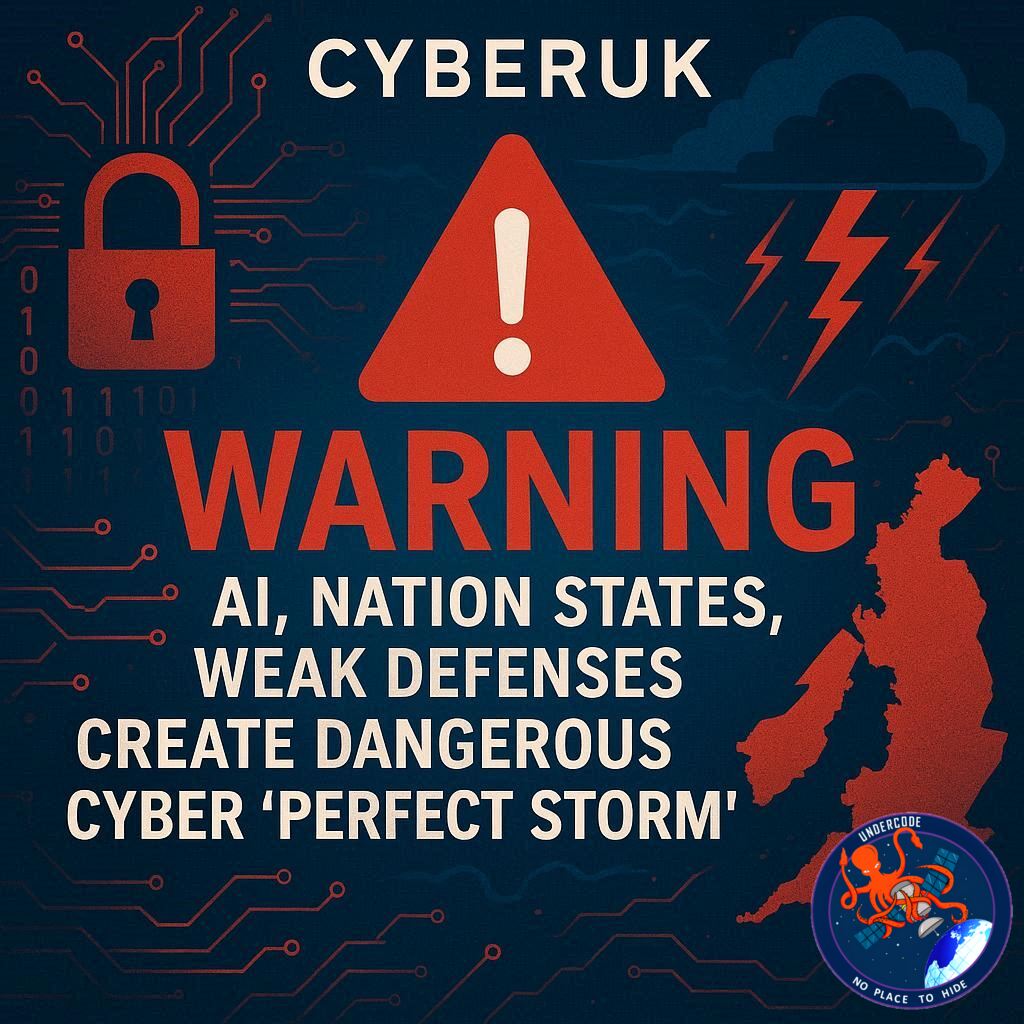
Cybersecurity leaders are sounding the alarm after a major warning delivered at the CyberUK conference in Glasgow. Richard Horne, CEO of the UK National Cyber Security Centre (NCSC), described today’s cyber threat environment as a “perfect storm” fueled by two powerful forces: the explosive growth of artificial intelligence and rising geopolitical tensions.
His message was direct. While attackers are becoming faster, smarter, and more automated, many organizations are still being compromised through old and preventable weaknesses such as outdated systems, missing patches, poor visibility, and aging infrastructure. This means modern cyber threats are succeeding not only because hackers are advancing, but because many businesses are still failing to secure the basics.
The speech also highlighted a more serious reality. Cyberattacks linked to nation states are increasing, making cybersecurity no longer just an IT issue, but a matter of national resilience, economic stability, and modern conflict.
The Growing Threat Landscape
Richard Horne explained that artificial intelligence is dramatically changing how cybercriminals and hostile groups operate. Attackers can now automate reconnaissance, identify vulnerabilities at scale, create phishing campaigns faster, and shorten the time between discovering a flaw and exploiting it.
Even with these advanced tactics, many breaches still begin with familiar problems. Unpatched software, unsupported legacy systems, weak credentials, and poor asset management remain common entry points.
This creates a dangerous imbalance. Defenders often move slowly through budget approvals, compliance processes, and limited staffing, while attackers can now move at machine speed.
Horne emphasized that organizations must stop treating cybersecurity as a side function. It should be considered a business-critical capability tied directly to continuity, trust, and survival.
Why Small Businesses Are Now Prime Targets
Jamie Akhtar, CEO and Co-Founder of CyberSmart, noted that this warning is especially important for small and medium-sized enterprises across the UK.
He explained that AI has changed the economics of cybercrime. In the past, smaller companies were sometimes ignored because attacking them was less profitable or too time-consuming. Today, automation has reduced those barriers.
Hackers can now scan thousands of businesses, find weak systems, and launch attacks cheaply and quickly. This means SMEs that once believed they were “too small to target” are now very much in scope.
With over 5.5 million SMEs in the UK economy, the potential exposure is massive.
Nation States and Modern Cyber Conflict
Several experts reinforced another major concern: cyberattacks connected to nation states.
According to Horne, some of the most serious incidents handled by the NCSC now involve state-backed actors directly or indirectly. That means espionage, disruption campaigns, infrastructure attacks, and strategic sabotage are becoming normal elements of geopolitical competition.
Cyber warfare is attractive because it can create economic disruption without physical invasion. Hospitals, energy providers, logistics networks, telecom firms, and government services can all be targeted remotely.
For many countries, critical infrastructure has become the new battlefield.
The Boardroom Problem
A recurring theme from industry leaders was that many executives still underestimate cyber risk.
Graeme Stewart of Check Point Software warned that ransomware, AI-driven attacks, and hacktivist campaigns could severely disrupt national services such as healthcare, supply chains, and energy systems.
Anthony Young of Bridewell added that many businesses are not prepared for a sustained nation-state level campaign. Many still lack full visibility into their own environments, making detection and response difficult.
This is where many companies fail. Cybersecurity is often discussed after an incident, rather than built into planning, budgeting, and governance beforehand.
What Organizations Must Do Now
The keynote stressed resilience over simple prevention. This means accepting that some attacks will happen and ensuring operations can continue during disruption.
Organizations should prioritize:
Rapid patch management
Replacing unsupported legacy systems
Multi-factor authentication
Strong backups and recovery plans
Continuous monitoring
Third-party risk management
Security awareness training
Incident response exercises
Executive involvement in cyber planning
Cyber maturity is no longer optional. It is operational insurance.
What Undercode Say:
Richard Horne’s warning reflects a deeper truth many organizations still resist: technology evolves faster than management culture. AI did not create weak cybersecurity. It simply exposed and accelerated existing negligence.
The most dangerous companies today are not always the least funded. They are the ones trapped in old thinking. Businesses still treating security as a compliance checkbox are highly vulnerable because attackers are treating it as a battlefield.
AI gives threat actors scale. They can test phishing messages instantly, search for leaked credentials, scan open ports globally, and build malware variations automatically. Defenders relying on annual audits and outdated playbooks cannot compete with that pace.
Nation-state threats also change risk calculations. Traditional cybercrime often seeks money. State-linked operations may seek disruption, intelligence, pressure, or strategic chaos. That means the damage may be broader and less predictable.
Another overlooked issue is supply chain concentration. Even secure companies depend on software vendors, cloud platforms, contractors, and managed providers. A weakness in one supplier can cascade into hundreds of victims.
The boardroom must understand that cybersecurity spending is not a cost center anymore. It protects revenue continuity, legal exposure, brand trust, and shareholder value.
SMEs face an especially hard challenge because they often lack dedicated security teams. However, smaller businesses can still build strong defenses through managed services, automation, and disciplined basics.
Quantum risk is another warning sign. Sensitive data stolen today may be stored and decrypted years later when quantum capabilities improve. Long-term secrets already have a countdown clock.
The future belongs to resilient organizations, not perfect ones. No company can block every threat. But companies can prepare, recover faster, isolate damage, and maintain trust.
Cybersecurity maturity will soon separate stable businesses from fragile ones.
Those who wait for a breach before acting may discover the cost of delay is far higher than the cost of prevention.
Fact Checker Results
✅ AI is increasingly used to automate cyberattacks, phishing, and vulnerability discovery.
✅ Nation-state cyber operations are a growing global security concern.
✅ Many successful breaches still exploit basic issues like unpatched systems and poor visibility.
Prediction
🔮 Within the next two years, regulators will pressure boards to personally oversee cyber resilience.
🔮 AI-powered attacks against SMEs will rise sharply because they are cheaper to automate.
🔮 Organizations investing in resilience now will outperform slower competitors during future crises.
🕵️📝✔️Let’s dive deep and fact‑check.
References:
Reported By: www.itsecurityguru.org
Extra Source Hub (Possible Sources for article):
https://www.stackexchange.com
Wikipedia
OpenAi & Undercode AI
Image Source:
Unsplash
Undercode AI DI v2
Bing
🔐JOIN OUR CYBER WORLD [ CVE News • HackMonitor • UndercodeNews ]
📢 Follow UndercodeNews & Stay Tuned:
𝕏 formerly Twitter 🐦 | @ Threads | 🔗 Linkedin | 🦋BlueSky | 🐘Mastodon


