
Listen to this Post
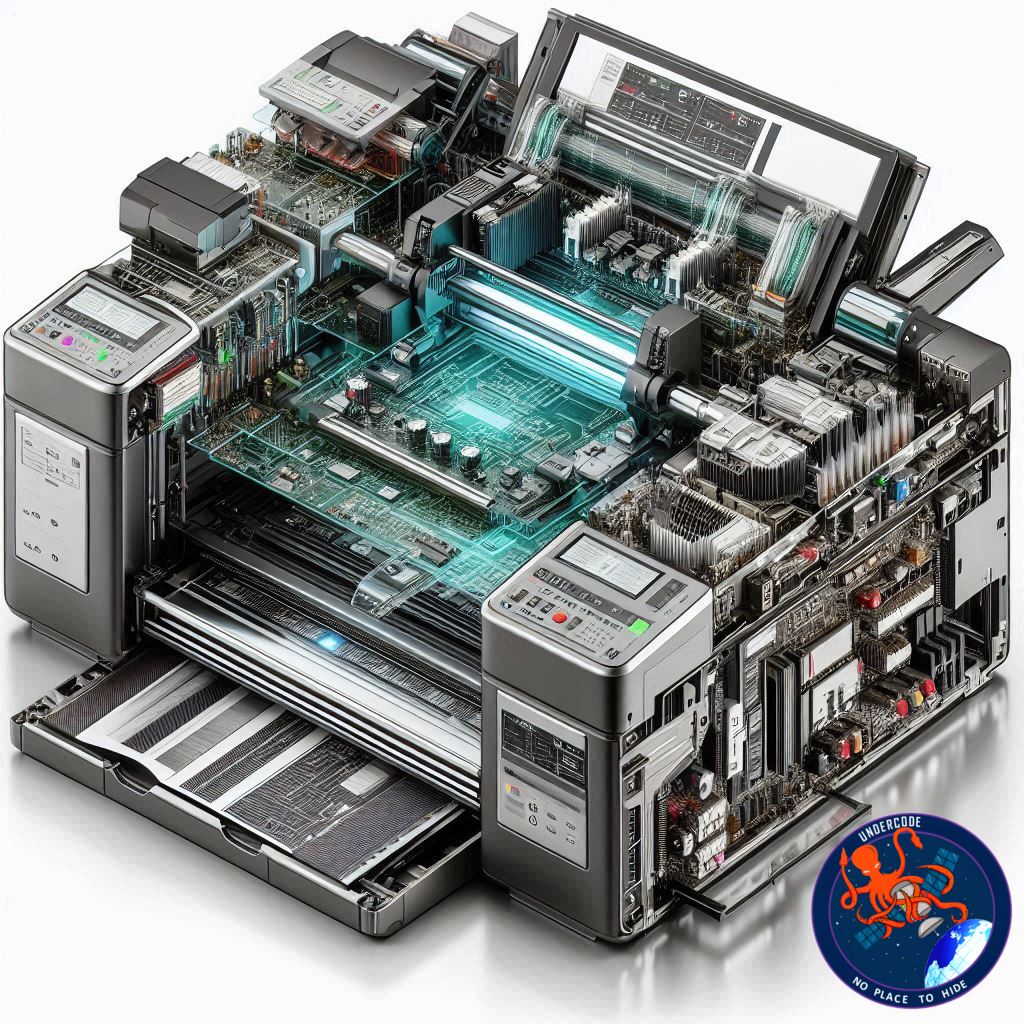
🎯 Introduction: The Invisible Engineering Behind Everyday Printing
Laser printers sit quietly in offices, homes, and institutions, often ignored until something goes wrong. Yet beneath their simple exterior lies a highly advanced system rooted in decades of innovation. What appears to be a basic task, printing a document, is actually the result of a precise orchestration of physics, electronics, and optics. From electrostatic charges to laser-guided imaging, laser printers represent one of the most efficient and refined technologies in everyday use.
🧾 Evolution of Laser Printing Technology
Laser printing technology traces its origins back to the late 1960s when an engineer at Xerox reimagined the photocopier by integrating a laser beam. This breakthrough allowed images to be drawn directly onto a drum, forming the foundation of modern laser printing. Over the following decades, advancements in control systems and character generation transformed early prototypes into commercial machines.
By the mid-1970s, the first enterprise-level laser printers were introduced, primarily designed for data centers. The 1980s marked a turning point as manufacturers began producing affordable office-friendly models. This shift made laser printers accessible to businesses worldwide, eventually turning them into essential workplace tools. Over time, improvements in speed, quality, and cost efficiency cemented their dominance in professional environments.
🏢 Practical Applications Across Industries
Laser printers are widely used due to their speed, reliability, and cost-effectiveness. Their ability to produce sharp text with minimal maintenance makes them ideal for high-volume environments such as corporate offices, universities, and government institutions. Industries that rely heavily on documentation, such as legal and finance sectors, benefit greatly from their precision.
Beyond traditional office use, laser printers play a vital role in logistics and healthcare. Warehouses depend on them for rapid label generation, while hospitals rely on their consistency for critical documentation. Specialized models also support barcode printing, secure document release, and high-quality marketing materials, expanding their utility across diverse professional settings.
🧪 Toner Instead of Ink: A Fundamental Difference
Unlike inkjet printers, laser printers use toner, a fine powder composed of pigment and plastic particles. This distinction is crucial because toner does not soak into paper but instead bonds to its surface through heat. This results in faster drying times, reduced smudging, and more durable prints.
The toner is stored in cartridges within the printer and is applied through a controlled electrostatic process. This method ensures consistent quality and efficiency, especially when handling large volumes of documents.
⚡ Electrostatic Imaging: The Core Mechanism
At the heart of a laser printer is the photoreceptor drum, a cylindrical component coated with a light-sensitive material. The printing process begins when the drum is uniformly charged with static electricity. This charge prepares the surface for image formation.
Once charged, a laser beam is directed onto the drum using mirrors and lenses. The laser selectively removes the charge in specific areas, creating an invisible electrostatic image that represents the document to be printed. This step requires extreme precision, as even minor inaccuracies can affect print quality.
🔦 Laser Precision and Image Formation
The laser operates by rapidly switching on and off while scanning across the drum. This controlled movement creates a detailed pattern of charged and uncharged areas. These patterns form the blueprint of the final printed image.
The precision involved is remarkable, with modern printers capable of producing thousands of dots per inch. This level of detail ensures crisp text and high-resolution graphics, making laser printers suitable for professional-grade output.
🧲 Toner Attraction and Image Development
Once the electrostatic image is formed, positively charged toner particles are released onto the drum. These particles are naturally attracted to the negatively charged areas created by the laser. As a result, the toner adheres only to the parts of the drum that represent the desired image.
This selective attraction ensures that the final print is accurate and clean, with no unwanted marks or smudges.
📄 Paper Transfer and Heat Fusion
The next stage involves transferring the toner image from the drum onto paper. The paper is given a positive charge as it moves through the printer, which attracts the toner from the drum. Rollers press the paper against the drum, ensuring proper contact.
After the toner is transferred, the paper passes through a fuser unit. This component applies intense heat, often reaching around 200°C (392°F), to melt the toner particles. The melted toner bonds permanently to the paper, producing a durable and smudge-resistant print.
🔄 Continuous Printing Cycle and Maintenance
Once a page is printed, the printer prepares for the next cycle. Residual toner is removed from the drum, and any remaining electrical charges are neutralized. This reset process allows the printer to operate continuously at high speeds.
For color printing, the process becomes more complex. Multiple toner cartridges in cyan, magenta, yellow, and black are used to create full-color images. Some printers apply all colors in a single pass, while others layer them sequentially.
Duplex printing adds another layer of complexity by automatically flipping the paper to print on both sides, further enhancing efficiency.
🖨️ The Complexity Behind Everyday Simplicity
Despite the intricate processes involved, laser printers operate in fractions of a second. Their ability to combine speed, precision, and reliability makes them indispensable in modern workflows. What seems like a simple action is actually a highly coordinated sequence of electrical and mechanical events.
What Undercode Say: Deep Technical Perspective on Laser Printing Systems
Laser printers represent a fascinating intersection of physics and digital computing. At their core, they rely on electrostatic principles that date back to early xerography, yet they integrate seamlessly with modern digital workflows. This duality, combining analog physics with digital precision, is what makes them so powerful.
One of the most compelling aspects is the use of static electricity as a medium for image creation. Unlike traditional printing methods that rely on direct deposition, laser printers manipulate invisible forces to construct images before physically rendering them. This approach reduces mechanical wear and increases longevity, which explains why laser printers often outlast inkjet alternatives in professional settings.
Another critical factor is efficiency. The ability to print hundreds of pages per minute without compromising quality is not just a convenience but a necessity in large-scale operations. This efficiency stems from the non-contact nature of the laser imaging process, which minimizes friction and mechanical delay.
The role of the fuser unit also deserves attention. Operating at extremely high temperatures, it must balance speed with thermal precision. Too much heat risks damaging the paper, while too little compromises print durability. This delicate balance highlights the engineering sophistication involved.
Color laser printing introduces additional complexity, requiring precise alignment of multiple toner layers. Any misalignment can result in color distortion, which is why high-end printers incorporate advanced calibration systems. These systems continuously adjust alignment to maintain consistent output quality.
Security is another overlooked dimension. Modern laser printers often include encrypted data transmission and user authentication features. In an era where data breaches are a major concern, these capabilities transform printers into secure endpoints rather than simple output devices.
From an environmental perspective, laser printers present both advantages and challenges. Their efficiency reduces paper waste and energy consumption per page, but toner production and disposal raise sustainability concerns. This has led to innovations in recyclable cartridges and energy-efficient designs.
Ultimately, laser printers are not just office tools but highly specialized machines that embody decades of technological evolution. Their continued relevance in a digital-first world underscores their adaptability and enduring value.
🔍 Fact Checker Results
✅ Laser printers use toner instead of liquid ink, which reduces smudging and drying time
✅ The printing process relies on electrostatic charges and laser precision to form images
❌ Laser printers do not “print instantly” without preparation, warm-up and charging phases are required
📊 Prediction
📈 Laser printers will integrate more AI-driven diagnostics and predictive maintenance
📊 Energy-efficient and eco-friendly toner systems will become industry standard
⚡ Hybrid printing technologies may emerge, blending laser precision with inkjet versatility
▶️ Related Video (84% Match):
🕵️📝✔️Let’s dive deep and fact‑check.
References:
Reported By: www.techradar.com
Extra Source Hub (Possible Sources for article):
https://www.facebook.com
Wikipedia
OpenAi & Undercode AI
Image Source:
Unsplash
Undercode AI DI v2
Bing
🔐JOIN OUR CYBER WORLD [ CVE News • HackMonitor • UndercodeNews ]
📢 Follow UndercodeNews & Stay Tuned:
𝕏 formerly Twitter 🐦 | @ Threads | 🔗 Linkedin | 🦋BlueSky | 🐘Mastodon


