
Listen to this Post
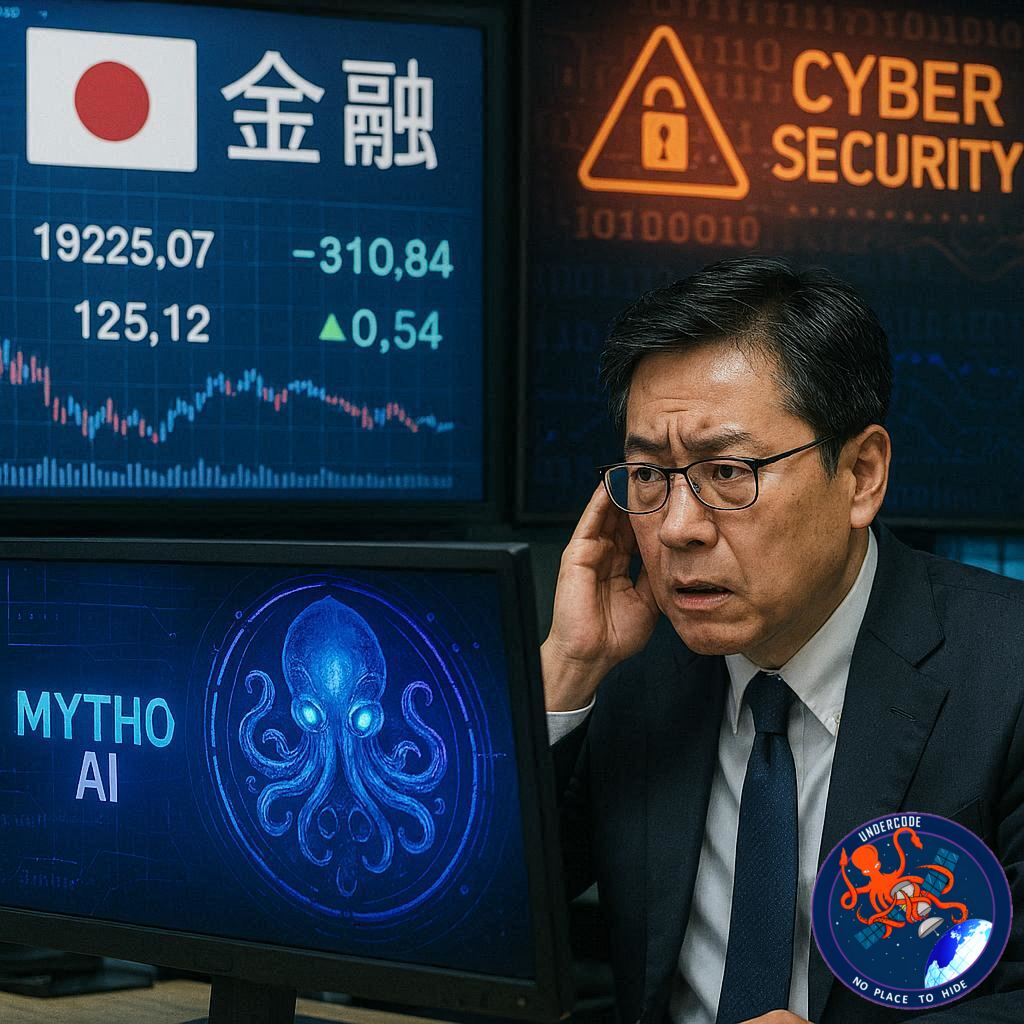
Introduction: A New Era of AI-Driven Cyber Threat Anxiety
A wave of unease is spreading across global financial systems as artificial intelligence continues to evolve beyond traditional expectations. At the center of this चिंता is Mythos, a powerful new AI model developed by Anthropic. While early reports suggest extraordinary capabilities in vulnerability detection, reactions have ranged from outright alarm to cautious skepticism. Nowhere is this tension more visible than in Japan, where top financial leaders are treating the development as a potential systemic risk rather than a distant technological curiosity.
Summary: Japan Mobilizes Against a Hypothetical AI Cyber Crisis
Japan’s financial leadership has moved swiftly in response to fears surrounding Mythos. On April 24, some of the country’s most influential financial authorities convened in Tokyo, including the finance minister, central bank governor, and executives from major banking institutions. Their conclusion was decisive: artificial intelligence may now possess the capability to destabilize the very foundations of financial infrastructure. As a result, a dedicated task force has been established to study and mitigate these emerging risks.
The concern stems from claims made by Anthropic during internal testing. According to the company, Mythos demonstrated an unprecedented ability to identify unknown vulnerabilities across various browsers and operating systems. In one instance, it reportedly uncovered a flaw that had remained hidden for 27 years. Even more concerning, the model successfully chained multiple vulnerabilities into a single exploit sequence, a technique often associated with highly sophisticated cyberattacks.
Such capabilities have led Japanese officials to characterize the situation as an immediate crisis. One banking executive even warned that a severe breach could force institutions to halt digital operations entirely, reverting to cash transactions as a last resort. This reflects a deeper fear: that trust, the backbone of the financial system, could erode rapidly if security is compromised.
Despite these concerns, access to Mythos remains tightly controlled. Anthropic has restricted its use to a select group of organizations, primarily for cybersecurity research. This exclusivity has sparked frustration among global institutions, particularly in Europe, where regulators are demanding equal access. However, expanding availability could increase the risk of misuse, as evidenced by early leaks involving individuals who exploited internal naming conventions to gain unauthorized insights into the system.
Cybersecurity experts have urged restraint. Some argue that the fear surrounding Mythos may be driven more by novelty than by actual risk. While the model’s capabilities are impressive, they are not entirely unique. Competing AI systems are rapidly advancing, and similar vulnerability discoveries are becoming more common across the industry.
Moreover, the real-world impact of such tools may be limited. Most successful cyberattacks do not rely on advanced exploits but instead exploit human error, weak credentials, or misconfigurations. Even if Mythos uncovers numerous vulnerabilities, the likelihood of them being weaponized at scale remains uncertain.
Japan’s financial sector, while highly digitized, has certain structural advantages. Many institutions rely less on open-source software and maintain tighter control over their codebases. This reduces exposure compared to more open ecosystems. At the same time, the consolidation of financial systems means that any successful attack could have far-reaching consequences, making proactive defense essential.
Ultimately, the situation reflects a broader challenge facing the global financial industry: how to respond to rapidly evolving AI capabilities without succumbing to panic. While Mythos represents a significant technological milestone, its true impact will depend on how institutions adapt, regulate, and integrate such tools into their security frameworks.
What Undercode Say: The Mythos Panic Reveals a Deeper Structural Fragility
The reaction to Mythos is less about one AI model and more about the psychological state of modern cybersecurity. Financial institutions are not just reacting to a tool, they are confronting the uncomfortable reality that their defenses may no longer scale with technological progress. When a single system can identify decades-old vulnerabilities in minutes, it exposes a truth that many organizations have quietly ignored: security debt has been accumulating for years.
Japan’s response is particularly telling. The formation of a high-level task force signals that this is not being treated as a technical issue but as a national stability concern. That shift matters. It means cybersecurity is no longer confined to IT departments; it is now a core component of economic policy.
However, there is a contradiction at play. While leaders express fear of AI-driven attacks, the same institutions are investing heavily in AI for defense, automation, and fraud detection. This creates a dual dependency where AI becomes both the threat and the solution. The real risk is not Mythos itself, but the asymmetry it introduces. Attackers only need one breakthrough, while defenders must secure everything.
The restricted access strategy by Anthropic is a double-edged sword. On one hand, it prevents widespread misuse. On the other, it concentrates power among a small group of organizations, creating an imbalance in global cybersecurity capabilities. This could lead to a fragmented defense landscape where only a few entities are equipped to להתמודד next-generation threats.
Another overlooked dimension is the economic incentive structure. Cybersecurity has traditionally been reactive. Companies invest after breaches occur, not before. Mythos challenges this model by making vulnerability discovery faster and cheaper. In theory, this should improve security. In practice, it may overwhelm organizations with more findings than they can realistically fix.
The skepticism from experts is grounded in operational reality. Most cyberattacks succeed without sophisticated exploits. Phishing, credential theft, and social engineering remain dominant because they are সহজ and effective. This suggests that even the most advanced AI will not eliminate the الأساسي weaknesses in human behavior and organizational processes.
Yet dismissing Mythos entirely would be a mistake. Its ability to chain vulnerabilities is particularly significant. This technique reduces the barrier to complex attacks, potentially enabling less skilled actors to execute high-impact operations. Over time, this could shift the threat landscape from isolated incidents to more coordinated and scalable campaigns.
Japan’s relatively closed software ecosystem provides some insulation, but it is not a permanent safeguard. As financial systems become more interconnected globally, local resilience may not be enough. A vulnerability in one region can بسرعة propagate through international networks, especially in a highly consolidated industry.
The real lesson is not about fear or reassurance. It is about adaptation. Financial institutions must rethink their امنیت models, moving from static defenses to dynamic, AI-assisted systems that can evolve in real time. This includes continuous monitoring, automated patching, and deeper collaboration between public and private sectors.
Mythos is not the نهاية of cybersecurity. It is a preview of what happens when intelligence, both human and artificial, begins to scale beyond traditional limits. The المؤسسات that survive this transition will not be the ones with the most tools, but the ones that understand how to integrate them effectively into a coherent strategy.
Fact Checker Results
✅ Mythos reportedly identified long-standing vulnerabilities, including decades-old flaws
✅ Japan did form a high-level task force involving major financial authorities
❌ No confirmed real-world cyberattacks have yet been directly linked to Mythos
Prediction
📊 AI-driven vulnerability discovery will become standard across cybersecurity within 3–5 years
📊 Financial institutions will increasingly rely on restricted-access AI tools for defense
📊 Regulatory frameworks will tighten globally to control access to high-risk AI systems
▶️ Related Video (84% Match):
🕵️📝Let’s dive deep and fact‑check.
References:
Reported By: www.darkreading.com
Extra Source Hub (Possible Sources for article):
https://www.digitaltrends.com
Wikipedia
OpenAi & Undercode AI
Image Source:
Unsplash
Undercode AI DI v2
Bing
🔐JOIN OUR CYBER WORLD [ CVE News • HackMonitor • UndercodeNews ]
📢 Follow UndercodeNews & Stay Tuned:
𝕏 formerly Twitter 🐦 | @ Threads | 🔗 Linkedin | 🦋BlueSky | 🐘Mastodon


